

Direct Answer
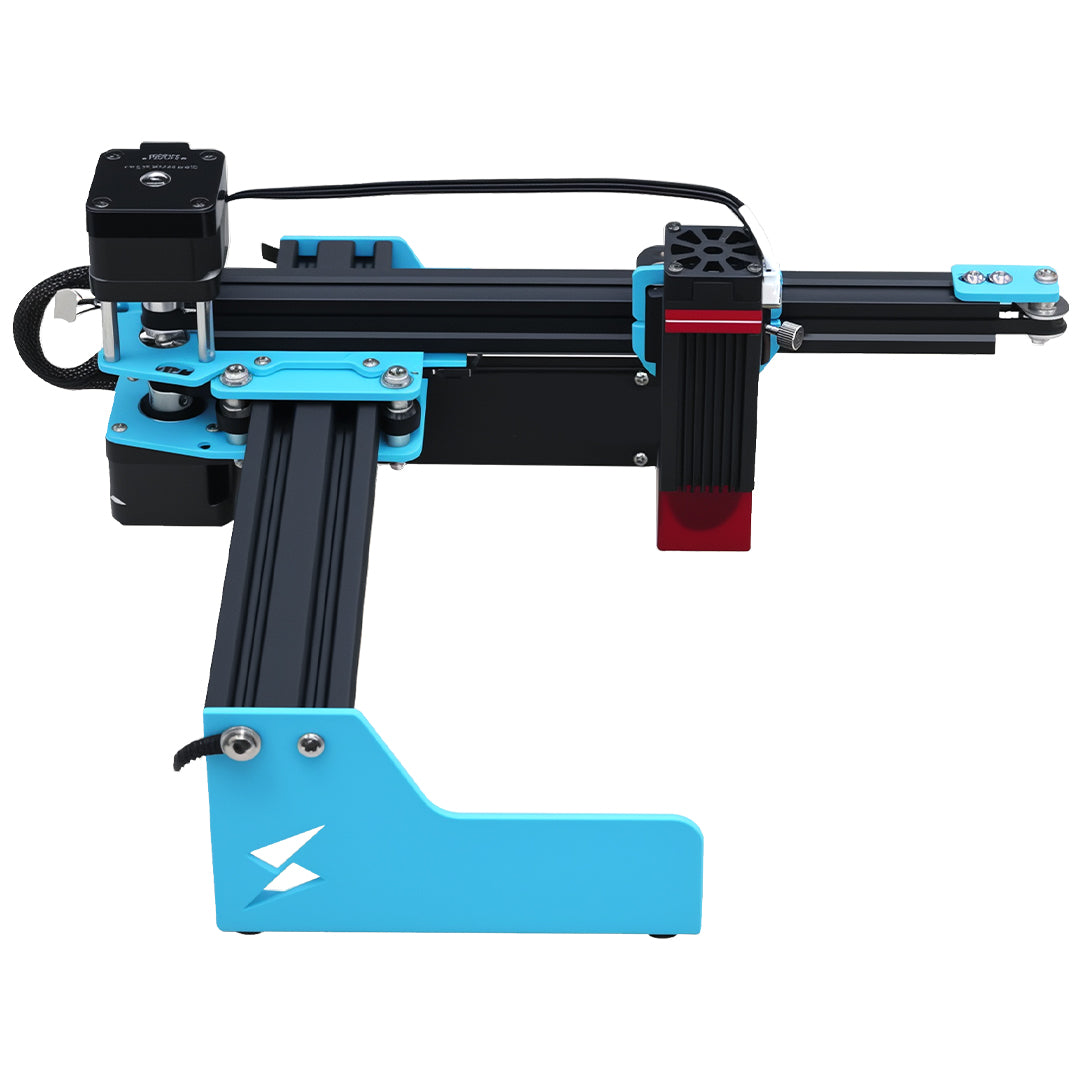
Start with a product menu, not a machine wish list. Put wood signs, acrylic displays, leather patches, paper packaging, cardboard templates, fabric labels, glass marking, and verified laser-safe rubber into a CO2 workflow such as the TYVOK K1 series. Put metal tags, serial plates, jewelry, tool IDs, metal cards, stainless marking, and aluminum marking into a metal-first 1064nm fiber workflow such as TYVOK P2 Ultra.

The popular parameter-table screenshots are useful as market demand signals, but the product-menu decision comes first. A small shop needs to know which products are safe to sell, which blanks are repeatable, and when a second laser path makes sense.
Before quoting capabilities to customers or running paid jobs, check the current TYVOK product page, latest manual, and material safety data. This guide is educational workflow guidance, not a replacement for the live product page, manual, or safety documentation.
Why a Product Menu Beats a Giant Settings Sheet
A single settings sheet looks efficient, but small businesses usually lose time when they mix material families without a sellable menu. Acrylic behaves differently from leather. Stainless behaves differently from anodized aluminum. A wood sign batch and a serial-number tag batch need different fixtures, cleaning steps, safety checks, and proofing standards.
A product menu gives operators a faster first decision:
- Which laser type should handle the job?
- Which blanks are approved?
- Which proof sample must be approved before production?
- Which products should not be accepted until the material is verified?
That structure prevents the common mistake of treating a video screenshot as a finished production file.
Product Menu Split: K1 Jobs vs P2 Ultra Jobs
| Product request | Better TYVOK workflow | First proofing check |
|---|---|---|
| Layered wood signs, plywood decor, cork items | TYVOK K1 series | Grain direction, smoke cleanup, edge color, and fire-watch plan |
| Acrylic signs, templates, display inserts | TYVOK K1 series | Edge quality, engraving contrast, flame behavior, and thickness fit |
| Leather patches, fabric labels, paper packaging | TYVOK K1 series | Material composition, fume extraction, scorch control, and repeat sample |
| Glass surface marking or coated decorative pieces | TYVOK K1 series | Focus, artwork density, thermal stress, and customer-facing finish |
| Stainless ID tags, serial plates, aluminum cards | TYVOK P2 Ultra | Contrast, scan readability, coating response, and repeat position |
| Jewelry, tool IDs, small metal personalization | TYVOK P2 Ultra | Red-light positioning, fixture repeatability, focus, and mark durability |
| Unknown plastics, vinyl-like labels, mystery coatings | Do not accept yet | Verify composition first; do not process PVC, vinyl, or unknown plastics |
Wood and Acrylic Products for the K1 Side
The K1 side should focus on CO2-friendly products where organic materials, acrylic, and studio sheet workflows matter. Good starting categories include custom signage, acrylic display pieces, wood gift panels, paper and cardboard packaging, leather patches, fabric labels, glass marking, and laser-safe rubber only after composition is verified.
Keep K1 product listings specific. Instead of selling “laser anything,” sell material-defined offers such as acrylic table numbers, layered wood wall art, leather patch samples, paper package inserts, and glass marking trials. Each offer should have its own approved blank, proof photo, cleanup step, and safety note.
When quoting a K1 job, do not map a 40W CO2 chart directly onto the customer order. The current K1 page lists different CO2 configurations, including K1 55W, K1 Pro 100W, and K1 Max 100W variants. Quote from the approved product sample, not from a generic chart, because power level, focus, bed size, air assist, tube behavior, artwork density, and material thickness all affect the result.
Metal Marking Products for the P2 Ultra Side
The P2 Ultra side should focus on compact metal marking, not large sheet cutting. Good starting categories include stainless tags, serial plates, aluminum business cards, coated tool IDs, jewelry personalization, metal gift plates, and small production parts where repeat position matters.
P2 Ultra is the metal-first 20W 1064nm fiber workflow with red-light positioning. Use that strength to sell jobs that need precision, fast alignment, and repeatable marks on small metal blanks. Keep expectations clear: metal marking and surface engraving-style workflows need proof samples; heavy material removal is a different production category and should not be promised from a blog.
For the first week, build a sample board instead of chasing one master preset. Include one approved stainless tag, one anodized aluminum card, one coated tool, one jewelry blank, and one rejected sample showing what too much heat or poor focus looks like.
When to Add the Second Machine Path
Many shops can start with one menu side. If your orders are mostly wood, acrylic, paper, cardboard, leather, and signs, start with the K1 side and keep metal requests as future expansion. If your orders are mostly tags, ID plates, jewelry, tool labels, and metal cards, start with the P2 Ultra side and keep wood/acrylic sheet products separate.
Add the second path when customers repeatedly ask for the other material family and you can define a repeatable product offer. K1 and P2 Ultra should be treated as complementary workflows, not as a winner-loser comparison.
How to Price and Proof Without Overpromising
Do not price from machine speed alone. Price from the whole workflow: blank cost, fixture time, test scrap, cleaning, packaging, failed-material risk, customer approval, and repeatability.
A practical proofing path:
- Confirm the material family and exact blank.
- Choose K1 or P2 Ultra before choosing settings.
- Run a small proof on scrap from the same supplier batch.
- Calibrate focus, position, and fixture repeatability before the customer piece.
- Inspect contrast, edge quality, cleaning effort, and durability.
- Photograph the approved sample next to the customer artwork.
- Save the preset, fixture note, focus note, and cleanup note together.
- Re-test when the supplier, coating, thickness, or finish changes.
For deeper material tuning, use the earlier CO2 vs fiber material-settings guide as the next step: https://tyvok.com/blogs/news/co2-vs-fiber-laser-settings-k1-p2-ultra.
Customer Quote Checklist for a Sellable Menu
- Confirm the exact material, thickness, coating, and supplier before taking the order.
- Use ventilation or fume extraction for every material test and production run.
- Keep fire watch active and never leave a laser job unattended.
- Use the required enclosure and eye protection for the wavelength and machine.
- Verify plastics, rubber, coatings, adhesives, and synthetic leather before running them.
- Do not process PVC, vinyl, or unknown plastics.
- Treat coating and anodizing as supplier-specific variables.
- Keep an approved sample for repeat jobs and a rejected sample for operator training.
Where Each TYVOK Page Fits
Use the TYVOK K1 series page when your menu is mostly signs, acrylic, wood, paper, cardboard, fabric, leather, glass marking, and studio sheet work: https://tyvok.com/products/tyvok-k1-100w-co-laser-engraver-for-makers-designers.
Use the TYVOK P2 Ultra page when your menu is mostly metal tags, serial plates, jewelry, tools, metal cards, and compact metal identification work: https://tyvok.com/products/tyvok-p2-ultra?view=tyvok-p2-ultra-v10#buy.
For deeper planning, pair this menu with the K1 small-business guide and the P2 Ultra metal tag guide:
- TYVOK K1 small-business review: https://tyvok.com/blogs/news/best-co2-laser-engraver-for-small-business-in-2026-tyvok-k1-series-review
- TYVOK P2 Ultra metal tags and serial plates: https://tyvok.com/blogs/news/tyvok-p2-ultra-metal-tags-serial-plates-20w-fiber-guide
FAQ
What laser engraving products should a small business start with first?
Start with the products you can proof repeatably. If your demand is signs, acrylic, wood decor, paper packaging, and leather patches, start with the K1 side. If your demand is metal tags, serial plates, jewelry, and tool IDs, start with the P2 Ultra side.
Should I sell wood and acrylic products before adding metal marking?
Only if those are the products customers already ask for. A CO2 product menu and a metal marking menu can both work, but they need different blanks, fixtures, proof samples, and safety checks.
Can one laser product menu include both K1 and P2 Ultra jobs?
Yes, but keep the menus separate. CO2-friendly sheet products and 1064nm fiber metal marking jobs need different fixtures, tests, safety checks, and customer proofing standards.
Is TYVOK K1 the better choice for acrylic products?
For acrylic signs, templates, and display pieces, the TYVOK K1 series is the CO2 path to evaluate first. Always test the exact acrylic thickness, edge quality, flame behavior, and ventilation setup before selling the job.
Is P2 Ultra the better choice for metal tags and serial plates?
For compact metal tags, serial plates, tool IDs, jewelry, and metal cards, TYVOK P2 Ultra is the metal-first fiber workflow to evaluate first. Validate contrast, readability, focus, and durability on the exact blank.
Should beginners copy settings from a short video?
No. Use the video or chart to choose a test direction, then build your own test grid on scrap from the same material batch.