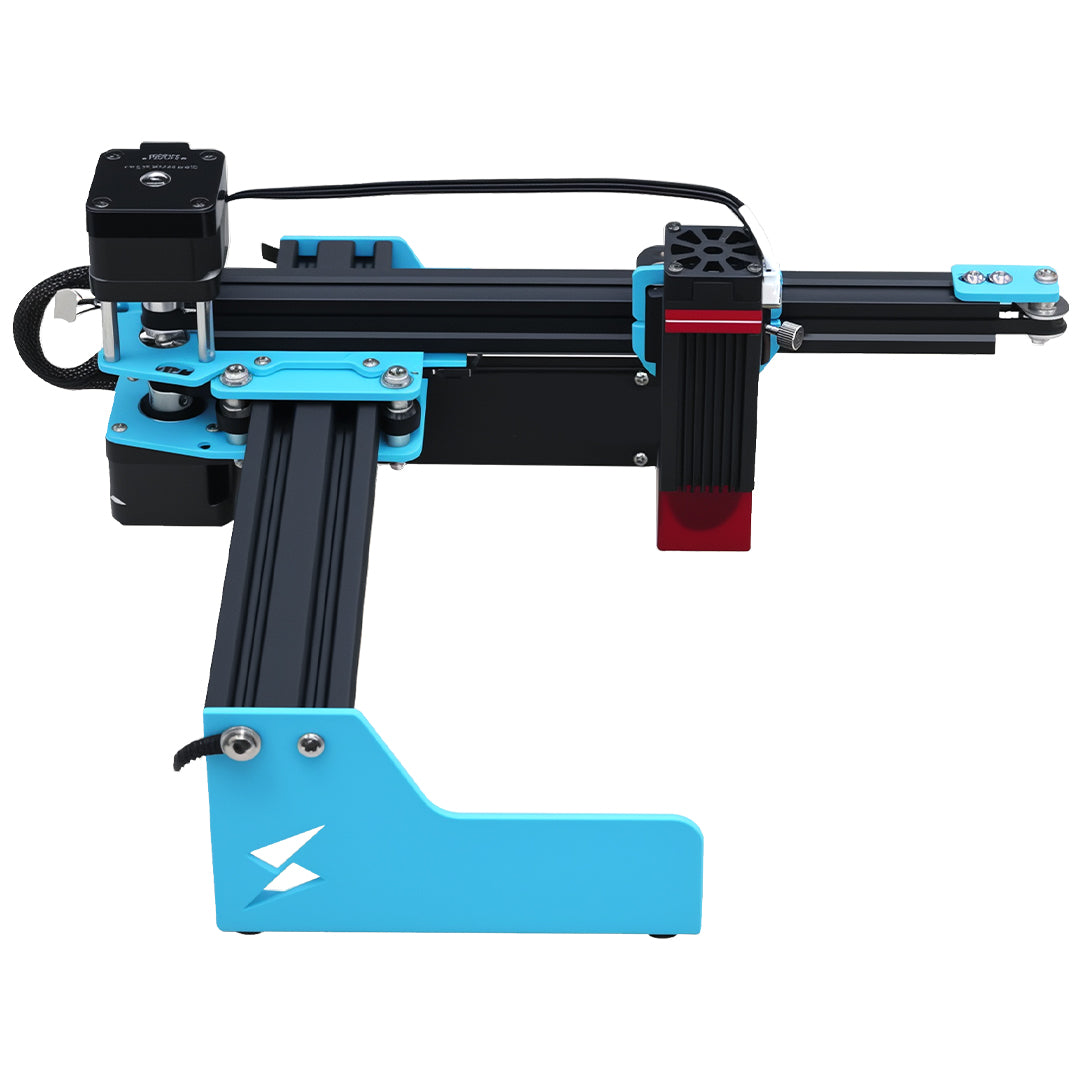


Physical fit is only the first compatibility check. A passive support must preserve the A1 Mini's required clearances and approved setup; a powered accessory also needs documented electrical, controller, and software compatibility. Do not buy or connect a rotary because its plug appears to fit.
An August beginner accessory discussion asks about third-party honeycomb beds, raised supports, and rotary rollers. Those items solve different problems and should not share a single “universal accessory” assumption. Begin by identifying what the accessory changes: support height, machine geometry, or powered motion.
Ask for dimensions that include the real assembly
For a honeycomb, obtain outside dimensions including the frame, not just the advertised working surface. Determine how it would sit in the manufacturer-approved arrangement and whether its height affects the documented focus method. For a riser, request written confirmation that the exact model supports that arrangement; added height can alter stability, clearance, and containment.
The A1 Mini listing specifies a 120 × 130 mm working area. This is not the machine's complete exterior footprint and is not a universal accessory mounting specification. Measure the actual workspace with the A1 Mini footprint guide, leaving the documented access and operating clearances intact.
| Accessory question | Evidence to obtain before purchase |
|---|---|
| Will a passive bed fit? | Full outside dimensions and approved support arrangement |
| Does its height change focusing? | Current A1 Mini instructions for the proposed setup |
| Is a riser authorized? | Exact model and configuration confirmation |
| Will a rotary connect correctly? | Written connector, pin-order, electrical, and controller compatibility |
| Can software control it? | Supported application/version and documented setup route |
| Does the complete workspace remain suitable? | Access, containment, exhaust, and stability confirmation |
Send one precise compatibility question
Give TYVOK and the accessory supplier the exact A1 Mini configuration, the accessory model number, its specification sheet, and the proposed use. Ask them to identify the relevant current instructions. “Works with diode lasers” does not answer whether this combination is supported.
For electrical accessories, require matching documentation rather than testing by connection. Do not probe, rearrange pins, splice cables, or experiment with controller settings. If the supplier cannot establish compatibility, leave the accessory disconnected and choose a documented option or postpone the purchase.
A larger support or enclosure arrangement may also change where the machine can operate. In shared housing, evaluate the neighbor and residential workspace checks before treating an accessory bundle as a complete solution.
Is a smaller honeycomb automatically compatible?
No. It still needs approved support, stable placement, appropriate clearance, and a usable arrangement for the actual material. External size alone does not establish safe operation.
Can an adapter cable make an unsupported rotary work?
An adapter's existence is not compatibility evidence. The electrical requirements, pin assignment, controller behavior, and supported software procedure all need confirmation for the exact combination before any connection.