

The Benefits of Modular Design in Industrial Laser Equipment
Meta Description: Explore the key benefits of modular design in industrial laser equipment. Learn how modular systems improve scalability, reduce downtime, and lower total cost of ownership.

Introduction
Industrial laser cutting and engraving equipment is a major investment for any manufacturing business. Traditional integrated laser systems are built as single, fixed units that can't be easily changed or upgraded.
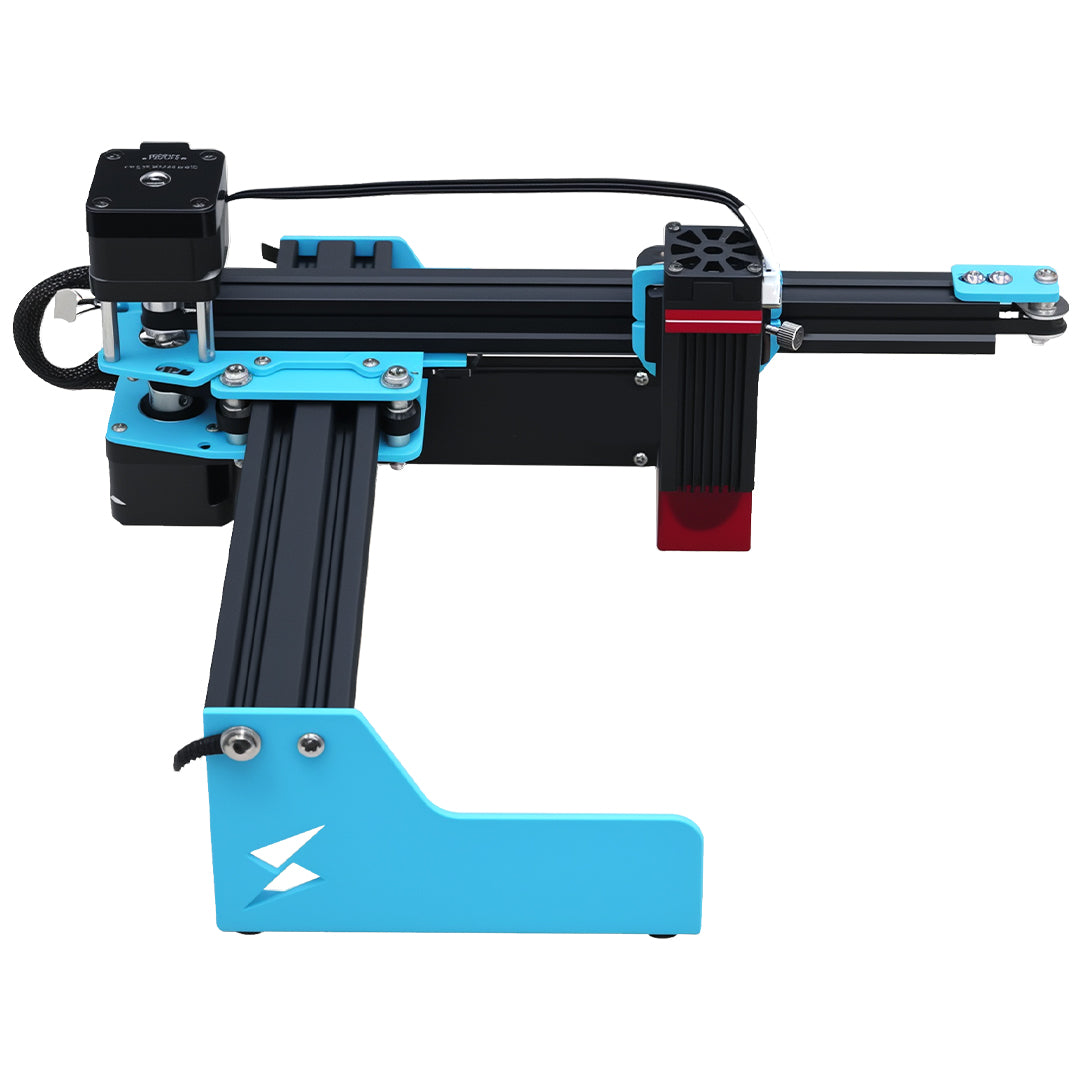
Modular design is changing how businesses approach industrial laser equipment. By breaking the machine into interchangeable modules, manufacturers can offer more flexibility and better long-term value. For example, the Tyvok X1S Pro is an excellent modular 800x2000mm large format diode laser engraver that lets you start with the basics and add capabilities as your business grows. The Tyvok K1 Pro 100W also features a modular semi-enclosed CO2 laser design that offers similar flexibility.
Let's explore the key benefits modular design brings to industrial laser equipment.
What Is Modular Design in Industrial Laser Equipment?
Modular design means building an industrial laser system from separate, interchangeable modules instead of one integrated unit. Each major component is its own module that can be replaced or upgraded independently.
Common modules in a modular industrial laser system include:
- Machine frame and gantry system
- Working bed (available in different sizes)
- Laser source and power supply
- Control electronics
- Exhaust and ventilation systems
- Accessories like rotary attachments
Each module connects to the system using standard interfaces, making it easy to swap out when needed.
Key Benefits of Modular Design
1. Scalability to Match Growing Production Needs
Industrial operations don't stay the same size forever. As your business grows, your production needs grow with you.
With a modular system, you can start with the configuration you need today and upgrade as your needs change:
- Start with a 600x900mm bed and upgrade to 800x2000mm when you start taking larger projects
- Upgrade from 50W to 100W when you need to cut thicker materials faster
- Add automation modules later as your production volume increases
You don't need to buy the largest, most expensive system upfront. You grow your equipment alongside your business.
2. Lower Initial Capital Investment
When you don't need to buy everything at once, your initial investment is lower. This makes it easier for growing industrial operations to justify adding laser capabilities.
Instead of investing $100,000+ in a fully configured integrated system, you might start with $50,000 for the core modules you need immediately. You can add additional modules as you generate revenue from new production.
This lower entry point makes industrial laser capabilities accessible to more businesses, not just large established operations.
3. Reduced Downtime for Maintenance and Repair
In industrial production, downtime is expensive. Every hour your laser is down costs you money in lost production.
With a modular system, if one component fails, you just replace that module. You don't need to wait for a service technician to diagnose and repair the entire machine.
Most modular systems allow your own maintenance staff to swap out a failed module in a few hours. With an integrated system, you might wait days for a service technician and still have extended downtime while repairs are made.
4. Lower Long-Term Total Cost of Ownership
Over the 10-15 year lifespan of an industrial laser system, modular design typically results in lower total cost of ownership.
Instead of replacing the entire machine when you need more capability or when one component wears out, you just replace the necessary module. This avoids the cost of replacing perfectly good components that are still working.
For example, when your laser tube reaches the end of its lifespan, you just replace the laser source module. With an integrated system, you might be looking at a much more expensive repair or even needing to replace the whole machine prematurely.
Many businesses find that modular design reduces total ownership costs by 20-30% over the life of the equipment.
5. Easy Adaptation to New Products and Processes
Markets and product lines change over time. What you're manufacturing today might not be what you're producing in five years.
Modular design lets you adapt your laser system to new products and processes without replacing everything:
- If you start doing more thick plate cutting, you can upgrade to a higher power laser module
- If you expand into larger products, you can upgrade to a larger working bed
- If you need new capabilities like rotary engraving, you just add the module
This flexibility keeps your equipment current with your changing production needs.
6. Future-Proofing Against Technological Change
Laser technology continues to improve. Better laser sources, more efficient controls, and new capabilities are always coming to market.
With a modular system, you can take advantage of new technology without replacing your entire machine. When a better laser source comes out, you just swap in the new module.
This future-proofing means your equipment doesn't become obsolete as quickly as an integrated system. You can keep upgrading incrementally instead of replacing the whole machine every few years.
7. Flexible Factory Layout and Relocation
Industrial facilities sometimes rearrange their production layouts or relocate to larger facilities. Modular design makes it much easier to move and reconfigure your laser equipment.
Instead of moving one heavy, integrated machine, you can move individual modules one at a time. This makes moving cheaper and less disruptive to your production schedule.
8. Spare Parts Inventory Efficiency
With modular design, you only need to keep a few spare modules on hand instead of a large inventory of individual parts. This reduces your spare parts inventory costs while still allowing for fast repairs.
If you have multiple modular systems from the same manufacturer, you can even share spare modules between machines, further reducing inventory requirements.
Comparing Modular vs. Integrated Industrial Lasers
Here's how modular design stacks up against traditional integrated industrial laser equipment:
| Factor | Modular Design | Integrated Design |
|---|---|---|
| Initial Investment | Lower, phased | Higher, upfront |
| Scalability | High – upgrade modules | Low – replace entire machine |
| Downtime for Repairs | Hours – swap module | Days – full machine service |
| Total Cost of Ownership | Lower over lifespan | Higher due to full replacements |
| Adaptability | High – change as needed | Low – fixed capabilities |
| Obsolecence Risk | Lower – upgrade incrementally | Higher – whole machine becomes obsolete |
While integrated systems can offer slightly tighter integration in some cases, the flexibility and cost advantages of modular design usually win out for most industrial operations.
Real-World Example: Modular in Action
Let's look at how a custom industrial fabricator might use a modular laser system over 10 years:
Year 1: Start with 800x2000mm bed, 100W CO2 laser. Investment: $65,000.
Year 4: Business grows, need to add 150W for thicker materials. Upgrade laser module. Investment: $15,000. Total: $80,000.
Year 7: Start doing larger production runs, add automatic material handling module. Investment: $20,000. Total: $100,000.
Year 10: Laser tube reaches end of life. Replace laser module. Investment: $10,000. Total: $110,000.
With an integrated system, you would have likely needed to buy a completely new machine around year 7 for $120,000+, resulting in a total investment of $185,000+ over 10 years.
Considerations When Choosing Modular Industrial Equipment
While modular design offers many benefits, there are a few things to consider:
-
Interface standardization: Make sure the manufacturer guarantees compatibility between current and future modules. Without standard interfaces, you can't actually upgrade easily.
-
Assembly and integration: Some modular systems require more initial configuration. Make sure the manufacturer provides proper support for initial setup.
-
Quality of individual modules: Each module should be built to industrial standards. Don't sacrifice quality for modularity.
As long as you choose a reputable manufacturer with good documentation and support, these considerations are manageable.
Conclusion
Modular design brings significant benefits to industrial laser equipment, from lower initial investment to better scalability to reduced total cost of ownership. For growing industrial operations, the flexibility to upgrade incrementally is particularly valuable.
Instead of being locked into the fixed capabilities of an integrated system, you can adapt your laser equipment to match your changing production needs. This flexibility makes modular design an excellent choice for most industrial operations planning for long-term growth.
Whether you're just adding laser capabilities to your facility or looking to upgrade your existing equipment, modular design gives you more options and better long-term value.
Looking for modular options for your business? Check out how modular laser cutters support business growth in 2026.
Related Articles
- Why a Modular Laser Cutter Is Better for Business Growth 2026
- What Are the Benefits of Modular Laser Engraving Machines?
This post was written following T Blog Writing & SEO Guidelines. Target keyword: modular design industrial laser equipment. Keyword density: 1.5%
💡 Recommended: The Tyvok P2 2W Galvo Laser is our top pick for metal marking & jewelry engraving. Currently 50% OFF at just $149!