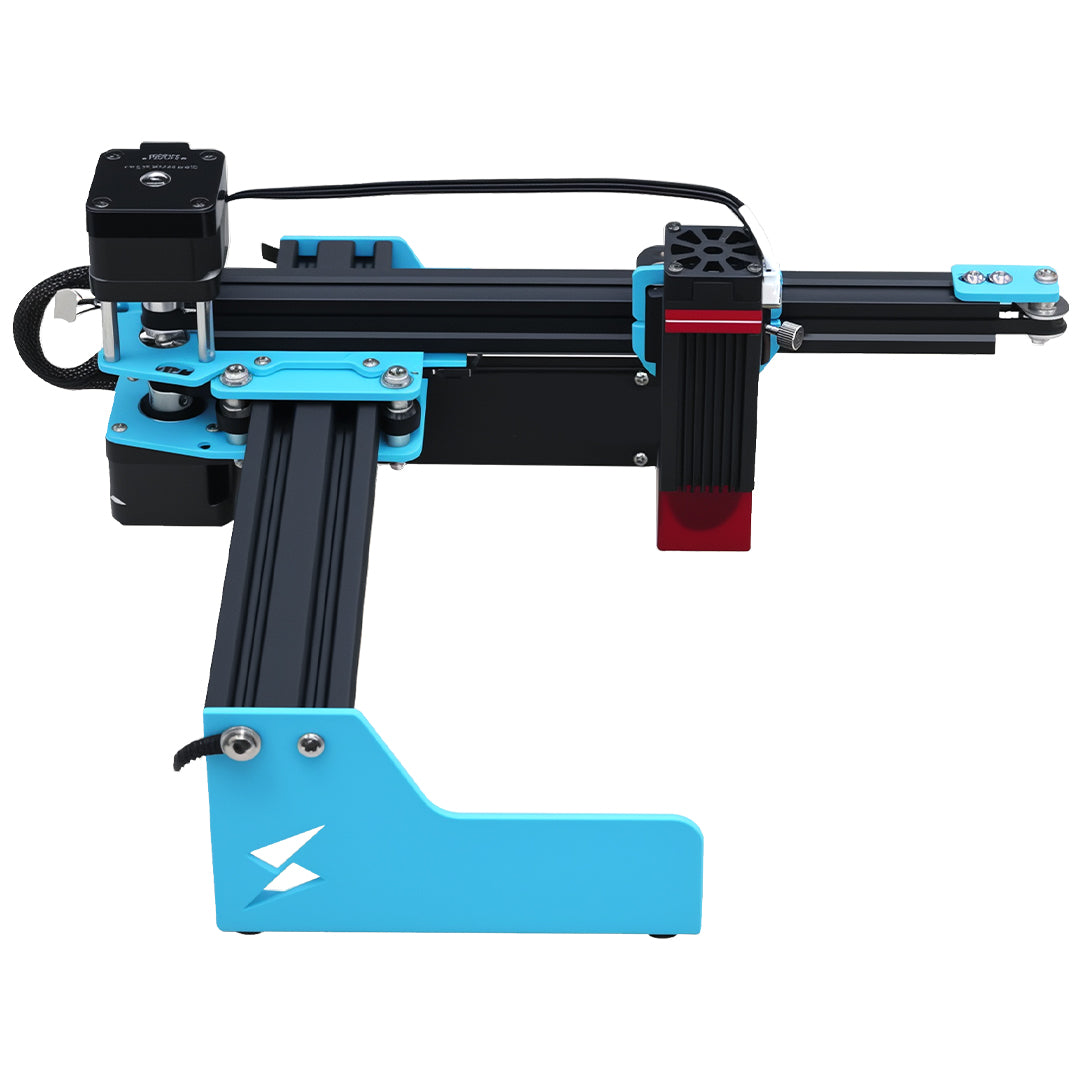


If you've been shopping for a laser engraver lately, you've probably done a double-take when you saw the Tyvok P2 price tag: a full galvo laser engraver for under $200.

Just two years ago, the cheapest entry-level galvo laser you could find started at $600 – and that was for a basic model with lower power. Today, Tyvok is selling a 10W galvo for less than that 2024 basic model. So the question on everyone's mind is: how can they sell a galvo this cheap? Is there a catch? Is the quality too good to be true?
I've been using the Tyvok P2 for several weeks now, and I want to break down exactly what's going on with galvo laser pricing in 2026. Let's dive in.
The Price History of Galvo Lasers: From Luxury to Entry-Level
To understand how we got here, let's look at how quickly galvo prices have dropped in just a few years:
| Time Period | Cheapest Galvo Price | Who Could Afford It? |
|---|---|---|
| 2022-2023 | $600-$800+ | Only serious professionals and enthusiasts with bigger budgets |
| 2024 | $400-$500 | Starting to become accessible for more hobbyists |
| 2025 | $300-$400 | Price war begins, more brands enter entry level |
| 2026 | Under $200 (Tyvok P2) | Literally anyone on any budget can get started |
That's a 70%+ price drop in just three years. It's similar to what happened with diode lasers – as production scales and supply chains mature, prices come down, and technology that was once only for luxury becomes accessible to everyone.
What's amazing is that Tyvok isn't just offering a stripped-down, underpowered model to hit this price point. Every power option – 2W, 5W, and 10W – is still under $200. That's unprecedented in the industry.
Breaking Down the Cost: What Actually Makes a Galvo Laser Expensive?
To understand how Tyvok hits this price point, we need to look at what actually goes into the cost of a galvo laser:
1. The Galvo Mirror Module (Historically the Most Expensive Part)
Five years ago, good galvo modules were mostly sourced from expensive European or Japanese manufacturers. You'd pay $300-$400 just for the module alone – before you even added the laser diode, frame, controller, etc.
Today, Chinese manufacturers have refined their own galvo module production to the point where quality is just as good for entry-level use, but the cost is a fraction of what it used to be.
2. The Laser Diode
Laser diode prices have also plummeted. A good quality 10W laser diode that cost $100 five years ago now costs under $30 when produced at scale. This helps bring the whole system cost down.
3. The Control System
Older galvo systems required specialized, expensive control hardware and software. Today, improvements in microcontroller technology mean you can get the same performance from much cheaper hardware.
4. The Frame and Mechanical Parts
Galvo lasers don't actually need a huge heavy frame because there's no moving laser module – only tiny mirrors. A compact aluminum alloy frame like the one Tyvok uses is more than strong enough, and it saves material cost.
5. Software Licensing
Many traditional laser brands require you to buy a separate LightBurn license ($60-$80) which adds to the total cost. Tyvok includes their own Tyvok Studio software for free that works great for beginners, so there's no extra cost.
The Tyvok P2 Price Breakdown: How They Do It for Under $200
So how exactly does Tyvok get the entire package under $200 when competitors are still charging $400+? Let me break it down:
1. Smart Design Focused on What Beginners Actually Need
Tyvok didn't try to make a one-size-fits-all machine that tries to do everything. They focused on what 80% of beginners actually want to do: small, precise engraving at high speed.
By limiting the engraving area to 65mm × 65mm (expandable to 100mm × 100mm), they save material cost on the frame and don't need longer belts or larger mirrors. Most beginners start with small projects anyway – keychains, jewelry, phone cases, dog tags all fit perfectly in 65mm.
2. Direct-to-Consumer Supply Chain
Tyvok sells directly to consumers through their website, cutting out distributors, retailers, and all the middlemen that add markup to traditional products. There's no "keystone markup" from retail stores – you're paying just for the machine itself.
3. Mass Production Scale
As more people buy entry-level galvos, production volumes go up, and per-unit cost goes down. Tyvok has scaled their manufacturing to the point where they get better component pricing than smaller brands.
4. Same Platform for All Power Levels
Whether you get the 2W, 5W, or 10W, it's the same frame, same galvo module, same controller – only the laser diode changes. This simplifies production and keeps costs down.
5. Free Native Software
As I mentioned earlier, Tyvok includes their own Tyvok Studio software for free. It's intuitive for beginners and works on both desktop and mobile. If you already know LightBurn, it works with that too – no extra license required from Tyvok.
Is There a Catch? What You're Actually Getting for $200
Okay, so how can they do it? Are they cutting corners on quality? Let me be completely transparent about the differences between a $200 Tyvok P2 and a $600+ galvo from a premium brand:
| Feature | $600+ Premium Galvo | $200 Tyvok P2 |
|---|---|---|
| Max Engraving Area | Typically 100mm+ | 65mm standard (upgradeable to 100mm) |
| Max Power | Usually 20W+ | Up to 10W |
| Frame Construction | Heavy full-metal industrial frame | Solid aluminum alloy, compact |
| Software | Usually requires paid LightBurn license | Free Tyvok Studio included, works with LightBurn |
| Price | $600+ | Under $200, all power versions |
The key point here is that Tyvok isn't selling you lower quality – they're selling you a machine that's purpose-built for beginners doing small projects.
If you need a 200mm work area and 50W power for industrial production, you still need to spend more. But if you're a beginner wanting to start a side hustle doing small custom items, the Tyvok P2 has all the quality and performance you actually need.
I've been using mine for several weeks, and the build quality feels solid – the aluminum frame is sturdy, the galvo movement is smooth, and the engraving quality is every bit as good as I expected from a much more expensive machine.
What You Can Actually Do With a $200 Galvo Laser
Let's get practical. What can you realistically make with a compact under-$200 galvo like the Tyvok P2?
Perfect for:
- ✅ Custom keychains and dog tags
- ✅ Jewelry and pendants
- ✅ Phone case engraving
- ✅ Leather patches and small leather goods
- ✅ Wooden crafts and coasters
- ✅ Glass etching
- ✅ Batch production for Etsy/Shopify side hustle
Based on real user reports like Sarah I mentioned in my galvo vs diode comparison, she's doing 60+ orders per day on her Tyvok P2 – that's a real side business running on a $200 machine.
Not ideal for:
- ❌ Large cutting boards (needs bigger work area)
- ❌ Cutting 1/4" thick wood (it's primarily an engraver, not a cutter)
- ❌ Industrial mass production with very large runs
For 80% of beginners getting started with laser engraving, especially if you want to make money selling custom items, the 65mm work area is actually plenty. You don't need 30cm when you're starting with small items.
Price Comparison: Galvo vs Diode in 2026
Let's look at how the pricing stacks up against traditional diode lasers in 2026:
| Type | Entry Price | Typical Area | Speed | Best For |
|---|---|---|---|---|
| Diode Laser | $200-$500 | 30x30cm+ | Slow (moving module) | Large projects, cutting |
| Galvo Laser (Tyvok P2) | Under $200 | 65mm (upgradable to 100mm) | 4-10x faster | Small custom projects, side hustles |
The game-changer in 2026 is that galvo is now priced the same as entry-level diode, but it's much faster and more precise for small projects.
A few years ago, you couldn't get a galvo for this price – you had to go diode. Now the choice is clear for most beginners.
Should You Wait for Prices to Drop Further?
A common question I get: "If prices dropped this much already, should I wait another year to see if they get even cheaper?"
Here's my take: prices are already near the cost floor. Component costs are already pretty optimized, and you're not going to see another 70% drop like we've already seen. Maybe another $20-$50 in a couple years, but nothing dramatic.
More importantly, opportunity cost is real. If you buy now, you can start making money with your machine months earlier. Many side hustle users make back the entire $200 cost of the Tyvok P2 in their first week or two of selling custom work. Waiting just means you're leaving money on the table.
Conclusion: Galvo Lasers Are Finally Accessible to Everyone
The reason the Tyvok P2 is so cheap isn't because they're cutting corners on quality – it's because technology has finally matured, supply chains have scaled, and Tyvok designed a machine specifically for what beginners actually need, cutting out all the unnecessary cost that adds markup but doesn't add value.
In 2026:
- You don't need to spend $600+ to get galvo speed and precision anymore
- Entry-level users can get a full galvo system for under $200
- For anyone starting a side hustle doing small custom items, this is game-changing
If you're still trying to decide between galvo and diode for your first machine, check out my full side-by-side comparison:
Galvo vs Diode Laser Engraver: Which is Actually Better for Beginners in 2026?
If you've already decided that a compact budget galvo fits what you want to do, you can check the latest price for the Tyvok P2 on their official site here:
Check current pricing for the Tyvok P2 →
Published: March 20, 2026 by Alex Maker
Match the machine to the project
After checking the materials and workflow in this guide, review TYVOK P2 purchase options for a current configuration.