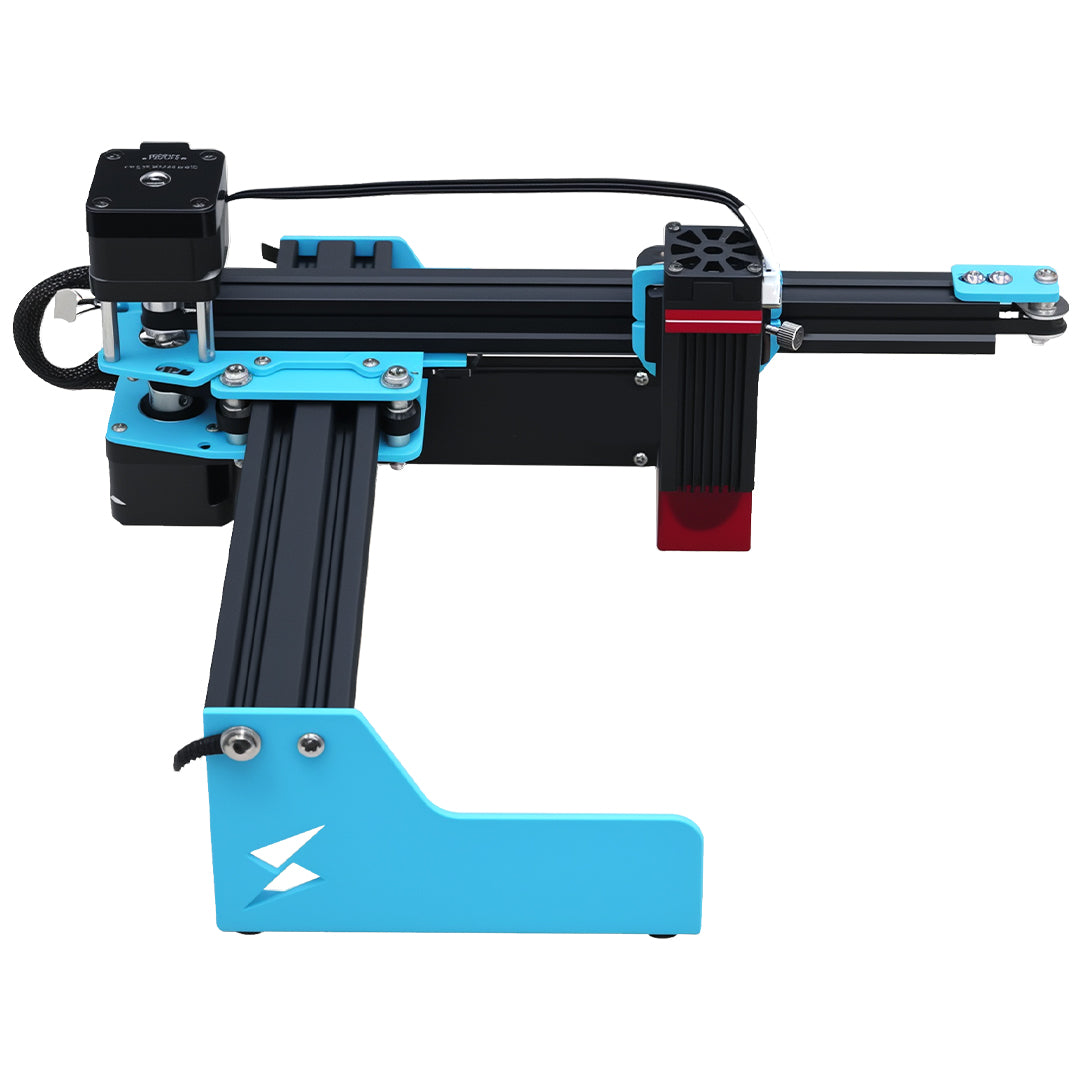


Whether you're a hobbyist enjoying your first Tyvok A1 Mini or running a small business with a Tyvok P2 galvo laser, proper maintenance is the key to consistent engraving quality and long machine lifespan. Many beginners overlook regular maintenance, only to encounter frustrating issues like blurry engravings, inconsistent power output, or even premature machine failure.
🛒 Check out the Tyvok A1 Mini here
In this complete guide, we'll walk you through everything you need to know about laser engraver maintenance, with a practical checklist organized by frequency, common mistakes to avoid, and tips specific to diode and galvo laser machines like the Tyvok lineup.
🛒 Check out the Tyvok A1 Mini here
Why Regular Laser Engraver Maintenance Matters
Before diving into the checklist, let's understand why maintenance matters so much. Laser engraving is a precision process – even minor buildup or misalignment can noticeably affect your results.
🛒 Check out the Tyvok Spider X1S Pro here
How Maintenance Affects Engraving Quality
When your laser lens gets dirty from smoke and debris residue, it diffuses the laser beam. This leads to:
👉 Learn more about How to Make Money Doing On-Demand Laser Engraving at Events with Your Tyvok P2 here - Blurry or out-of-focus engravings - Inconsistent depth across your project - Burn marks where you don't want them - Wasted material and time re-doing projects
Even on compact machines like the Tyvok A1 Mini, which features a closed laser path design that reduces contamination, regular cleaning keeps everything working as it should.
🛒 Check out the Tyvok A1 Mini here
How Maintenance Extends Machine Lifespan
Your laser engraver has several moving parts – belts, rails, lenses, and electrical components. When these parts aren't maintained:
🛒 Check out the Tyvok A1 Mini here - Moving parts wear out faster from friction - Smoke residue can corrode metal components over time - Overheating can damage the laser diode or motherboard
🛒 Check out the TyvokStudio Laser Software here - Small problems become big, expensive repairs
With proper maintenance, a quality diode laser like the Tyvok A1 Mini can last 3-5 years or more, even with regular use. The solid-state galvo design in the Tyvok P2 can last even longer when properly cared for.
🛒 Check out the Tyvok A1 Mini here
Your Complete Laser Engraver Maintenance Checklist
We've organized this checklist by frequency, so you can build maintenance into your regular workflow without feeling overwhelmed.
Daily Maintenance (Before Every Use)
Daily maintenance takes just 2-3 minutes but prevents most common issues.
| Task | Description | Why It's Important |
|---|---|---|
| Clean laser lens | Use a cotton swab with 90%+ isopropyl alcohol to gently clean the lens surface | Smoke residue builds up quickly, especially when cutting wood or acrylic |
🛒 Check out the Tyvok Spider X1S Pro here | Check for debris on rails | Wipe down linear rails with a clean cloth | Small particles can cause stepper motors to work harder and wear out faster | | Inspect ventilation/exhaust | Make sure your fan or exhaust is working properly | Good ventilation not only keeps you safe – it also reduces smoke buildup on internal components |
👉 Learn more about How to Make Money Doing On-Demand Laser Engraving at Events with Your Tyvok P2 here | Check belt tension | Give belts a gentle tug – they should be firm with a little give | Loose belts cause misalignment and inconsistent engravings |
👉 Learn more about How to Start a Laser Engraving Business with Under $200 here | Test fire at low power | Do a quick test fire on scrap material to confirm the laser is firing correctly | Catches alignment or power issues before you waste expensive material |
👉 Learn more about How to Choose Laser Power for Different Materials here
Pro tip for Tyvok A1 Mini owners: The compact design means the lens is closer to the work area, so make sure to check it every day. It only takes 60 seconds!
🛒 Check out the Tyvok A1 Mini here
Weekly Maintenance (Once Per Week of Regular Use)
If you use your machine several times a week, do these tasks once a week. If you use it less, you can do this every 10-15 uses.
- Deep clean the lens and mirror system
- Remove the lens holder (follow your machine's manual)
- Clean both sides of the lens gently
- Clean any mirrors in the optical path
-
Allow to fully dry before reinstalling
-
Clean the work area and honeycomb bed
- Remove the honeycomb bed
- Tap out all the charred debris
- Vacuum or brush away remaining particles
-
For stubborn residue, use a soft brush with mild soap
-
Check and clean air assist nozzle
- Remove the nozzle
- Clear any debris that's blocking airflow
-
A clogged air assist affects cut quality and increases smoke buildup
-
Inspect wiring and connections
- Look for any loose wires or connections
- Check for signs of overheating (discolored insulation)
-
If you spot anything concerning, address it before your next project
-
Wipe down the machine exterior
- Keep the outside clean to prevent dust from getting inside
- Pay special attention to ventilation intakes
Monthly Maintenance
These monthly tasks keep your machine running smoothly for years.
- Lubricate linear rails and bearings
- Clean rails thoroughly first with isopropyl alcohol
- Apply a thin layer of food-grade machine oil or PTFE lubricant
- Move the gantry back and forth several times to distribute evenly
- Wipe away any excess oil – you don't want it attracting dust
Note for galvo users: The Tyvok P2 galvo system has minimal moving parts that need lubrication – focus your monthly maintenance on keeping the lens and mirror clean.
🛒 Check out the Tyvok A1 Mini here
- Check and calibrate focus
- Run a focus test pattern
- If you notice inconsistency, re-calibrate your focus offset
-
This is especially important if you move your machine frequently
-
Inspect stepper motors
- Listen for unusual noises during operation
- Clean any dust from motor vents
-
Overheating is the #1 cause of stepper motor failure
-
Check power connections and voltage
- Make sure your power cord is in good condition
👉 Learn more about How to Make Money Doing On-Demand Laser Engraving at Events with Your Tyvok P2 here - If you have a voltage meter, confirm your power supply is outputting the correct voltage
- Clean ventilation filters
- If your machine has a filter, clean or replace it according to the manufacturer's recommendations
- A dirty filter reduces airflow and increases internal contamination
Yearly Maintenance
These annual in-depth checks prevent major issues down the line.
- Full machine disassembly and deep clean
- Remove all covers
- Thoroughly clean all internal components
- Remove any accumulated dust and debris from every nook and cranny
- Pay special attention to the area around the laser diode module
🛒 Check out the TyvokStudio Laser Software here
- Replace worn parts
- Check belts for signs of stretching or cracking – replace if needed
- Replace any worn bearings
- Check if your laser diode needs replacement (output power decreases over time)
🛒 Check out the TyvokStudio Laser Software here
- Check and calibrate mechanical alignment
- Check that your gantry is square to the work area
- Verify belt tension on all axes
-
Calibrate steps per mm if you notice dimensional inaccuracy
-
Update firmware
- Check the manufacturer's website for any firmware updates
- Manufacturers often release improvements for performance and reliability
- For Tyvok machines, you can find the latest firmware updates on their official website
🛒 Check out the Tyvok A1 Mini here
- Inspect safety systems
- Test any emergency stop buttons
- Verify that your grounding is still good
- Check door interlocks if your machine has them
Common Maintenance Mistakes to Avoid
Even well-meaning hobbyists make these maintenance mistakes. Avoid these, and your machine will thank you.
1. Using the Wrong Cleaning Materials
The mistake: Using paper towels, regular tap water, or low-percentage alcohol.
Why it's bad: Paper towels can scratch your expensive laser lens. Tap water leaves mineral deposits. Lower-percentage alcohol (like 70%) leaves water residue that can damage coatings.
The fix: Use 90%+ isopropyl alcohol and cotton swabs or lint-free microfiber cloths. For the Tyvok A1 Mini's lens, the smaller cotton swabs work perfectly for getting in the tight space.
🛒 Check out the Tyvok A1 Mini here
2. Over-Lubricating Rails
The mistake: Putting too much oil on linear rails.
Why it's bad: Excess oil attracts dust and debris, which actually increases wear instead of reducing it.
The fix: Apply a very thin layer, then run the gantry back and forth, then wipe off any excess. Less is more when it comes to lubrication.
3. Ignoring Ventilation
The mistake: Running without proper ventilation because it's inconvenient or noisy.
Why it's bad: All that smoke has to go somewhere – it deposits on your lens, mirrors, and internal components. This drastically shortens your machine's life.
The fix: Even for small machines like the Tyvok A1 Mini, always use proper ventilation. It doesn't just protect your lungs – it protects your investment.
🛒 Check out the Tyvok A1 Mini here
4. Forcing Movement When Something's Stuck
The mistake: When the gantry won't move, you push it manually to see what's wrong.
Why it's bad: This can strip gears, damage belts, or knock the system out of alignment.
The fix: Turn off the power first, then investigate what's causing the jam. Clear the obstruction gently before restoring power.
5. Not Documenting Your Maintenance
The mistake: You do maintenance but don't keep track of when you did what.
Why it's bad: When something does go wrong, it's harder to troubleshoot if you don't know when you last checked something.
The fix: Keep a simple log – even a notes app on your phone works. Jot down the date when you do monthly or yearly maintenance.
6. Using Compressed Air Too Aggressively
The mistake: Blasting everything with compressed air to clean out dust.
Why it's bad: This can actually force dust into bearings and electrical components, where it causes more problems. It can also misalign delicate optical components.
The fix: Use compressed air gently, holding the nozzle at least 6-12 inches away. For internal cleaning, a soft brush and vacuum work better.
Maintenance Tips for Specific Tyvok Models
Different laser designs have different maintenance needs. Here's what you need to know for the popular Tyvok models.
🛒 Check out the Tyvok A1 Mini here
Tyvok A1 Mini (Diode Laser)
The A1 Mini is designed for beginners and hobbyists, with a compact footprint that makes it perfect for home use. Here's what to focus on:
🛒 Check out the Tyvok A1 Mini here
- Check the lens daily: The close proximity to the work area means more smoke exposure
- Keep the honeycomb clean: The smaller work area means debris accumulates faster
- Check belt tension regularly: The lightweight design means loose belts can cause alignment issues more quickly
- Don't over-lubricate: The small rails don't need much oil
Many new A1 Mini owners are surprised how little maintenance it actually needs – just a couple minutes daily and you're good to go. Check out our guide to setting up your Tyvok A1 Mini for the first time if you're just getting started.
Tyvok P2 (10W Galvo Laser)
The P2 galvo laser is designed for faster engraving and on-demand production. Its maintenance needs are different from traditional gantry diode lasers:
🛒 Check out the Tyvok Spider X1S Pro here
- Focus on lens cleaning: The galvo mirrors are precision-made – keep them clean and avoid touching them with your fingers
🛒 Check out the Tyvok P2 10W Galvo here - Galvo doesn't need lubrication: The galvo system is sealed, so you don't need to oil anything there
🛒 Check out the Tyvok P2 10W Galvo here - Check ventilation more often: The faster engraving speed means more material processing, which means more smoke
👉 Learn more about Is Galvo Laser Faster Than Diode? Real Speed Test Results here - Keep the unit cool: Make sure the cooling vents aren't blocked – overheating affects galvo accuracy
🛒 Check out the Tyvok P2 10W Galvo here
The P2's solid-state design actually means less frequent mechanical maintenance than traditional gantry lasers. Many P2 users run it daily for small businesses, and with proper maintenance, it keeps producing consistent results year after year. If you're considering whether the P2 is right for your business, check out our full review of the Tyvok P2.
How Maintenance Saves You Money
Let's talk about the bottom line – how regular maintenance puts money back in your pocket.
1. Less Material Waste
When your machine is properly maintained, you get consistent results on the first try. No more re-doing $20 worth of acrylic because the engraving was blurry.
2. Fewer Replacement Parts
Properly maintained belts, rails, and bearings last much longer. A $5 belt that breaks prematurely because of lack of maintenance isn't expensive, but the downtime while you wait for a replacement costs you money – especially if you're running a business.
3. Longer Laser Diode Life
The laser diode is the most expensive part of your machine. Keeping it cool and clean extends its life dramatically. Instead of replacing your diode after 18 months, you might get 3-4 years of use.
🛒 Check out the TyvokStudio Laser Software here
4. Higher Quality Products = Higher Prices
When your engravings are consistently crisp and clean, you can charge more for your products. Customers notice the difference – and they're willing to pay for quality work.
Troubleshooting Common Maintenance-Related Issues
Even with good maintenance, you might run into issues. Here's how to diagnose the most common problems:
| Problem | Most Likely Cause |
|---|---|
| Blurry engravings | Dirty lens or out of alignment |
| Inconsistent power output | Dirty lens, check connections |
| Gantry is sticking | Debris on rails, needs lubrication |
| Burning more than usual | Clogged air assist, dirty lens |
| Misaligned engravings | Loose belts, need tension adjustment |
In most cases, you can trace the problem back to something simple that's covered in your maintenance checklist. If you're having issues with your A1 Mini, check our guide to common Tyvok A1 Mini problems and solutions.
Building a Maintenance Routine That Works
The best maintenance routine is one you'll actually stick to. Here are some tips for building a sustainable routine:
- Do daily maintenance before you start – it becomes a habit, like warming up before a workout
- Schedule weekly maintenance on your calendar – pick a set day, like Sunday evening
- Keep your cleaning supplies right next to your machine – when everything is handy, you're more likely to use it
- Set reminders for monthly and yearly maintenance – your phone can remind you automatically
- Don't skip it because you're in a hurry – 10 minutes of maintenance now saves hours of troubleshooting later
Final Thoughts
Proper laser engraver maintenance doesn't have to be complicated or time-consuming. By following this simple checklist, you'll get consistent engraving quality, extend your machine's lifespan, and save money in the long run.
🛒 Check out the Tyvok A1 Mini here
Whether you're a beginner just starting out with a Tyvok A1 Mini or a seasoned pro running a business with a Tyvok P2, the principles are the same: keep things clean, lubricated, and checked regularly. A few minutes of maintenance every week keeps your machine running like new for years.
🛒 Check out the Tyvok A1 Mini here
Remember: your laser engraver is an investment. Like any investment, it pays off to take care of it. Start implementing this maintenance routine with your next project, and you'll notice the difference in your results immediately.
🛒 Check out the Tyvok A1 Mini here
Related Articles to Check Out
- Beginner's Guide to Laser Safety: What You Need to Know Before Using Your Tyvok Laser
- Best Speed and Power Settings for Laser Engraving Wood in 2026
- Why Is My Laser Engraving Blurry? Common Problems and Fixes 2026
- How Much Money Can You Make with a Laser Engraver in 2026: Realistic Profit Examples
- Tyvok A1 Mini vs Tyvok P2: Which Should You Choose in 2026?
- Top 5 Upgrades for Your Tyvok A1 Mini You Actually Need in 2026
- What Size Laser Engraver Do You Actually Need in 2026?