

How to Laser Engrave Leather: A Complete Beginner's Guide (Settings, Tips & Project Ideas)
So, you've seen those stunning, personalized leather goods—wallets with intricate monograms, journals with custom artwork, belts with crisp logos—and you want to create them yourself. You’re wondering how to laser engrave leather and if it's something you can tackle as a beginner. The good news? It absolutely is. Laser engraving leather is one of the most satisfying applications for a desktop laser, combining the timeless appeal of leather with the precision of modern technology. This guide will walk you through everything you need to know, from choosing the right material to dialing in the perfect settings and launching your first project.

Why Laser Engrave Leather?
Before we dive into the "how," let's talk about the "why." Laser engraving offers unique advantages over traditional leatherworking tools. The laser provides unparalleled precision, allowing you to reproduce complex vector graphics, fine text, and photorealistic images with consistent results every time. It's a non-contact process, meaning there's no physical tool pressure to distort the leather. This makes it perfect for delicate or pre-assembled items. Whether you're looking to start a small business creating custom gifts or just want to add a professional touch to your DIY projects, laser engraving opens up a world of creative possibilities on a versatile and beloved material.
Choosing the Best Leather for Laser Engraving
Not all leather is created equal, especially when it comes to laser engraving. Your results depend heavily on the type you choose. Here’s a breakdown of the main categories:
Vegetable-Tanned Leather
This is the gold standard for laser engraving leather projects. It’s tanned using natural tannins found in plants, resulting in a pale, natural color. When lasered, it produces a beautiful, dark brown to black contrast that is deep and permanent. It’s ideal for items like wallets, belts, keychains, and book covers where you want a classic, high-contrast engraved look.
Chrome-Tanned Leather
Commonly used in garments, shoes, and car interiors, this leather is tanned with chromium salts. It’s softer and more pliable, and comes in a wide array of colors. Important: Many chrome-tanned leathers contain metallic salts and other additives that can produce toxic fumes (like chlorine gas) when lasered. Always verify the leather is laser-safe and ensure you have excellent ventilation or a filtration system. When safe, it can engrave, but often with less contrast than veg-tan.
Synthetic & Faux Leather
These materials (PU, PVC) can be engraved, often with a clean, sharp result. However, they will produce harmful fumes and must only be used with a powerful exhaust system. They also tend to melt or burn rather than engrave cleanly if settings aren't perfect.
Pro Tip: Always, always test your settings on a scrap piece of the exact leather you plan to use. A small test square can save a large, expensive piece.
Your Laser Engraving Leather Settings & Process
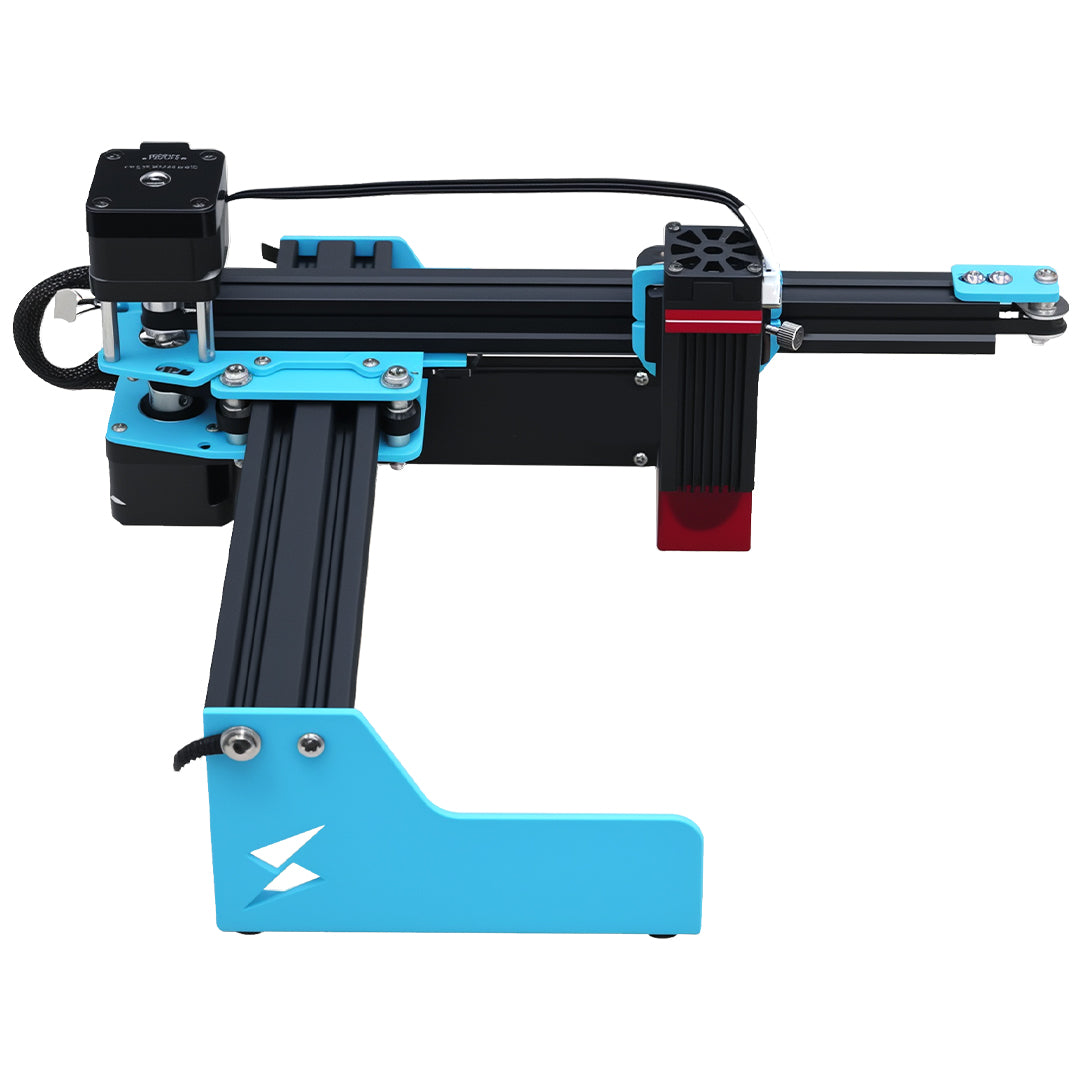
This is the core of the craft. Settings vary based on your laser's power and type (Diode like the Tyvok P2 10W Galvo, CO2 like the Tyvok K1, or a beginner-friendly diode like the A1 Mini). Here’s a general framework.
Step 1: Preparation is Key
- Clean the Surface: Wipe the leather with a slightly damp cloth and let it dry completely to remove any dust or finish that could affect the engraving.
- Masking (Optional but Recommended): Apply a layer of low-tack transfer tape or painter's tape to the engraving area. This prevents smoke residue (a byproduct of the engraving) from staining the surrounding leather, resulting in a much cleaner final piece. You peel it off after engraving.
- Secure Your Work: Use magnets, weights, or a honeycomb bed to keep the leather perfectly flat. Any movement will blur the engraving.
Step 2: Software & Design
Use your laser's software (LightBurn is highly recommended for its control). Your design should be in vector format (SVG, DXF) for crisp lines. Set the mode to ENGRAVE (not cut). For images, use a Grayscale Dithering pattern (like Jarvis or Floyd-Steinberg) to translate shades of gray into dots.
Step 3: Finding the Perfect Settings
Start with these as a baseline and adjust from there. Always run a test grid.
-
For Vegetable-Tanned Leather (on a 10W Optical Power Diode Laser like the Tyvok P2):
- Speed: 150-250 mm/s
- Power: 30-50% (for a dark engrave)
- Passes: 1
- DPI/PPI: 300-500
-
For Vegetable-Tanned Leather (on a 40W+ CO2 Laser like the Tyvok K1):
- Speed: 300-500 mm/s
- Power: 8-12%
- Passes: 1
- DPI: 300-500
The Goal: A deep, dark brown/black engraving without cutting through or excessively charring the edges. Too slow/too powerful will burn and cut. Too fast/too weak will be faint.
Step 4: Post-Processing
Once engraved, remove the masking tape. You may see a light ash residue; gently brush it away with a soft brush or cloth. To seal and protect the engraving, apply a light coat of a leather conditioner (like neatsfoot oil or a dedicated balm). This will darken the natural leather slightly and make the engraved areas pop with even more contrast.
Inspiring Leather Laser Engraving Projects
Ready to create? Here are some beginner-friendly ideas to get you started:
- Personalized Wallets & Cardholders: A laser engraving leather wallet is a classic. Engrave initials, a signature, or a geometric pattern on the front panel before or after assembly.
- Custom Key Fobs & Bag Tags: Simple, small, and incredibly popular. Use a sturdy veg-tan strap and add a name, logo, or fun icon.
- Decorated Journals & Book Covers: Transform a plain leather journal into a cherished heirloom with a quote, family crest, or landscape scene.
- Belts with Flair: Engrave the tail end of a plain belt with a pattern, name, or symbolic design for a unique accessory.
- Pet Tags: Create durable, stylish tags. Engrave the pet's name and your phone number on both sides of a veg-tan circle or bone shape.
- Coasters & Placemats: Layer and stitch or glue engraved leather pieces onto a base for rustic, elegant home decor.
Frequently Asked Questions
Can you laser engrave any type of leather?
No. You must use laser-safe leather. Vegetable-tanned leather is the safest and most reliable. Avoid chrome-tanned leather unless the manufacturer explicitly confirms it is safe for laser engraving, as it can release toxic fumes. Always research and test in a well-ventilated area.
Why is my laser engraving on leather not dark?
The engraving is likely too shallow. This is usually due to the laser speed being too high or the power being too low. Slow down your speed or increase your power slightly in your next test. Also, ensure you are using untreated vegetable-tanned leather for the best natural contrast.
Do I need special ventilation for laser engraving leather?
Yes, absolutely. Engraving leather produces smoke and fumes that should not be inhaled. Even with safe leather, it's a best practice to use your laser engraver's exhaust fan vented to a window or use it in conjunction with a dedicated air filter, like the ones designed for use with Tyvok machines.
How do I prevent a burnt smell or yellowing on the leather?
The burnt smell and yellow halo are caused by smoke residue. The most effective solution is to apply masking tape to the leather surface before engraving. The laser burns through the tape and the residue sticks to it instead of the leather. Peel it off immediately after engraving for a clean result.
Conclusion
Laser engraving leather is an accessible and immensely rewarding craft that blends traditional material with cutting-edge technology. By starting with the right material—vegetable-tanned leather—mastering your settings through methodical testing, and beginning with simple projects, you'll quickly be producing professional-quality personalized items. Remember, the key to success is patience and practice. Whether you're using an entry-level machine like the Tyvok A1 Mini to learn the ropes, a fast galvo like the P2 for high-volume small items, or a large-format CO2 like the K1 for bigger projects, the principles remain the same. Now, grab some leather scraps, fire up your laser, and start creating something timeless.