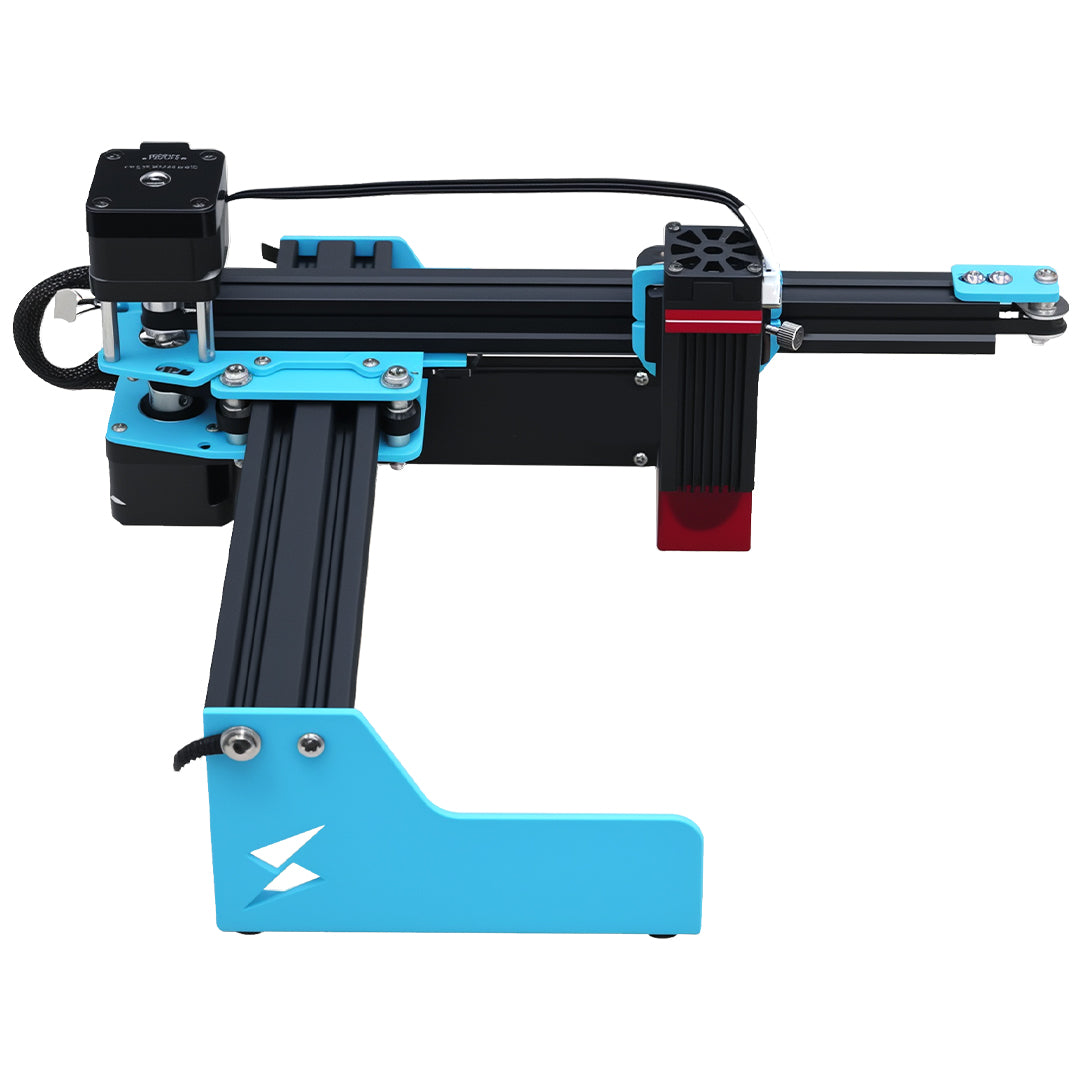


Expanded to 800 × 2000? Recheck the Exhaust Route
After expanding the work area, requalify the user-provided capture and exhaust route; visible smoke absence is not exposure proof.
Start with the decision, not a setting
Beginners and large-format buyers repeatedly treat smoke extraction as a core cost and safety constraint; expansion changes the physical route around the work area.
The useful method here is workspace-owned duct route worksheet recording added length, bends, leaks, discharge location, capture observations, and hold criteria without claiming exposure certification.
Record the comparison that can change the answer
| Route field | Measured value | Observed risk | Hold condition |
|---|---|---|---|
| Added straight length | Enter metres/feet | Pressure loss | Unknown or beyond system design |
| Bends/reducers | Count and angle | Restriction/leak points | Damaged or improvised joints |
| Capture positions | Near, middle, far | Uneven visible capture | Any uncontrolled plume |
| Discharge/makeup air | Location and review | Re-entry or neighbor exposure | Unsafe/uncertain discharge |
Follow the evidence in sequence
- Draw the user-provided route from capture point to discharge.
- Measure added length, bends, reducers, and every joint.
- Check near, middle, and far positions with an approved supervised observation.
- Hold use until a qualified ventilation assessment closes uncertain capture or discharge.
TYVOK X1S 2026 facts for added duct length and bends
The 800 × 2000 expansion changes workspace geometry but does not include exposure certification; see the current TYVOK X1S 2026 configuration.
A visual plume check cannot certify air quality; uncertain capture, recirculation, discharge, or neighbor exposure keeps the expanded workspace on hold.
References for joint leakage check
- Observe large-panel smoke capture zones
- Stop mixed plywood burn-through safely
Buyer questions about added duct length and bends
Does X1S expansion include certified exhaust?
No. X1S expansion does not itself provide or certify enclosure, capture, exhaust, or exposure compliance.
Can filtered air always return indoors?
Do not assume recirculation or indoor return is safe; material emissions and filter performance require a qualified, process-specific assessment.
What does a visual smoke check prove?
Visual smoke absence proves neither contaminant capture nor exposure compliance. It is only one observation.