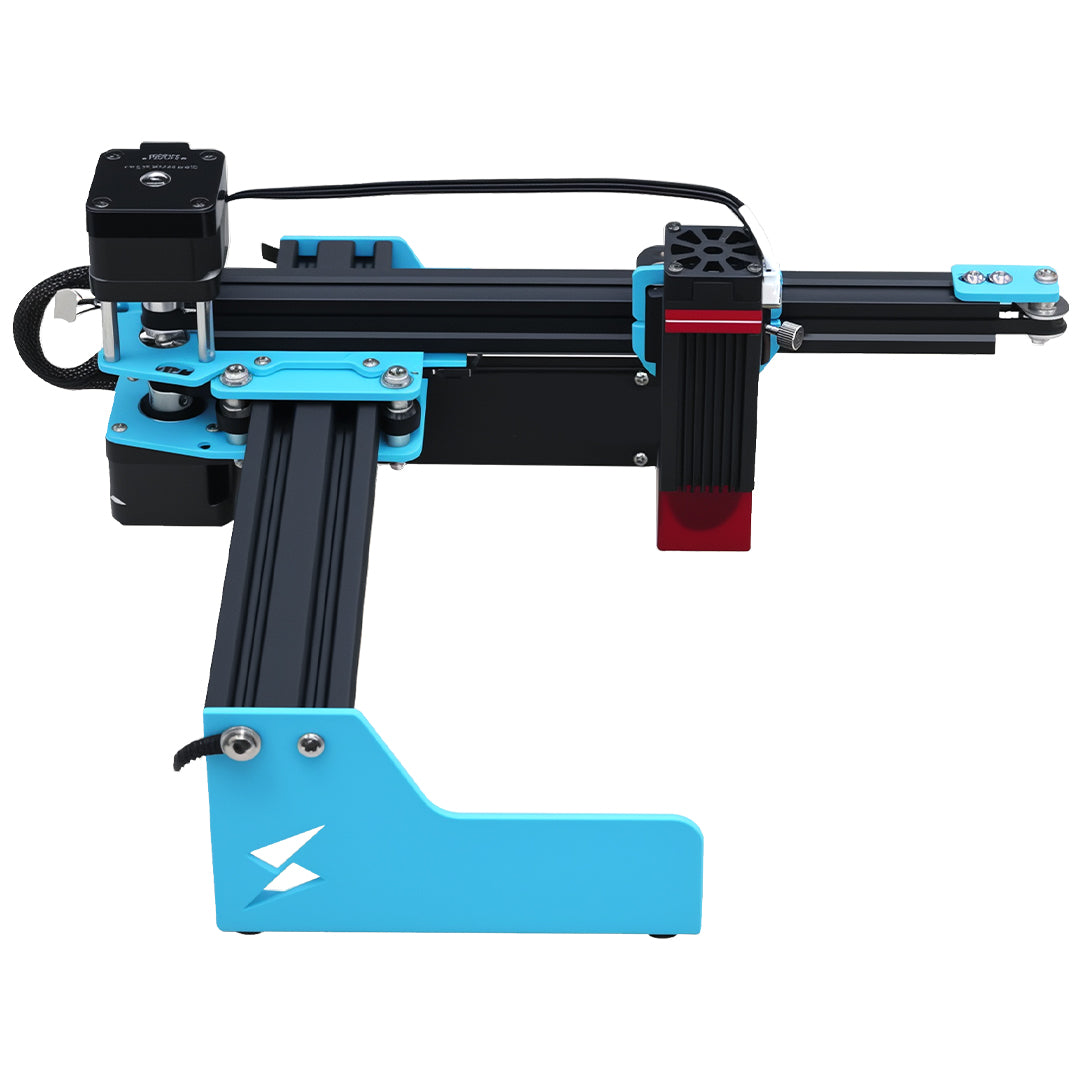


Long boards are one of the clearest reasons to consider a large-format laser engraver. The challenge is not only whether the machine can cover a larger area. The challenge is whether the material stays aligned from setup to finished inspection.
TYVOK X1S and TYVOK X1S Pro are relevant when signs, boards, and panels become part of your product catalog.
Direct Answer
For long-board engraving, build a workflow around material support, reference marks, file origin, test passes, and final inspection. Do not rely on work area alone to make the project repeatable.
Why Long Boards Are Different
A small gift blank can be repositioned quickly. A long board cannot. Long material introduces new variables:
- Board straightness
- Surface variation
- Weight and support
- Long design alignment
- Shipping and handling
- Larger visible mistakes
That is why the workflow must be planned before the first paid order.
Alignment Setup
Use three reference points:
- A fixed origin point
- A long straight reference edge
- A secondary check mark near the far end
This gives you a way to catch drift before the full design runs. For repeat products, mark a shop jig or support surface so the next board starts from the same logic.
Simple Alignment Diagram
Use this mental model before running the file:
| Board area | Reference to check | Failure it prevents |
|---|---|---|
| Near edge | Fixed origin point | Design starts from the wrong corner. |
| Long edge | Straight guide line | Board rotates slightly across the length. |
| Far end | Secondary check mark | Drift is discovered too late. |
| Center area | Test text or small mark | Final contrast is wrong for the board. |
Common Failure Cases
- The board looks straight but has a bowed edge.
- The design is scaled from screen view instead of real size.
- A knot, grain change, or finish variation affects the visible mark.
- The support surface lets the board move during the job.
- The finished sign is too large for normal packaging.
File Preparation
Prepare the file at real size. Do not scale the artwork casually after import. Use named layers for:
- Border or placement guide
- Test mark
- Main engraving
- Optional cut or outline layer
- Notes layer if your software supports it
If the design has text, check readability at the final viewing distance. A board that looks good on screen may feel too dense or too small when mounted.
Test Before Full Production
Before running the complete design:
- Test a small corner or scrap from the same board type.
- Confirm contrast after cleaning.
- Check whether the wood grain changes the result.
- Confirm the board stays stable during movement.
- Review the design from the distance a customer will see it.
Avoid making throughput promises until you have tested your own material and layout.
Product Ideas
Long-board workflows can support:
- Family name signs
- Workshop signs
- Farmhouse wall decor
- Directional signs
- Retail shelf headers
- Event welcome boards
- Menu boards
Each product should have a standard size range. Custom length on every order will slow quoting, setup, and packaging.
Buying Recommendation
Choose TYVOK X1S when long boards and large panels are becoming normal work. Compare TYVOK X1S Pro when the business also needs a more advanced large-format or batch workflow.
Related TYVOK Guides
- TYVOK X1S product page
- Laser Engraver for Large Wood Signs X1S Guide
- X1S 800x2000 Extension Large Format Guide
FAQ
Is work area enough to guarantee a straight long-board design?
No. You still need support, reference edges, file origin control, and test marks.
Should I use a jig for repeat long-board products?
Yes. A simple jig or reference board helps repeat origin, edge alignment, and spacing across orders.
Can I engrave customer-supplied boards?
Only after checking size, flatness, finish, and material safety. Unknown coatings should be rejected or tested first.
What should I do before running the full sign?
Run a small proof area on the same material and inspect contrast, alignment, and cleaning result.
When is X1S Pro worth comparing?
Compare X1S Pro when long-board work becomes part of a larger batch, modular, or advanced production workflow.