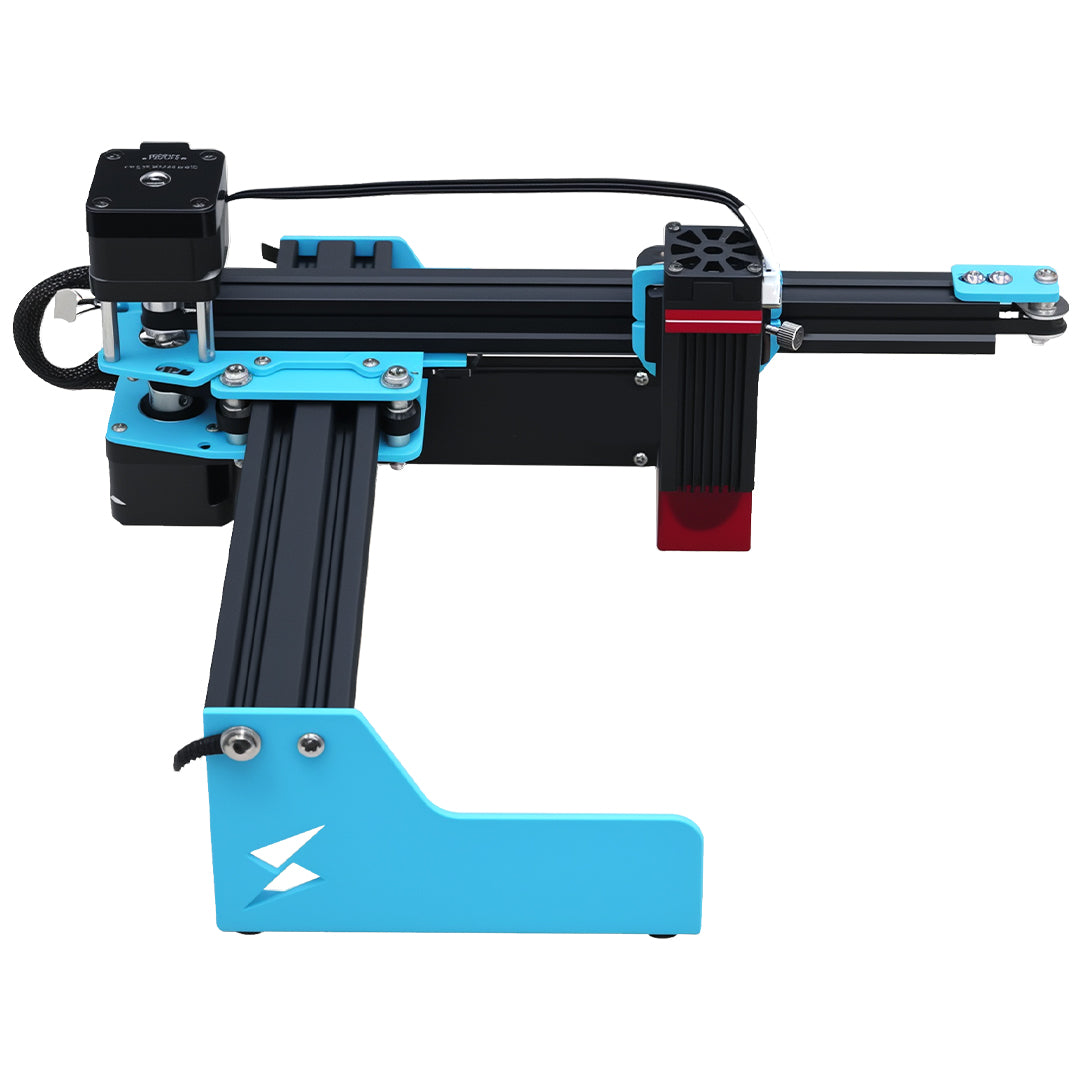


Week-by-week plan for going from unboxing to first paid order.
Why Most First-Time Buyers Fail (And How to Avoid It)
Most people who buy a laser engraver for business start the same way: they unbox the machine, test every material they can find, get excited about 50 product ideas, and then… nothing. No orders. No revenue. Just a expensive machine collecting dust.
The problem is not the machine. It's the approach.
TYVOK P2 is a tool that creates value when it's connected to a specific customer problem and a repeatable production process. This guide is designed to make sure your first 30 days build toward real orders, not just test samples.
Who This Guide Is For
You just bought (or are about to buy) TYVOK P2. You're one of these people: - First-time laser buyer – you want to test whether custom products can become a real side income or full business
-
Maker or crafter – you've been making things by hand and want to add personalization capability
-
Small business owner – you have a store or market presence and want to add in-house customization
-
Side-hustle explorer – you're testing business ideas and need the cheapest way to validate demand
This guide assumes you're starting from zero. No prior laser experience needed.
Your First 30 Days – Week by Week
Week 1: Learn the Machine, Not Selling
Goal: Understand what P2 can and can't do, document your settings.
What to do: - Unbox and set up P2. Follow the quick start guide. Run 3-5 test engravings on scrap materials you have around the house. - Test these materials: cardboard (easy), soft wood (good), leather (different contrast), acrylic (clean). - Create a settings notebook – write down power, speed, and pass count for each material and color combination.
What NOT to do: Don't try to sell anything this week. Don't run 50 tests. Don't panic if the first results aren't perfect.
Example: Tom in Denver spent week one running 12 test grids on different wood types. He documented 4 settings that gave him consistent, clean results. This one week of documentation saved him hours of re-work later.
Key insight: The first week is about learning the machine's language. Every laser behaves slightly differently, and your P2's optimal settings are unique to your unit.
Week 2: Create 5 Sellable Samples
Goal: Build a small catalog of real products you could sell, with professional photos.
What to do: - Choose one material family and one product type. Don't try to be everything at once. - Create 5 finished samples that look like things you'd actually buy as a customer. - Photograph each sample: full product shot, detail close-up, packaged and ready to ship. - Save the original files, settings, and photos together in one folder per product.
Starter product ideas by material:
Material Easy First Product
Leather Personalized keychain (name or initials)
Wood Small ornament or name tag
Acrylic Luggage tag or product label
Coated metal Pet ID tag
Example: Jessica in Raleigh created 5 leather keychain samples in week two – one with just an initial, one with a full name, one with a small logo, one with a date, one with a short phrase. She photographed each and had a ready-to-launch catalog by the end of week 2.
Week 3: Open One Offer
Goal: Create one product listing and get it in front of potential customers.
What to do: - Pick your best sample from week 2. Create one Shopify product page or Etsy listing with real photos. - Write a clear product description: what it is, what personalization is included, what's not included, turnaround time. - Set a price that covers: blank cost + engraving time + labor + packaging + a profit margin. - Share the listing with 5-10 people you know. Ask for honest feedback.
Pricing formula:
(Blank cost × 4–5) + $5 labor + $2 packaging = minimum price
A keychain that costs $3 in blanks and takes 8 minutes to make should retail for at least $25–35.
Week 4: Get Your First Order (And Learn From It)
Goal: Turn interest into revenue and build a feedback loop.
What to do: - If you got an order: run it through a checklist (confirm spelling → prepare file → engrave → inspect → clean → photograph → pack → ship). Then ask the customer for a photo and review if they're willing. - If you didn't get an order yet: share the listing in one more place, ask for feedback on your photos and pricing. Adjust and try again. - Document what slowed you down. This is critical data for scaling.
Key metrics to track:
-
Time from order to ship
-
Which products are fastest to produce
-
Which products get the most interest
-
What questions do customers ask before ordering
What P2 Owners Actually Make – Real Examples
Week 1–2 reality: Most new P2 owners spend the first two weeks learning settings, creating samples, and taking bad photos. This is normal and necessary.
Month 1 reality: Most P2 owners who follow this plan get their first paid order in weeks 3–4. Average order value for first-month customers: $35–75.
Month 3 reality: P2 owners who picked one product family and refined their workflow are doing $500–$1,500/month in revenue. The key differentiator: they stopped adding products and started perfecting their core offer.
Common First-Month Mistakes
Mistake 1: Testing everything at once
Don't try to master leather AND wood AND tumblers AND metal in month one. Pick one. Master it. Then expand.
Mistake 2: No documentation
The people who get frustrated at month 3 are the ones who can't remember what settings they used for their best-selling product at month 1. Document everything from day one.
Mistake 3: No minimum price discipline
If your pricing doesn't cover your time, materials, and a profit margin, you're not running a business – you're running a hobby that costs you money. Start at 4–5x material cost minimum.
Mistake 4: Waiting for perfect
Perfect samples don't generate revenue. Good enough samples with clear photos and honest descriptions do. Launch before you're ready to be ready.
Week 1 Setup Checklist
Before you start engraving, set up your workspace: - [ ] Clear, flat work surface (P2 is about the size of a sheet of paper)
-
[ ] Ventilation: small fan or air purifier directed away from the machine
-
[ ] Cleaning supplies: isopropyl alcohol, soft cloths, compressed air
-
[ ] Recording setup: phone or camera for product photos
-
[ ] Settings notebook: physical or digital, ready to document
First Projects to Test
Start with these low-risk materials to build confidence: - Cardboard – nearly free, forgiving, great for testing positioning
-
Balsa wood – easy to engrave, cheap blanks, good for ornate designs
-
Basswood – slightly harder, still forgiving, popular for crafts
-
Vegetable-tanned leather – light color, clear contrast, high value products
-
Acrylic – clean results, professional look, great for tags and labels
FAQ
How long does it take to learn P2?
Most first-time owners are producing clean, salable samples within 3–5 days of regular use. The learning curve is gentle compared to traditional diode lasers.
What materials should I avoid at first?
Dark or heavily textured leather, untreated brass or copper, and any material you haven't tested. Start with forgiving materials and work toward harder ones as you learn the machine.
Do I need design skills?
Not for most personalization products. Start with simple text (names, initials, dates, short phrases) and standard logo placements. You can offer more complex design services later as you learn.
What's the realistic income potential?
Most P2 owners doing this part-time earn $200–$800/month in their first 3 months. Serious full-time operators who have refined their workflow are earning $2,000–$5,000+/month. The machine is just the starting point – workflow optimization is what drives income.
Ready to Start?
Your first 30 days determine whether P2 becomes a revenue tool or an expensive shelf decoration. Follow this guide week by week, and you'll have real products, real photos, and ideally real orders before month one is over.
View TYVOK P2 and get started →
Start week one on the right foot. Document your settings, create real samples, and keep your eyes on the process – the orders will follow.