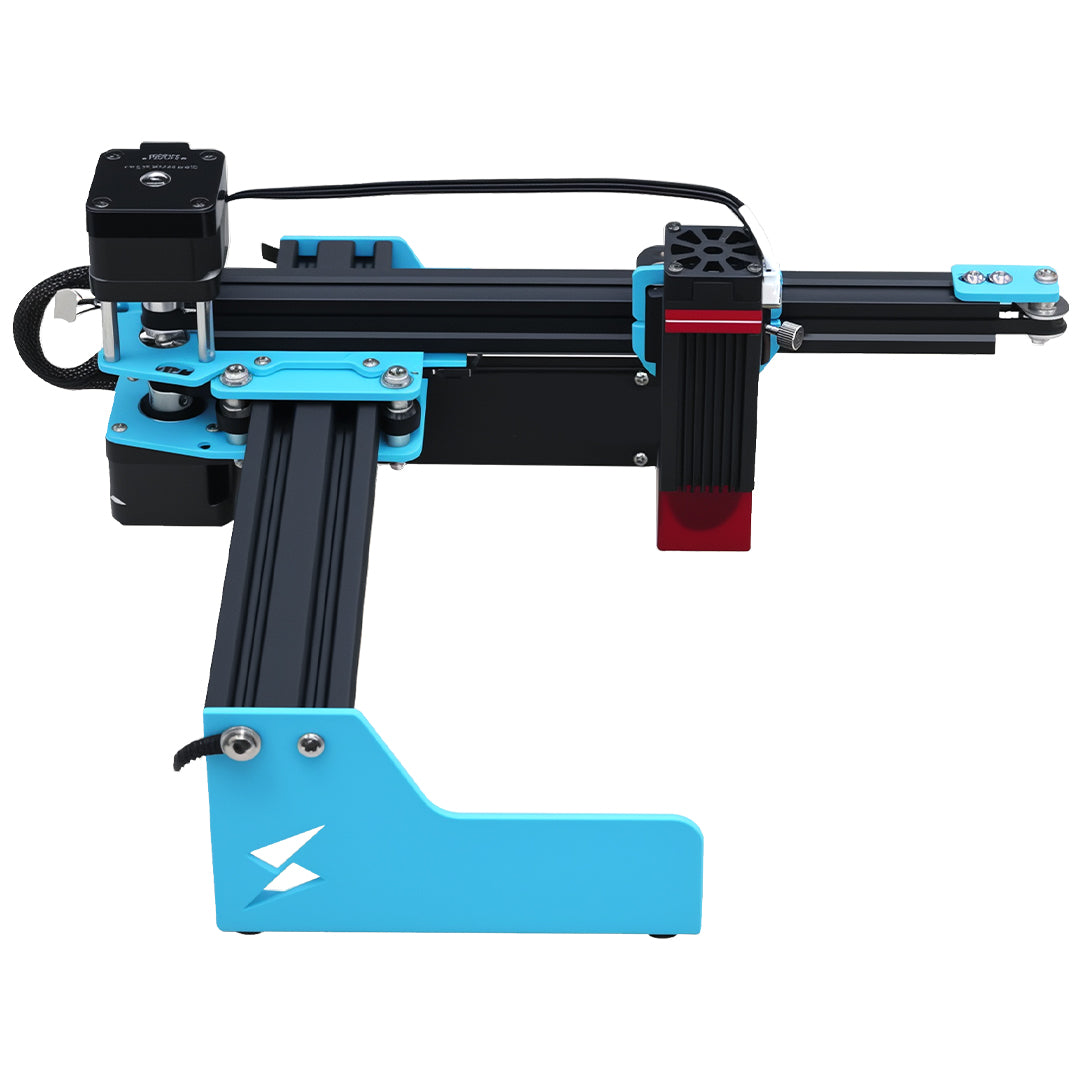


Local assembly makes sense when a dealer already has proven demand and is ready to own technical execution. It is not a shortcut around normal product responsibility. It is a structured transfer of capability: TYVOK provides an approved module scope, procedures, training and test methods, while the local partner completes the agreed assembly, final quality checks, delivery and first-line service.

The direct answer
Choose local assembly only when all four conditions are present:
- The market and expected volume are already proven.
- The local team has technical, quality-control and service capability.
- The assembly environment and test equipment can support a repeatable process.
- Compliance, labeling, importer or manufacturer responsibility and warranty boundaries can be agreed before launch.
If one of these conditions is missing, TYVOK distribution or private label is usually a safer starting point.
What local assembly is
A compact galvo platform can be considered as several functional groups, including the laser module, galvo and control components, stand, power components and supporting hardware. The exact split is not universal. TYVOK and the partner must agree which assemblies arrive completed, which operations happen locally and which final tests release a unit for sale.
A proper local assembly program therefore includes more than a shipment of parts:
- An approved bill of materials and configuration
- Clear assembly instructions and controlled revisions
- Training for the local technical team
- Incoming inspection and traceability rules
- Defined functional and safety-related final checks
- A nonconformance, parts and escalation process
What local assembly is not
Local assembly does not automatically make certification unnecessary. Regulatory treatment depends on the product configuration, the market, the party placing the finished product on the market, labeling and the extent of local work. These responsibilities must be reviewed for the actual country and cooperation structure.
It is also not simply a freight-saving exercise. If rework, inconsistent quality, missing documentation or slow service consumes the expected saving, the local model is weaker than importing a finished product.
Responsibility must be explicit
| Workstream | TYVOK role | Local partner role |
|---|---|---|
| Configuration | Define the approved product and module scope | Build only the approved local configuration |
| Documentation | Provide agreed SOPs, training and test methods | Control local work instructions and revision use |
| Incoming quality | Prepare modules to the agreed supply standard | Inspect receipt, damage, quantity and traceability |
| Assembly | Transfer the approved process | Provide trained staff, tools, fixtures and controlled execution |
| Final quality | Define agreed test criteria and escalation | Complete and record final inspection before release |
| Market delivery | Support the agreed supply and parts path | Manage local stock, delivery and customer handoff |
| Service | Provide the agreed technical escalation path | Own first-line diagnosis, communication and local response |
| Compliance | Provide agreed technical information | Confirm local obligations with qualified specialists |
How to judge whether the economics work
Compare the full operating model, not only module freight versus finished-product freight. Include:
- Module price, freight, duties and local handling
- Assembly labor and supervision
- Fixtures, tools, test equipment and maintenance
- Facility, inventory and traceability cost
- Training, process documentation and revision control
- Yield loss, rework, spare parts and warranty reserve
- Compliance review, labeling and local documentation
- Final delivery and first-line service
The model is attractive when it creates a durable operational advantage: faster local availability, better service response, controlled final configuration or stronger channel positioning. It is not attractive when the only argument is that separate modules appear cheaper on the invoice.
A phased readiness plan
- Prove demand with finished units. Learn customer applications, price expectations and support questions.
- Build local service first. Train the team on setup, diagnosis, parts handling and customer communication.
- Run a process review. Agree the module boundary, facility needs, tools, QA records and responsibilities.
- Complete a controlled pilot. Assemble and test a limited reviewed batch before scaling.
- Audit the result. Compare quality, time, cost, rework and support outcomes against finished-product supply.
- Scale only after the process is stable. Volume should follow process capability, not precede it.
Questions to answer before a local assembly discussion
- Which country or region will receive the finished product?
- Who will be the importer, brand owner and seller of record?
- What monthly or quarterly demand has already been demonstrated?
- Which trained staff, tools, fixtures and test equipment are available?
- How will serial numbers, component batches and test results be recorded?
- Who approves a finished unit and who handles a nonconforming unit?
- What local warranty and parts response will customers receive?
Next step
Send TYVOK a short capability profile covering your market, proven sales, team, facility, QA process, service coverage and intended product configuration. The first discussion should decide whether local assembly is justified now or whether distribution or private label should come first.
Discuss local assembly with the TYVOK Partner Team or compare all three options in the dealer model guide.
Choose a machine for your project
For small personalized gifts and tags, review TYVOK P2 options. For larger wood panels and signs, compare TYVOK X1S 2026 configurations. Test the actual material and project dimensions before buying.