

Choose veneer by its complete construction, not by the attractive wood face. Raw veneer avoids a separate backing layer but still needs material and process confirmation. Paper-backed, fleece-backed and adhesive-backed sheets introduce additional components that must be identified before any laser work.
The xTool home-decor collection, accessed September 9, 2026, includes a marquetry project. When shopping for a small version of that kind of work, similar-looking veneer sheets may have very different backing. Begin with the supplier's construction information rather than choosing from the face photograph alone.
Ask what is behind the visible grain
“Walnut veneer” might describe the visible wood while leaving a paper backing and bonding layer unspecified. Ask for the product code, species, treatment, backing material and adhesive identity. Also ask whether the sheet has a removable protective film and whether a finish has already been applied.
The craft-plywood label discussion explains why a familiar material name is not complete processing documentation. With veneer, the same reasoning applies to hidden layers, but plywood guidance cannot qualify those layers for laser use.
| Veneer option for an A1 Mini project | Information needed |
|---|---|
| Raw wood sheet | Species, treatment, thickness and process eligibility |
| Paper-backed sheet | Wood, paper and bonding-layer identities |
| Fleece-backed sheet | Fiber composition and bonding-layer identities |
| Peel-and-stick sheet | Adhesive and liner construction; no assumed permission |
| Finished decorative offcut | Full original specification, not appearance alone |
Compare two small samples before buying a pack
Imagine making a 50 mm square decorative insert. One supplier offers raw veneer with a declared species and thickness; another offers a flexible backed sheet with no bonding-layer details. The backed sheet may look easier to handle, but that convenience cannot fill the documentation gap. Request the missing information rather than buying a large pack on appearance.
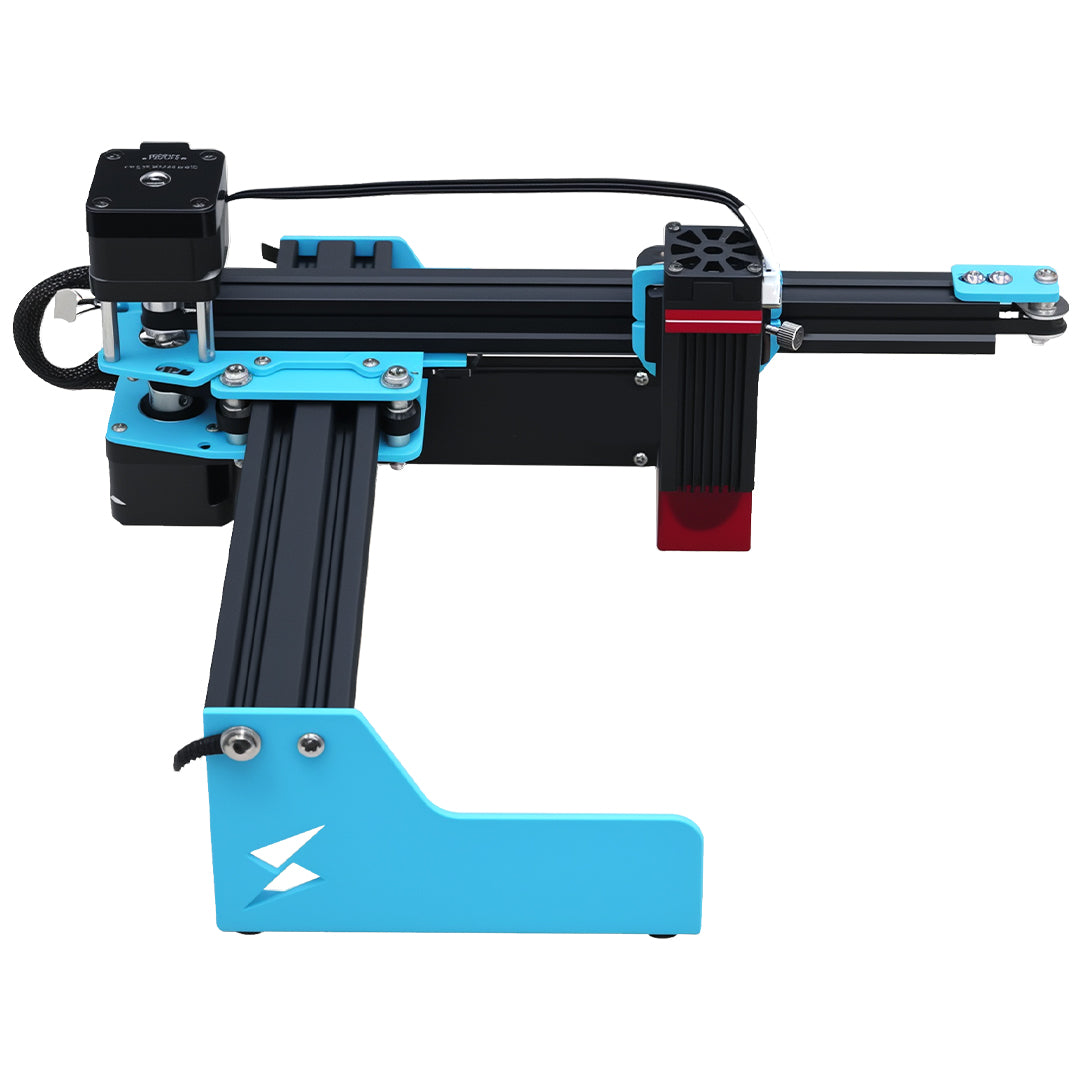
Then confirm the exact construction with TYVOK for the selected A1 Mini configuration and intended process, including the necessary extraction setup. If confirmation is unavailable, use an appropriate non-laser method or choose another fully documented material. Do not peel away an unknown backing and assume the remaining wood is free of adhesive.
After eligibility is established, consider how the insert will be handled and assembled. Raw veneer can require careful support and storage; a backing changes the construction of the finished object. Evaluate flatness, visible face and assembly fit without inventing a universal cutting setting. Any glue used for final assembly is a separate step after laser processing, not permission to reprocess the glued object.
Check compact geometry and appearance
The A1 Mini listing gives a 120 × 130 mm engraving area. Your design, approved workholding and placement margins must fit the actual supported setup. Published area does not guarantee that a curled offcut can be processed acceptably.
Once the material is cleared, preserve show-face orientation for marquetry. Identifying the safe construction answers whether to process; choosing which side will be visible answers how the finished pattern should look.
Is raw veneer automatically the safest choice?
No. “Raw” does not establish species, treatment or compatibility with your machine and extraction. It removes one possible layer from the inquiry, not the inquiry itself. Obtain confirmation for the actual product and intended process.
Can I use a leftover peel-and-stick offcut?
Only if the entire construction is identified and explicitly suitable for that exact process. Unknown adhesive residue remains unknown even when the release liner is removed. For a first small project, missing documentation is a reason to choose a different material or cutting method.