

Thread a small rigid-heddle sample before committing to a full weaving band. Threads through fixed eyes move with the heddle; threads in its slots need room to travel relative to it. The design works only if those two groups create a clear opening for the weft without snagging or excessive tension.
The rigid-heddle project on Atomm offers several thread counts. Those alternatives show that thread count is part of the tool design, not just decoration. A larger design cannot be made suitable for A1 Mini simply by scaling every hole and slot down.
Prove a short section with the intended yarn
Create an original narrow test section containing several alternating slots and eyes. Match the intended yarn and the construction of the planned loom. With all laser processing finished, thread the section and apply modest, controlled tension in an appropriate test arrangement. Move the heddle through its intended positions and watch both groups of threads.
The slot threads should move freely along the usable length; the eye threads should follow the heddle without being pinched. If a strand catches at a slot end, check clearance and edge condition. Do not pull harder to compensate for a rough opening. Keep fingers clear of tensioned parts and use the loom's normal setup instructions.
| What the A1 Mini sample reveals | Design decision |
|---|---|
| Slot threads catch before full movement | Reconsider slot length, shape and surface finish |
| Eye threads bind or abrade | Recheck the eye opening with the actual yarn |
| Adjacent threads crowd each other | Adjust spacing instead of uniformly shrinking the tool |
| Thin webs flex or crack | Choose a more suitable construction before extending the design |
| Clear separation in both positions | Proceed to a small band trial, not an assumed full-width result |
Keep the sample within the real machine limits
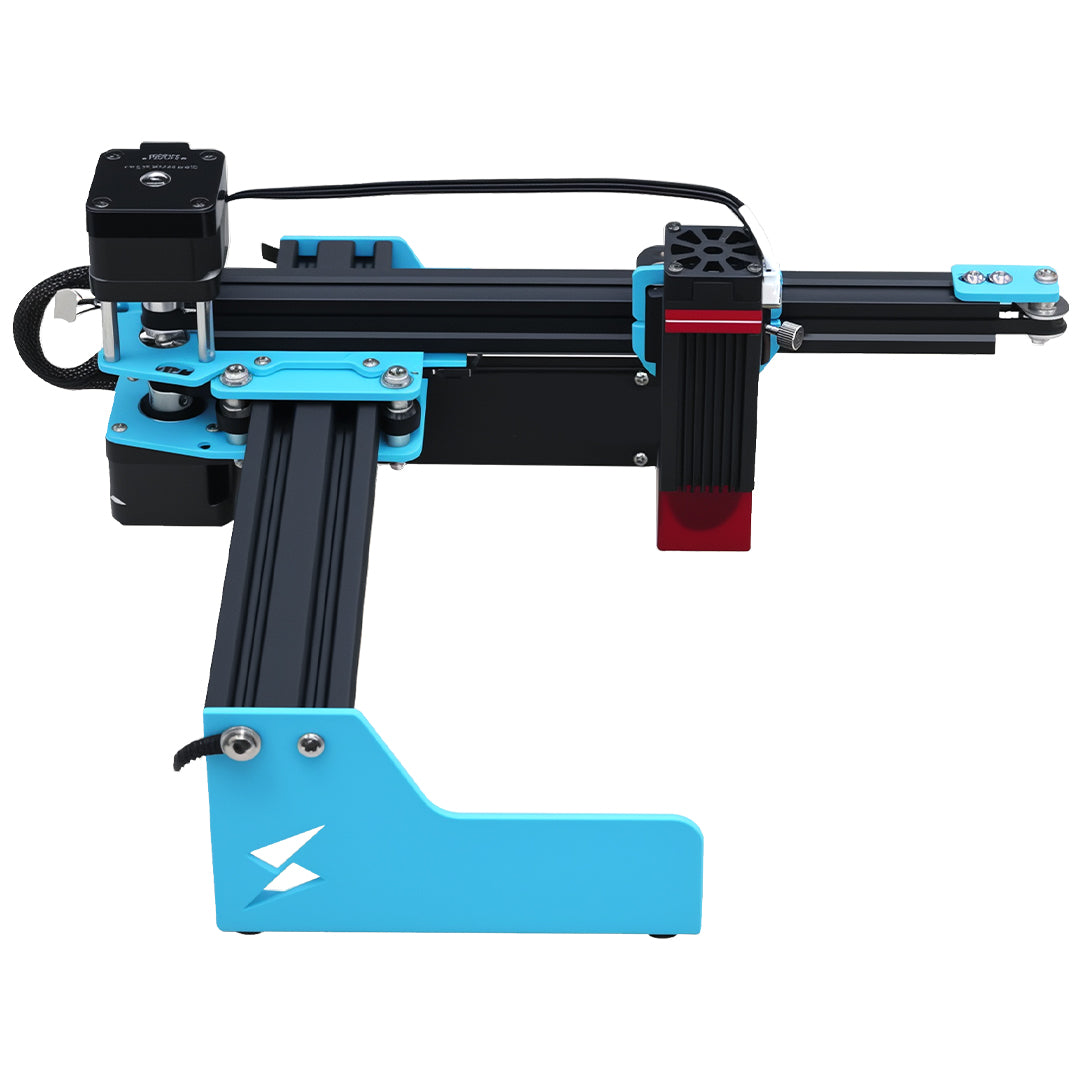
The A1 Mini has a listed 120 × 130 mm working area. The whole sample, margins and supports must fit. Confirm cutting performance on the actual laser-compatible stock and selected head; the available area does not establish that a particular thickness will cut reliably.
Material construction matters in narrow webs. If considering veneer, distinguish raw wood from backed sheets before processing: an unseen backing changes the material question, and a thin sheet may not provide the stiffness needed for a heddle. Use a proven appropriate material rather than choosing only for easy cutting.
After cleanup, run a short weaving trial and inspect the yarn for fuzz or staining. A kumihimo disk intentionally grips strands in edge slots; this heddle needs controlled free movement. Evaluate each tool by what the yarn must do. Use your own design or comply with the specific file's license before making or selling copies.
Can I reduce a 65-thread heddle to fit the A1 Mini?
Uniform scaling also reduces yarn openings and the wood between them. Design a narrower, appropriate thread-count section instead, then test spacing and movement with the actual yarn.
Will smoothing the holes fix a poor shed?
It may address friction, but inadequate slot travel, incorrect threading or unsuitable tension can still prevent separation. Inspect the moving thread groups before deciding which part needs revision.