

A rotated rectangle can show a different selected width without changing the lengths of its sides. Many editors display the horizontal and vertical extent of the rotated object: its axis-aligned bounding box. Check what the dimension fields measure before typing the original width back into them, because that correction can unintentionally rescale the part.

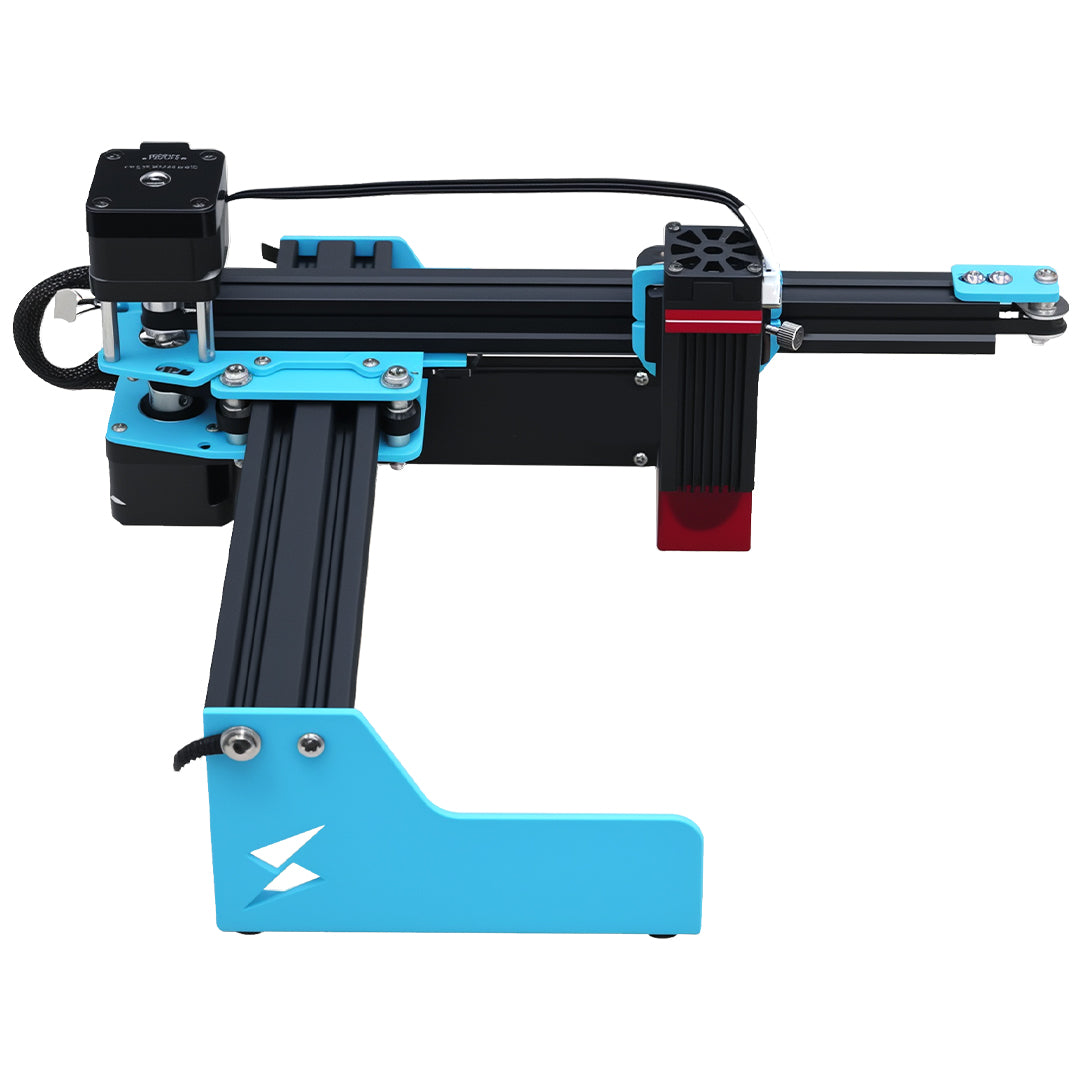
The LaserPecker edit-bar documentation places size and rotation controls in the artwork workflow. The geometry below explains how those quantities can interact. It is a mathematical example, not a measurement of A1 Mini motion or a promise about the labels in its software.
One rectangle, two different measurements
Take an unrotated rectangle whose sides measure 40mm and 20mm. Its horizontal extent is initially 40mm, and its vertical extent is 20mm. Rotate the shape through 45 degrees without resizing it. The side lengths remain 40mm and 20mm, but the enclosing horizontal and vertical spans are each approximately 42.43mm.
For a rectangle with side lengths a and b at angle θ, the axis-aligned spans are:
- Horizontal span = |a cos θ| + |b sin θ|
- Vertical span = |a sin θ| + |b cos θ|
At 45 degrees, both spans in the example equal (40 + 20) ÷ √2. This calculation assumes a simple rectangle and ignores stroke thickness, added effects, and other selected objects. Those can enlarge the reported bounds in an editor.
Test the interpretation without changing the part
Keep an untouched copy, duplicate the rectangle, and compare the rotated and unrotated versions. If the application permits it, inspect a known side length or return the duplicate to zero rotation. An unchanged shape should recover its original unrotated dimensions.
| A1 Mini layout question | Measurement that answers it |
|---|---|
| Will the artwork occupy this much horizontal space? | Rotated horizontal bounding span |
| Is the rectangular part still 40mm long? | Intrinsic long side, or unrotated reference |
| Has an outline enlarged the selection? | Bounds including the stroke or effect |
| Did a resize distort the shape? | Side ratio compared with the original |
| Does the saved file preserve the intended geometry? | Reopened artwork and confirmed processing preview |
If the sides themselves changed or the rectangle became stretched, investigate nonuniform resizing and aspect-ratio recovery. A changed bounding box by itself is not evidence of distortion.
Use the new bounds when planning space
The A1 Mini product listing states a 120 × 130mm working area. A rotated layout occupies its full extents, not just the original short and long side labels. Confirm placement, stock eligibility, and the actual machine setup before processing; nominal working area is not a guarantee of physical clearance.
Once those rotated dimensions are understood, repeated layouts need their own spacing check. Converting array center pitch into an edge gap helps distinguish distance between centers from available space between neighboring bounds. For rotated shapes, a bounding-box gap is a conservative layout measure, not necessarily the shortest distance between the actual angled edges.
Questions about the dimension readout
Should I change the displayed width back to 40mm after rotating?
Not until you know what that field measures. If it describes the rotated bounding span, entering 40mm can resize a rectangle whose 40mm side was already correct.
Why is the bounding box slightly larger than the geometry predicts?
Check stroke width, shadows or effects, extra selected objects, and hidden paths. Compare a plain rectangle without styling in a separate copy before concluding that the machine or file scale is wrong.