

If filled letters show alternating pale and dark bands, preserve the file and compare a small sample before changing power. First establish whether the unwanted pattern is already in the preview or appears only on the material. Those observations lead to different investigations, and neither proves that the laser module has failed.
A recent CO2 engraving discussion describes precisely this symptom even though cutting appeared normal. The author later reported a mirror-retaining problem on that machine. That repair is not a P2 instruction; the useful lesson is to preserve the symptom instead of borrowing the first suggested fix.
Start with one letter, not a full order
Choose a filled letter with a wide solid area from the affected file. Keep its final size and save a copy without changing the original. Examine the output preview at close zoom and at the intended viewing size. If an extra path is already visible, investigate the unexpected fill-preview shape before processing another blank.
For a material comparison, use an expendable sample from one supplier-identified, laser-compatible lot. Confirm the installed head, documented focus procedure, stable placement and supported software controls. Maintain effective extraction, required eye protection and bystander exclusion; remain at the machine with appropriate fire controls available. Stop for flame, persistent smoke, abnormal heat or changed machine behavior.
A comparison sheet for P2 filled text
| Sample | Keep unchanged | Observe or change | What to record |
|---|---|---|---|
| A: baseline | Letter, size, identified material lot | Current documented setup | Band direction and location; photograph after cooling |
| B: setup check | File and processing values | Correct only a documented setup discrepancy, if found | The exact discrepancy and whether bands changed |
| C: one software variable | Accepted setup and material | One supported fill variable within current guidance | Old/new values, units and resulting density |
| D: confirmation | Best accepted configuration | Repeat on another same-lot sample | Whether the apparent improvement repeats |
Do not change interval, speed and power together. If the software exposes none of the relevant fill controls through the supported P2 workflow, retain the comparison evidence for support instead of forcing a different device profile. A cleaner-looking sample after one change establishes an association, not a component diagnosis.
Inspect the same portion of each cooled letter under the same light. Note whether the pale line crosses the entire letter or only one surface feature. The tonal-step proof can help compare a density range after the banding question has been isolated; it should not introduce several variables into this test.
The P2 boundary that matters here
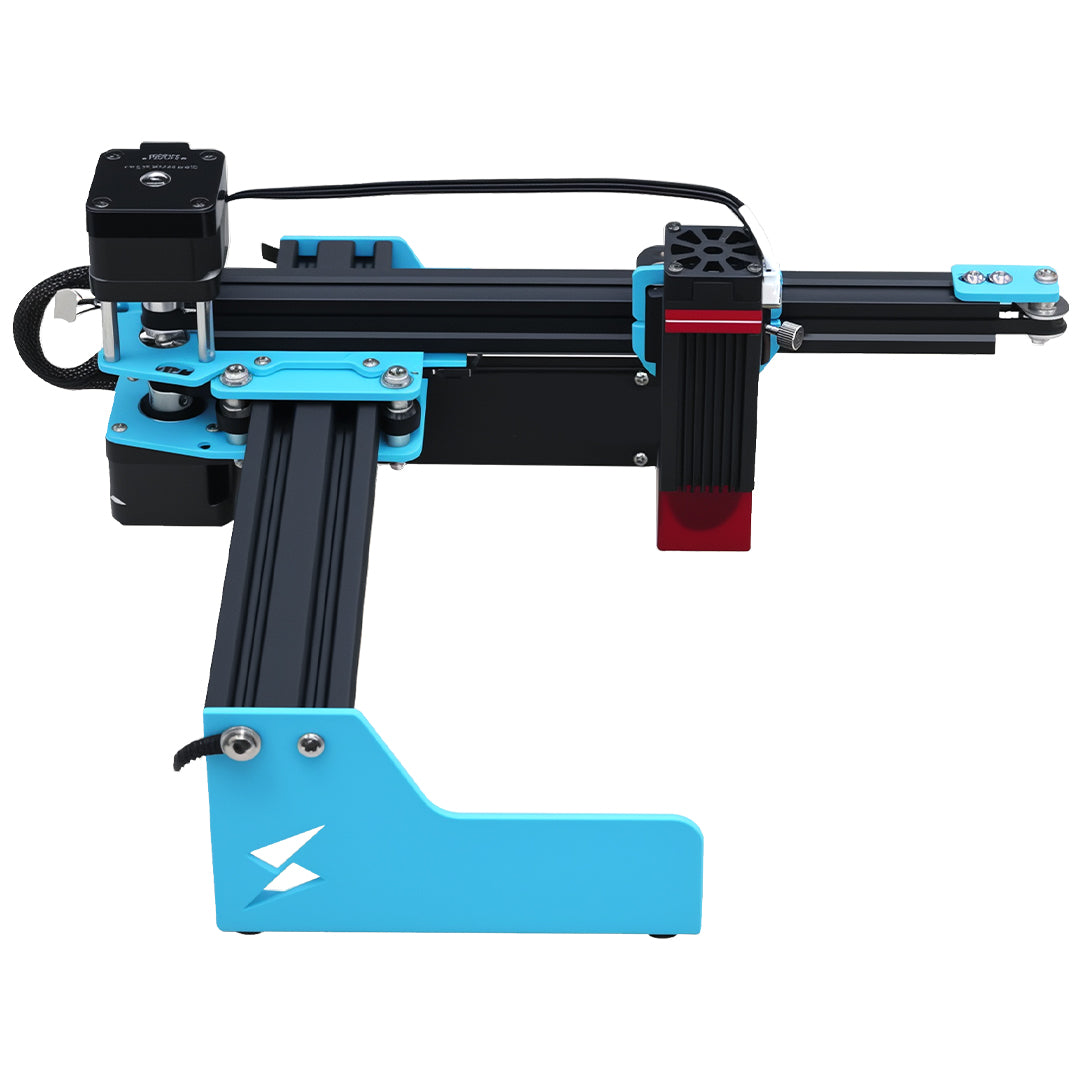
The P2 product listing describes a compact blue-laser galvo. A small filled-letter comparison suits that workflow, but a CO2 mirror procedure or gantry belt adjustment does not follow from it. Retain the module identity with the samples and send persistent unexplained bands to TYVOK support.
Does normal cutting prove the filled-text setup is correct?
No. A cut outline and a filled area use different artwork and processing patterns. Record their results separately rather than treating one as a health certificate for the other.
Should I increase power until the pale bands disappear?
No. Extra energy can obscure the symptom while damaging the surface. Stop if no supported, controlled comparison explains the difference; repeated darkening is not proof of a stable result.