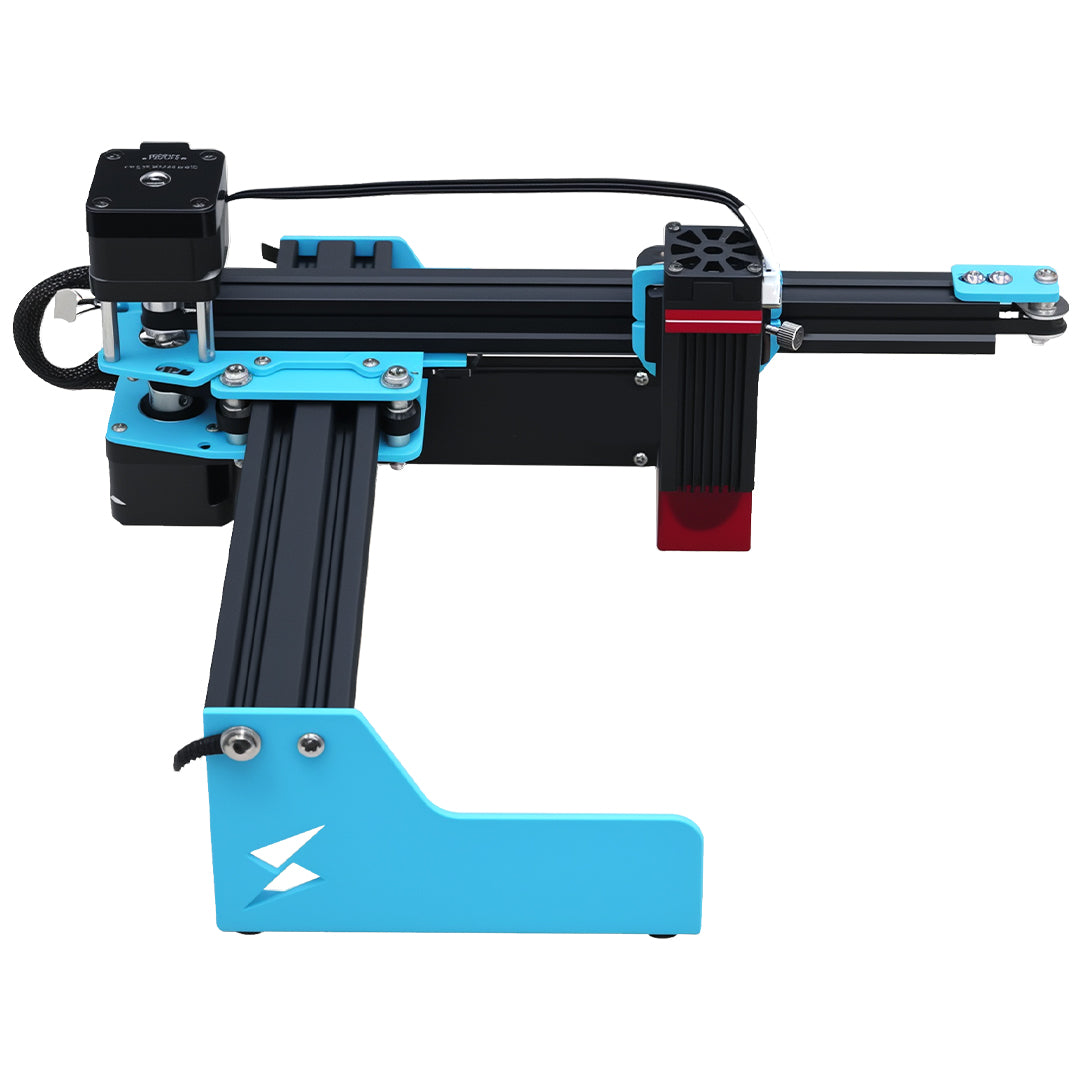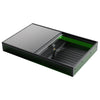


A black metal business card can appear crisp under a bright workbench lamp and dull in a customer's hand. The artwork file is only one part of the result. The card's coating, the mark produced on that exact batch, viewing angle, handling, and the size of the smallest line all affect whether the recipient can read it. For a TYVOK P2 Ultra card order, approve a physical sample in the lighting where the card will be used before producing the full set.

Concept illustration, not a tested metal-card sample. Approve contrast on the production card.
Separate the card stock from the mark
P2 Ultra is listed as a 20W, 1064 nm fiber laser with a 150 × 150 mm marking area. TYVOK identifies metal cards and anodized aluminum among its intended metal-first applications. That says the machine is a candidate for the job; it does not establish that every black card behaves alike. Anodized aluminum, painted steel, coated stainless, and a decorative laminate can give very different contrast and edge quality. Ask the supplier what the blank actually is. Obtain the same finish and lot that will be used for the paid order, and avoid unknown constructions or hidden electronic components.
Make the initial proof as a small matrix on spare stock. Change one variable at a time using the machine's supported settings and the TYVOK material settings guidance as a starting reference, not as a guaranteed recipe. Note whether the process is removing a coating, altering a surface, or producing a different metal tone. A mark that looks pale immediately after processing can change appearance after wiping away residue. Inspect only after the part cools and after a cleaning method approved for the blank. Record the surface and settings with a photo of the physical result.
Judge the design at final size
Business cards invite thin logos, long email addresses, and tiny QR codes. Print or display the layout at its real physical dimensions before the laser proof. Keep important text away from edges, rounded corners, and any hole or chip zone. Do not trust a zoomed screen preview to prove small type is legible. Mark a proof card with the longest name or title and the smallest planned character. If it includes a QR code, test the actual finished card with the phones and scan apps the customer expects; a screenshot scan of the source artwork proves little about the metal mark.
| Proof view | What it reveals | Decision |
|---|---|---|
| Diffuse daylight | Everyday contrast without a spotlight | Text must remain readable |
| Angled indoor light | Glare or tone-on-tone line loss | Revise finish or design if needed |
| Close inspection | Broken small strokes and edge burrs | Rework artwork or settings |
| Normal hand distance | Practical reading experience | Approve only if key details are clear |
The approval photo should include a neutral view and an angled view, but a photograph alone may misrepresent reflective metal. If the order is large or color-critical, send a physical sample. Ask the customer to approve the exact blank, artwork version, orientation, and expected tone. Avoid promising a specific color such as white or bronze without that sample. Similar-looking products from another supplier are not evidence for the current lot.
Prevent layout and handling mistakes in the batch
Create a fixture that locates the card against repeatable edges without scratching the visible face. Test that the red-light positioning preview agrees with the final mark on a sacrificial card. Keep hands, clamps, and reflective objects out of the beam path. The red light is a placement aid, not an inspection of contrast or depth. Maintain effective fume extraction and active supervision throughout marking. Stop if the card shifts, a coating smokes unusually, or the proof differs from the approved finish.
For personalized cards, tie each printed name and contact detail to an order row. Approve the first piece from the production lot and recheck after any fixture adjustment or blank change. Inspect a sample at intervals rather than assuming that the first pass qualifies the entire run. Record rejects separately so a replacement does not inherit the wrong name or card finish. Pack cards only after they are cool, clean, dry, and protected from contact scratches.
When a different process is the better answer
If the customer needs a specific bright ink color, a photo-quality multicolor image, or a coating that cannot be laser-marked safely, a different finishing method may suit the project better. A simple dark logo on an approved metal blank is a different brief from full-color printing. Standard TYVOK P2 uses a blue-diode workflow and should not be treated as interchangeable with P2 Ultra's 1064 nm fiber process for bare-metal work. Compare the actual sample and business requirement before choosing a machine or quoting the job.
Does a black card always produce a white mark? No. The visible tone depends on card construction and tested settings.
Is the highest contrast under a lamp the best option? Only if it remains readable in ordinary lighting and after handling.
Can one approved card qualify a new supplier lot? No. Re-proof the new stock and record the difference.
Buy only after a card sample
If metal cards are a regular order, review the P2 Ultra package and purchase path once the exact card finish and artwork pass a physical proof.