

Keep engraving away from the tip and bevel of a wooden guitar pick. Place the design only after identifying where the player's fingers hold it and where it contacts the strings. Then compare the finished sample with an untouched pick of the same shape and thickness.
Thunder Laser's custom-pick project shows interest in personalized picks. The useful design question is not just whether a name fits: will the decorated object still feel right when played? The contact-area checks here are a practical adaptation for a small wooden blank, not a promise of improved sound or grip.
Mark the grip and string-contact areas on paper
Trace the actual pick onto paper. Ask its intended player to hold the blank naturally, then identify the part projecting beyond the fingers. Keep the full tip and its transition into the body clear of artwork. A generic centered logo can extend farther into this region than it appears to on screen.
Do not impose a universal safe distance from the tip. Players hold picks differently, and a broad rounded pick has different usable space from a narrow pointed one. Work from the chosen blank and grip, leaving room for the design to shift slightly without entering the playing edge.
- Confirm the precut wood and any treatment are suitable for laser processing.
- Draw the complete pick outline at its measured size and place the proposed art inside the grip area.
- Inspect a paper proof while holding the unmarked pick over it.
- Engrave one securely held sample using a tested setup, then inspect and clean it appropriately.
- Compare feel and edge condition with an unmarked pick before making a gift set.
Small text must stay within the allowed area
If the name will only fit by crossing the bevel, shorten the wording or use initials. Consider single-line versus outlined lettering before shrinking it further. The smallest font visible on a monitor may become a rough or indistinct patch on wood.
Avoid deep decoration intended to create extra grip unless you have a separate, successful playing test. A tactile pattern can be uncomfortable, collect residue or change how the pick flexes. A buyer who wants a display keepsake may accept a different design from someone who intends to use it every day; decide which object you are making.
P2 suitability for this small surface
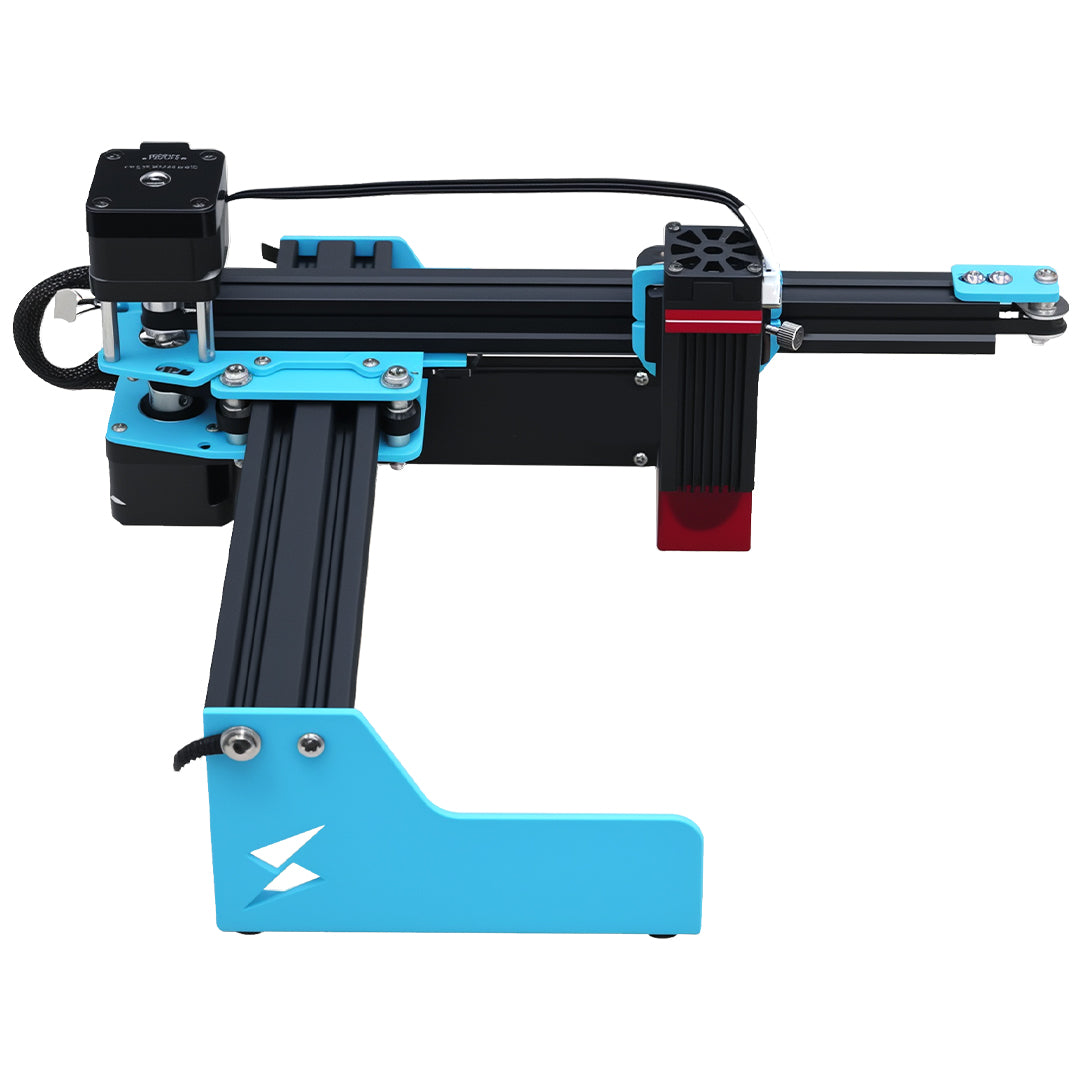
The TYVOK P2 provides a listed 60 × 60 mm marking area using a blue-diode galvo. Check that the entire working face and placement allowance fit. Start with known compatible unfinished wooden picks; exclude celluloid and unidentified plastic picks from this wood workflow. Confirm focus and keep extraction, protection and supervision in place.
Any finish belongs after the engraving and cleanup, with its own supplier instructions and drying time. Repeat the playing comparison after finishing because the final texture, not the bare sample, reaches the player.
Does engraved texture guarantee a less slippery pick?
No. Comfort and grip depend on the person, blank and surface treatment. Let the intended player assess a sample instead of making that claim from appearance.
Can I put a large signature across the pointed end for a display gift?
You can redesign the keepsake as a display object, but do not then represent it as a proven playing pick. Keep functional and decorative expectations explicit.
The same visibility planning helps with names on wooden fountain pens, where the cap can cover an otherwise attractive engraving position.