

If a rounded rectangle changes when you ungroup it, stop at the artwork stage. Save the unchanged source, compare the before-and-after geometry on a copy, and reduce the problem to one shape. Changing laser power, focus, or mechanics cannot repair a contour that has already changed in the editor.
In a June 2026 LightBurn discussion, users reported altered rounded rectangles after ungrouping in particular software versions, and support requested the source project and environment. That report is a reason to check a reproducible editing operation; it does not prove that the installed version on your computer has the same problem.
Freeze four measurements
Consider an illustrative nameplate outline that is 120 mm wide and 45 mm high with rounded corners. Before editing, record its width, height, position, and one close view of a corner. These are example artwork dimensions, not a required product size or a guarantee of finished part tolerance.
Save a separate comparison file. Select the group, ungroup once, and inspect the resulting shape without dragging it. Recheck the same four observations. An unchanged bounding box is not enough: a corner can become square while overall width and height remain identical.
| X1S Pro panel geometry record | Before ungrouping | After ungrouping |
|---|---|---|
| Overall dimensions | Record W and H | Compare numerically |
| Corner contour | Save enlarged view | Compare curvature |
| Object position | Record anchor coordinates | Check for movement |
| Object structure | Note group contents | Count unexpected pieces |
| Output preview | Save reference view | Inspect the actual contour |
Reduce the evidence without losing the fault
Create a second file containing only your own simple rounded rectangle and the smallest group arrangement that reproduces the change. Repeat the same action. If the simplified shape behaves correctly, retain the original privately and investigate whether imported geometry or additional objects are involved.
For a purchased pattern, do not publish the entire licensed design in a support thread. A newly drawn equivalent is often enough to demonstrate the operation. Supply software version, operating system, reproducible steps, and images showing the specific difference. If support needs the licensed file, establish an appropriate private channel and your right to share it.
If the editing session is still open, Undo History can help recover its earlier state. Save the recovered result under a distinct filename and verify the corners again. Do not assume that the next reopen will retain the same history.
Avoid combining repairs while investigating. If the imported outline is also unusually dense, postpone anchor-point simplification until the ungrouping comparison is complete. Otherwise, two simultaneous geometry changes make it harder to identify the cause.
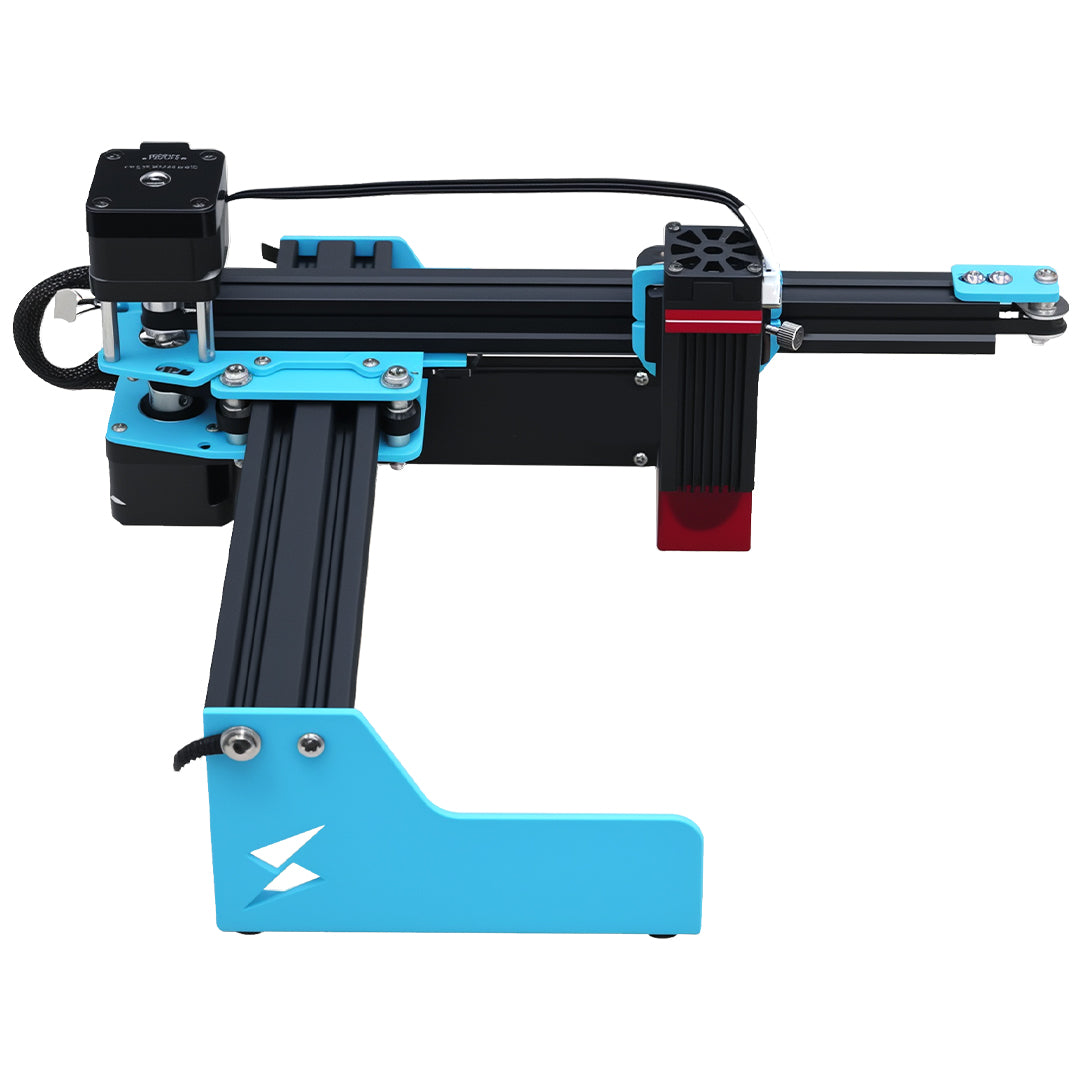
For production preparation, the TYVOK X1S Pro provides a listed large-format diode workflow with LightBurn support. Its workspace size does not validate a modified design. Release the exact accepted contour and supported device setup together, with a reference that the next operator can compare before output.
Can I just redraw the corners and continue the order?
You can rebuild a copy when the dimensions and intended contour are known, but compare every corner and obtain any required design approval. Keep the original evidence so the replacement does not conceal a recurring import or editing problem.
Does this mean my X1S Pro needs calibration?
An on-screen contour change caused by ungrouping is an artwork issue first. Investigate physical calibration only if verified geometry produces a separate measurable output error. Keep those two observations distinct.