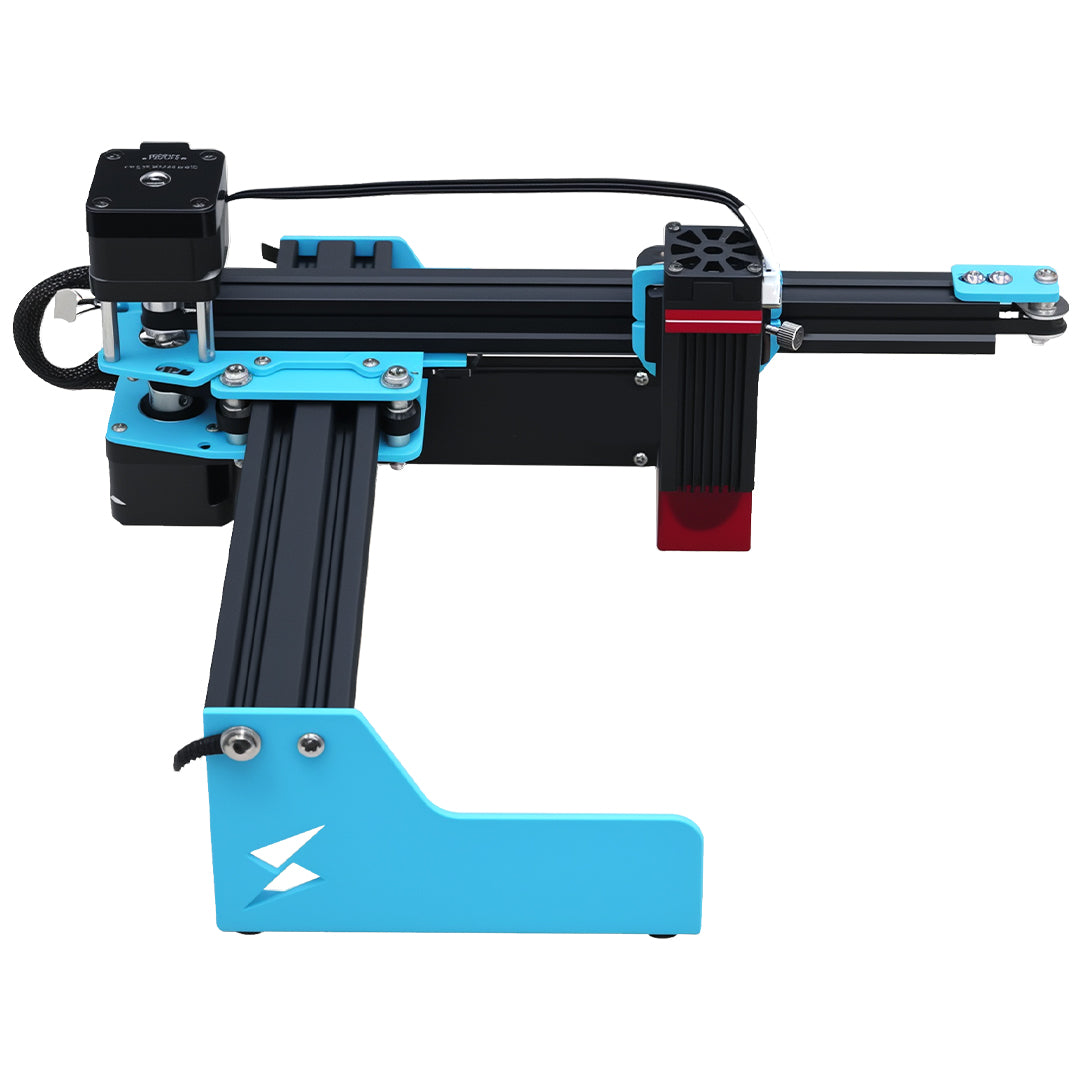


If you're new to laser engraving and you have a small 3.5W or 5W diode laser like the Tyvok A1 Mini, you're probably wondering: what materials can I actually engrave?

It's a great question – the last thing you want is to waste money on materials your laser can't handle. I've put together this complete list of what works and what doesn't work with a small entry-level diode laser.
Let's dive in.
Materials That Work Great With 3.5W / 5W
Here are all the materials that you can easily engrave with a 3.5W or 5W diode laser:
✅ Wood (All Types)
- Softwood (pine, cedar, balsa): Works perfectly in 1-2 passes
- Hardwood (oak, maple, cherry): Works great, may need 2 passes for deep engraving
- Plywood / MDF: Good for cutting thin sheets, engraves very well
- Wood blanks (keychains, coasters): This is one of the most common beginner projects, and it works perfectly
Best settings (example): 3.5W – Power 30-50%, Speed 150-200mm/s
✅ Leather
- Natural leather: Excellent engraving results
- Synthetic leather / faux leather: Works well too
- Great for: Keychains, jewelry, leather patches, wallets
Leather is one of the most popular materials for selling laser engraved products, and 3.5W/5W handles it easily.
✅ Acrylic
- Cast acrylic: Engraves beautifully with a nice frosted effect
- Extruded acrylic: Engraves okay, cast is better
- Thin acrylic (under 3mm): Can be cut with 5W
- Great for: Signs, keychains, display pieces
✅ Anodized Aluminum
- Works amazing: 3.5W easily removes the anodized coating to reveal the aluminum underneath
- Perfect for: Pet tags, nameplates, keychains, metal business cards
This is one of the most surprising things for beginners – a small 3.5W diode laser can really engrave anodized aluminum, and the results look fantastic.
✅ Cardboard / Paper
- Cuts and engraves very easily even at low power
- Great for: Packaging, paper crafts, invitations, stencils
✅ Rubber
- Natural rubber / vulcanized rubber: Engraves well for stamps
- Great for: Custom rubber stamps
✅ Glass
- Engraves nicely: You get a frosted effect that looks great
- Best for: Glass tumblers, beer mugs, wine bottles
- Tip: Use a slow speed and multiple passes for best results
✅ Stone / Slate
- Engraves really well: Creates nice contrast
- Great for: Coasters, memorial plaques, decorative stones
✅ Marble
- Works great for engraving – nice contrast between the engraved and unengraved areas
✅ Cork
- Cuts and engraves easily – very popular for coasters
✅ Coated Metals (painted / powder coated)
- The laser removes the coating to create a nice contrast
- Works similarly to anodized aluminum
Materials That Are Possible But Have Limitations
These materials work, but they have some limitations with 3.5W/5W:
⚠️ Cutting Thick Materials
- You can cut thin materials (under 3mm) with 5W
- For thicker materials (over 5mm), you'll need more power
- 3.5W is really for engraving, not cutting thick stuff
⚠️ Solid Bare Metals (steel, aluminum, etc.)
- 3.5W/5W can do very light marking on bare metal, but it doesn't engrave deeply
- If you want to engrave bare metal, you'll need a higher power or a fiber laser
- Anodized aluminum is fine though (see above)
⚠️ Glass Cutting
- Engraving is fine, cutting glass requires more power
Materials That Don't Work (Or Are Dangerous)
Never engrave these materials with any laser:
❌ PVC (vinyl, some plastics)
- Creates toxic chlorine gas when laser cut/engraved
- Very dangerous for you and bad for your machine
❌ Polycarbonate
- Doesn't engrave well, releases toxic fumes
❌ ABS plastic
- Releases toxic cyanide fumes when cut
❌ HDPE
- Melts and doesn't engrave well, produces bad fumes
If you're not sure what a material is, check with the manufacturer before lasering it.
Tips for the Best Results With Any Material
- Always do a test: Cut/engrave a small corner first to check the power/speed settings before doing the whole piece
- Use masking tape: Tape over your material before engraving to reduce burning and make cleanup easier
- Focus correctly: Make sure your laser is focused properly – this makes a huge difference in engraving quality
- Ventilate: Always have good ventilation when engraving any material – even "safe" materials produce fumes
Frequently Asked Questions
Can a 3.5W laser engrave metal?
Yes! It can easily engrave anodized aluminum, which is what most pet tags and nameplates are made from. It can't engrave deeply into solid bare steel, but that's okay for most beginner projects.
Can a 5W laser cut wood?
Yes, it can cut thin wood (up to 3-4mm) just fine. Thicker wood will require more passes or higher power.
What is the best material for a beginner to start with?
Soft wood blanks are the best – they're cheap, easy to find, and always work great with 3.5W/5W lasers.
Conclusion
As you can see, a 3.5W or 5W diode laser like the Tyvok A1 Mini can engrave a huge variety of materials. You don't need a high-power 50W laser to make great products.
Most common beginner projects – keychains, pet tags, coasters, leather goods, custom gifts – all work perfectly with 3.5W or 5W.
If you're just getting started and don't have your laser yet, check out the Tyvok A1 Mini: it's affordable ($109 for 3.5W) and capable of handling all the materials on this list.
👉 Check out the Tyvok A1 Mini here:
Tyvok A1 Mini Desktop Laser Engraving Machine (3.5W $109 / 5W $149)
👉 Read more beginner guides:
Is 3.5W Enough for Laser Engraving? What Can You Actually Engrave?
Published: March 21, 2026 by Alex Maker
💡 Tip: Looking for the best value galvo laser for metal marking? The Tyvok P2 2W Galvo Laser is our top pick for 2026 — currently 50% OFF at just $149!