

What's the Difference Between a Laser Cutter and a Laser Engraver in 2026?
If you're new to the world of laser machining, you've probably wondered: what's the actual difference between a laser cutter and a laser engraver? Can one machine do both jobs? Do you need separate machines for cutting and engraving?
These are common questions, and the lines between laser cutters and laser engravers have actually blurred quite a bit in recent years. But there are still key differences that affect which machine you should buy for your specific needs.
In this article, we'll break down the real differences between laser cutters vs laser engravers, what each is best at, and help you figure out which type you actually need. We'll also answer the most common question: can a laser engraver also cut materials?
---
What's the Core Difference: Cutting vs Engraving
Let's start with the basics. At their core, laser cutting and laser engraving do two very different things:
Laser Cutting: Cutting All the Way Through
Laser cutting uses a powerful laser beam to cut completely through a material. The laser burns, melts, or vaporizes through the entire thickness of the material, leaving clean edges and creating a specific shape.
What laser cutters do:
- Cut out complete shapes from sheets of material
- Create parts for assemblies
- Cut larger designs like signs, boxes, furniture components
- Cut through thicker materials
Laser Engraving: Removing Surface Material
Laser engraving uses a laser beam to remove material from the surface of an object without cutting all the way through. This creates a permanent mark, design, text, or image on the surface.
What laser engravers do:
- Add text, logos, and designs to existing items
- Create photos on wood, leather, and metal
- Personalize products like keychains, tumblers, and gifts
- Mark tools and parts with serial numbers or branding
So the fundamental difference between a laser cutter and engraver is that cutting goes all the way through, while engraving only removes the surface layer.
---
Key Differences in Power, Speed, and Work Area
Beyond the core functionality, laser cutters and laser engravers are typically built differently for their specific jobs. Here's how they compare:
Power Requirements
Laser Cutters: Generally need more power because they have to cut completely through materials. For example:
- Cutting 1/4" (6mm) wood typically needs at least 40W
- Cutting 1/2" (12mm) wood usually needs 80W or more
- Cutting acrylic or thicker materials requires even more power
Laser Engravers: Usually need less power because they're only removing a thin surface layer. Even a 5W-10W laser can engrave most materials effectively. Higher power can engrave faster, but you don't need it for most engraving work.
Speed Differences
Laser Cutters: Typically cut slower because the laser needs enough time to burn through the entire thickness of the material. Faster speeds can result in incomplete cuts that don't go all the way through.
Laser Engravers: Can engrave much faster because they're only working on the surface. Especially galvo laser engravers can engrave at incredible speeds – 15-24x faster than traditional gantry lasers. The Tyvok P2 is a great example of this – it can blast through an entire sheet of small engravings in minutes.
Work Area Size
Laser Cutters: Usually have larger work areas because they're often cutting larger designs from full sheets of material. It's common to see laser cutters with work areas of 300mm x 500mm, 500mm x 700mm, or even larger.
Laser Engravers: Can have smaller work areas, especially when they're designed for personalized items. Most galvo engravers (which are optimized for speed) work best with 100mm x 100mm to 200mm x 200mm areas – which is perfect for small items like keychains, jewelry, and gifts. Larger format engravers do exist, but they're more expensive.
---
Can a Laser Engraver Also Cut Materials?
This is the question we get asked more than any other: if I buy a laser engraver, can it also cut things?
The short answer is: yes, but with limits.
Most modern laser engravers can cut materials, but there are some important caveats:
What a Laser Engraver Can Cut
With a 10W optical power laser engraver like the Tyvok P2, you can definitely cut:
- Thin wood (up to 1/8" or 3mm)
- Thin acrylic (up to 1/8" or 3mm)
- Leather
- Paper and cardstock
- Thin fabric
- Balsa wood
For small projects like cutting out keychains, earring blanks, or small wooden shapes, a good 10W laser engraver can handle the job perfectly fine.
In fact, the Tyvok P2 – which is primarily a galvo engraving machine – handles these types of small cutting tasks really well. The speed that makes it great at engraving also means it can cut through thin materials quickly.
What a Laser Engraver Can't Cut Well
Where you'll run into limitations:
- Thicker materials: Anything over 3mm-6mm will be difficult or impossible for a 10W engraver to cut through completely
- Large format cutting: Most engravers have smaller work areas, so you can't cut large sheets
-
Very dense materials: Things like thick hardwood or thick acrylic will take too many passes to be practical
So if your main goal is to cut out large signs, boxes, or furniture parts from full sheets of plywood, you'll want a dedicated higher-power laser cutter. But if you just need to cut small parts for your projects, a laser engraver can definitely handle it.
---
Comparing Different Machine Types: Diode, Galvo, CO2
Now let's break down how the different laser technologies compare when it comes to cutting vs engraving:
Diode Lasers
Diode lasers are the most common type in entry-level machines today.
How they work for cutting:
- Diode lasers can do both cutting and engraving
- Entry-level 5W-10W diodes: can cut thin materials (up to ~3mm-6mm depending on the material)
- Higher power 40W+ diodes: can cut thicker materials up to ~10mm
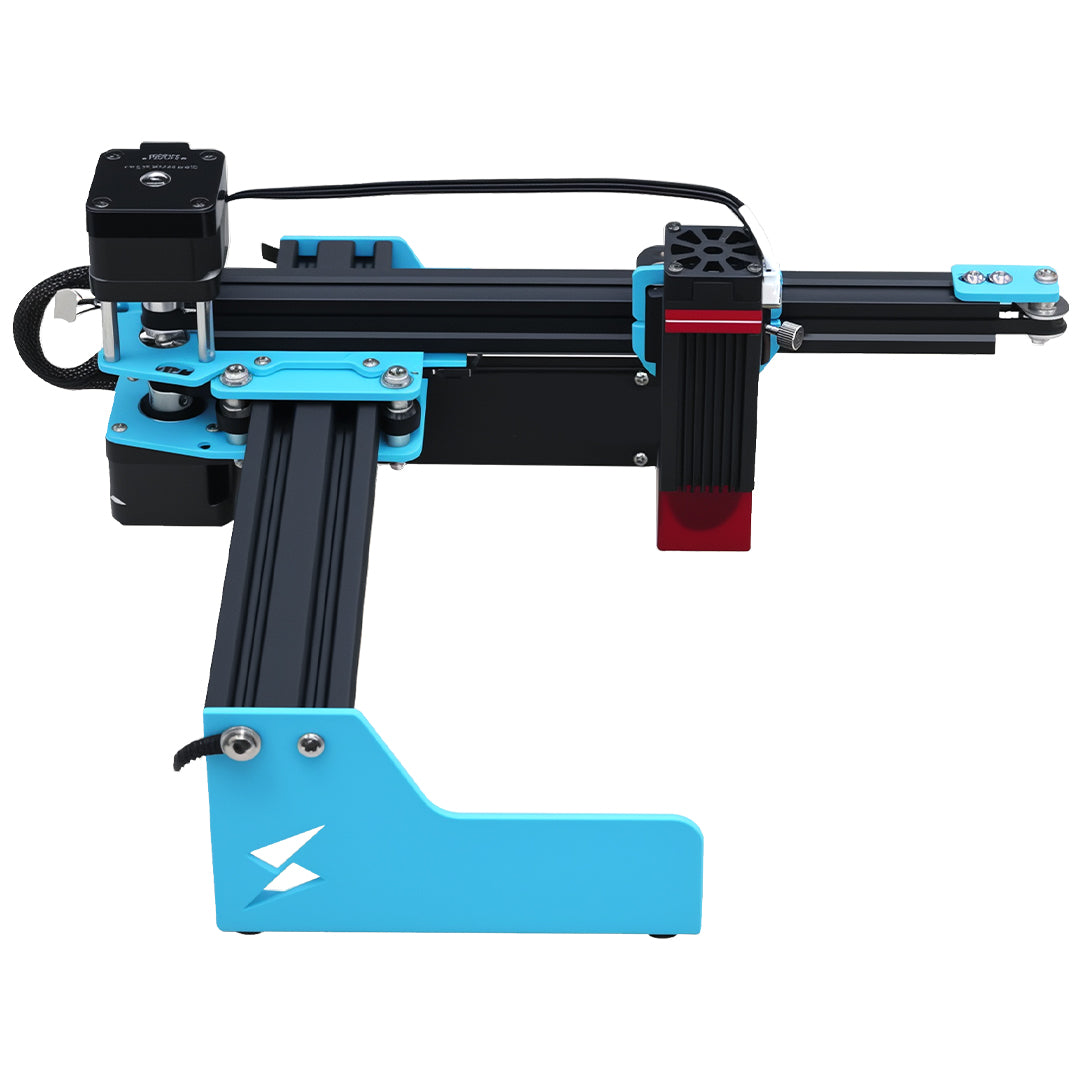
- Typically gantry-style (the laser head moves around on rails)
How they work for engraving:
- Diode lasers can engrave most materials
- Gantry design means they're slower than galvo for engraving
- Good for larger areas but slower for detailed work
Best for: If you need to do a mix of moderate cutting and engraving and you want a larger work area, a higher-power diode laser can be a good middle ground.
Galvo Lasers
Galvo lasers use a completely different system – instead of moving the entire laser head, they use mirrors to steer the laser beam. This makes them much faster.
How they work for cutting:
- Galvo lasers excel at fast engraving, but many can also handle cutting thin materials
- A 10W galvo like the Tyvok P2 can cut thin wood, acrylic, leather, and other materials up to ~3mm thick
- Perfect for cutting out small items like keychains, jewelry, and small parts
- The incredible speed means you can cut multiple small parts faster than a gantry machine
How they work for engraving:
- Galvo lasers are the fastest option for engraving – 10-24x faster than gantry diode lasers
- Amazing for detailed work and photo engraving
- Perfect for small to medium sized items
- The Tyvok P2 is a great example of an affordable galvo that's perfect for starting a laser business
Best for: If your main focus is engraving (especially personalized products, bulk orders, or event work) and you only need to cut small materials, a galvo like the Tyvok P2 gives you amazing speed at a budget price.
CO2 Lasers
CO2 lasers have been around longer and are still popular for cutting.
How they work for cutting:
- CO2 lasers are typically higher power (40W-150W+)
- Excellent for cutting thicker materials like plywood, acrylic, and hardwood
- Can cut through thicker materials faster than diode lasers of the same power rating
- Usually have larger work areas
How they work for engraving:
- CO2 lasers can engrave, but they're usually slower than galvo
- They require more maintenance (tubes need replacement every 1-3 years)
- They're larger and heavier
- Higher power consumption
Best for: If you primarily need to cut thicker materials and larger formats, a CO2 laser cutter is still a solid choice. They're more expensive and bulkier, but they can handle the big cutting jobs.
---
Which One Do You Actually Need?
So how do you decide between a laser cutter and a laser engraver? Ask yourself these questions:
Question 1: What's Your Primary Job?
If you mostly do: Personalization, engraving gifts, bulk orders, event work, photo engraving → Get a laser engraver
A galvo laser engraver like the Tyvok P2 is perfect here. It's fast, affordable, and can handle all your engraving needs and cut small materials when you need to. The low entry price means you can get started without breaking the bank.
If you mostly do: Cutting out large parts, making signs, building furniture, cutting thick materials → Get a dedicated laser cutter
You'll need the extra power and larger work area that a dedicated cutter provides.
Question 2: What's Your Budget?
- Under $500: You can get an excellent 10W galvo engraver like the Tyvok P2 that will handle 90% of small business engraving needs and cut thin materials.
- $1,000-$2,000: You can get a mid-sized diode laser cutter that can handle thicker materials and larger work areas.
-
$2,000+: You can get a full-size CO2 laser cutter or a higher-end galvo with a larger work area.
Question 3: How Much Space Do You Have?
- Small space (desktop): A compact galvo engraver like the Tyvok P2 fits easily on a desk. Even most small diode cutters work on a desktop.
-
Large space (workshop): You can fit a full-size CO2 cutter with a large work area.
Question 4: Do You Need Speed for Bulk Work?
If you're running a business doing bulk orders (like 100 wedding favors or 50 pet tags), speed is money. A galvo engraver can do the same job in a fraction of the time of a gantry cutter/engraver. That means you can take more orders and make more money per day.
---
Final Recommendations for 2026
Here's our straightforward recommendation based on what most people need in 2026:
If You're Just Starting Out or Focusing on Engraving
Get a budget galvo laser engraver like the Tyvok P2 10W. Here's why:
- It's affordable (under $500) so you can get started without huge investment
- It's 15-24x faster than traditional gantry lasers for engraving
- It handles all common engraving jobs: personalization, gifts, bulk orders, photo engraving
- It can also cut thin materials for small projects like keychains and jewelry
- It's compact and portable enough to take to events
- You can always add a larger cutter later if you need it
For most people starting a laser engraving business, this is the perfect sweet spot in 2026.
If You Primarily Need to Cut Thicker Materials
Get a 40W+ CO2 laser cutter or a 20W+ diode laser cutter with a larger work area. You'll get the power and size you need for cutting full sheets of material. You can still do engraving on it, it just won't be as fast as a galvo for detailed work.
If You Need Both Capability and Speed
If you have the budget and you need to do both heavy cutting and high-speed engraving, you can get two machines: a galvo for all your fast engraving work and a cutter for the bigger cutting jobs. But this is only necessary once your business is already growing and you have the volume to justify it.
---
Wrapping Up
To recap the key differences:
- Laser cutters are built to cut all the way through materials, typically have more power and larger work areas
- Laser engravers are built to remove surface material for marking and personalization, and are often faster
- Most laser engravers can cut thin materials – you don't need a separate cutter if you're only working with small projects
- Galvo lasers like the Tyvok P2 offer the best speed for engraving and can handle most small cutting tasks
The lines between laser cutters and laser engravers are more blurred now than ever, but understanding the differences helps you make the right buying decision for your specific needs.
For most people starting out in 2026, especially if you're interested in personalized products and starting a side business, a quality budget galvo engraver gives you the best combination of capability, speed, and affordability.
---
Ready to Learn More?
If you're interested in starting a laser engraving business with an affordable galvo, check out our article: [Can You Make Money with a Budget Galvo Laser Engraver? Real-World Examples 2026](Can-You-Make-Money-with-a-Budget-Galvo-Real-World-Examples-2026.md) for real-world profit examples and business ideas.
You can also read our full review of the [Tyvok P2 10W Galvo Laser Engraver](Is-the-Tyvok-P2-10W-Galvo-the-Best-Affordable-Galvo-Laser-Engraver-in-2026.md) to see why it's our top budget pick for 2026.
Related Reading: How Much Does a Laser Engraver Cost in 2026? Complete Price Breakdown
Related Reading: How Much Does a Galvo Laser Cost in 2026? Why is the Tyvok P2 So Cheap?
Related Reading: Why Tyvok A1 Mini Is The Best Entrylevel Laser Engraver For Beginners In 2026