

Is Laser Engraving Safe? Your Complete Safety Guide 2026
If you're considering getting into laser engraving as a hobby or small business, one question is probably at the top of your mind: is laser engraving safe? It's a great question — and honestly, it's the right question to ask before you invest in a machine and start creating.
Laser engraving has exploded in popularity over the past few years, with more affordable desktop models bringing this powerful technology into home workshops. But with that accessibility comes legitimate concern about what risks might be lurking. Can you really use one of these machines safely in your home? What about fumes? Are the lasers dangerous to your eyes? Could you start a fire?
In this complete guide, we'll break down everything you need to know about laser engraving safety in 2026. We'll cover fume hazards, fire risks, eye protection, and share essential safety tips that every beginner should follow. Our goal is to give you the honest information you need to decide if laser engraving is right for your home — and if it is, how to do it safely.
Understanding the Risks of Laser Engraving
Before we dive into specific hazards, let's start with the big picture. Like any power tool, laser engravers come with risks — but those risks are manageable when you understand them and take proper precautions.
Is home laser engraving generally safe?
Yes, home laser engraving can be completely safe when done correctly. Modern desktop laser engravers come with many built-in safety features that weren't standard even five years ago. When you follow best practices, use common sense, and invest in basic safety equipment, the risk of serious injury or accident is very low.
That said, it's not completely risk-free. A laser is a focused beam of high-energy light that can cut or burn through many materials. If you misuse it or ignore safety protocols, you can absolutely hurt yourself or start a fire. The key is education and preparation.
The good news is that the vast majority of home laser engravers never experience a serious accident. The people who get into trouble are usually those who cut corners on safety, don't understand the risks, or try to modify their machines in unsafe ways.
Common safety misconceptions debunked
Let's clear up some of the most common misconceptions about laser engraving safety:
Myth 1: "Laser engravers are just like 3D printers — you can leave them unattended and forget about them."
This is dangerous thinking. While 3D printers do have their own risks, lasers add fire hazards that 3D printers don't. We'll talk more about this later, but you should never leave a laser engraver running unattended.
Myth 2: "If the laser is Class 4, it's automatically unsafe for home use."
While Class 4 lasers are more powerful than Class 1 or Class 2, that doesn't mean they can't be used safely at home. Power matters, but enclosure and operating practices matter more. Many popular home laser engravers are Class 4, but they're designed with proper enclosures that make them safe when operated correctly.
Myth 3: "The fumes are just an irritation — they don't cause real health problems."
This is wrong. Depending on what you're engraving, the fumes can contain toxic chemicals that cause both short-term and long-term health problems. We'll cover fume safety in depth in the next section.
Myth 4: "You only need eye protection if you're looking directly at the laser."
Even reflected laser light can damage your eyes. That's why proper eye protection and enclosures are so important.
Myth 5: "Lasers can't start a fire if you're only engraving, not cutting."
Engraving still generates heat. If you're working with flammable material and something goes wrong, a fire can still start.
The bottom line? Respect the power of your laser, but don't let fear keep you from enjoying this amazing hobby. The risks are real, but they're manageable.
Fume Safety: Are Laser Engraving Fumes Dangerous?
This is one of the most asked questions about laser engraving safety: are the fumes dangerous? The short answer is that it depends on what material you're engraving or cutting. Some materials are relatively safe when lasered, but others produce extremely toxic fumes that can cause serious health problems.
What materials produce toxic fumes
When you laser engrave or cut a material, you're essentially burning or vaporizing the surface. That process releases particulate matter and volatile organic compounds (VOCs) into the air. Some of these are harmless in small quantities, but others are toxic or even carcinogenic.
Materials that produce toxic or dangerous fumes:
-
PVC (polyvinyl chloride): This is one of the worst offenders. When you laser PVC, it releases chlorine gas and phosgene — both are extremely toxic. Even small exposures can cause severe respiratory problems. Never laser PVC.
-
Vinyl: Similar to PVC, vinyl releases chlorine and other toxic chemicals. Avoid lasering vinyl.
-
ABS plastic: ABS releases styrene, which is a suspected carcinogen and can cause respiratory irritation and nervous system effects.
-
Polycarbonate: Releases bisphenol A (BPA) and other toxic compounds when burned.
-
Treated wood: Pressure-treated wood, stained wood, or painted wood can release heavy metals (like arsenic or chromium) and other toxic chemicals when lasered.
-
Foam: Many types of foam, especially polyurethane foam, release toxic isocyanates when burned.
-
Leather (some treated kinds): Some treated leather can release toxic fumes from the dyes and processing chemicals. Stick to vegetable-tanned leather if you're going to laser it.
-
Any material with glue or adhesive: The glues used in plywood, MDF, and composite materials can release toxic fumes when heated.
Materials that are generally considered safer (still require ventilation):
- Solid hardwood (untreated)
- Bamboo
- Cork
- Cotton
- Wool
- Leather (vegetable-tanned)
- Glass
- Stainless steel
- Anodized aluminum
- Paper and cardboard (in moderation)
Even with these safer materials, you still need proper ventilation. The particulate matter that's created during engraving can irritate your lungs even if the chemicals aren't overtly toxic.
Proper ventilation and fume extraction options
The good news about fume safety is that with proper ventilation and extraction, you can keep the air in your workshop safe. There are several options for fume extraction, ranging from simple to more advanced.
1. Ventilation to the outside
The most effective (and often most affordable) option is to vent the fumes directly outside. You do this by connecting a duct from your laser's exhaust port to a window or wall opening. This is what many hobbyists use, and it works very well for low-to-medium power machines.
The downside is that it's not always practical — if you live in an apartment or don't have a good place to vent outside, this might not be an option. It can also let in cold air in the winter or hot air in the summer.
2. Fume extractors
A fume extractor is a self-contained unit that pulls air from your laser, filters it, and recirculates clean air back into your room. Good fume extractors have multiple layers of filtration, including a HEPA filter and activated carbon to absorb VOCs.
This is the best option if you can't vent outside. They're portable, you can use them anywhere, and they don't affect your room temperature. The downside is that they can be somewhat expensive, and you need to replace the filters periodically.
For most home users, a good-quality hobbyist-level fume extractor is sufficient. You don't need the same kind of industrial extractor that a large shop would use.
3. Combination of both
Many serious hobbyists and small business owners use both: ventilation to outside as the primary method, and a fume extractor as a backup for extra protection.
Best practices for fume safety
Follow these tips to keep your air clean and safe:
-
Always run your extraction/ventilation when the laser is on. Even if you're just doing a small, quick engraving, turn it on. The few extra seconds it takes aren't worth the risk.
-
Know what you're cutting. Never engrave or cut a material if you're not 100% sure what it is and whether it's safe to laser. When in doubt, find out or don't cut it.
-
Replace your filters on schedule. If you're using a fume extractor, don't run it with clogged filters. They won't work properly, and you'll still be breathing bad air.
-
Keep your workspace well-ventilated even with extraction. Open a window if you can. It adds an extra layer of protection.
-
Wear a respirator mask when working with questionable materials. Even with good extraction, a N95 or better respirator adds extra protection.
-
Clean your laser's internal optics and ventilation regularly. Buildup of smoke residue can reduce your laser's effectiveness and can even be a fire hazard in extreme cases.
Fire Safety: Preventing Laser Engraving Fires
Fire is the most serious risk in laser engraving. It's not the most common risk, but a laser fire can destroy your workshop (or worse) if you're not prepared. The good news is that almost all laser fires are preventable if you understand the hazards and follow safety rules.
Common fire hazards in laser engraving
Let's look at what causes most laser engraving fires:
-
Igniting flammable materials in the laser bed. This is the most common cause. Thin materials like paper, cardboard, or thin wood can easily catch fire if the power is too high or the speed is too slow. Even thicker materials can catch fire if the laser gets stuck in one spot.
-
Dirty optics and laser bed. When smoke residue builds up on your mirrors, lens, and inside the laser, it can absorb heat from the laser beam. In extreme cases, this can cause a fire.
-
Poorly adjusted power settings. If you're running way more power than you need for the material you're cutting or engraving, you're generating more heat than necessary. That increases fire risk.
-
Flammable materials near the laser. If you have rags, paper, cardboard, or other flammable items stored close to your laser, a stray spark or heat can ignite them.
-
Thick materials with internal gaps. When cutting thick wood or other materials, the laser can sometimes ignite dust or debris inside the material that you can't see.
-
Left-over debris in the laser bed. If you don't clean out cut pieces and debris from your laser bed regularly, that debris can be ignited by the laser.
Never leave your laser unattended: why it matters
This is the number one rule of laser engraving fire safety, and it bears repeating: never leave your laser engraver running unattended.
We get it — you have things to do. The job is going to take an hour, and you want to go do something else while it runs. But that's how fires start. If something goes wrong and the laser starts a fire while you're not there, by the time you smell smoke or your smoke alarm goes off, it could be too late.
When you're in the room with the laser, you can smell the smoke before it becomes a fire. You can see if something is starting to smolder. You can hit the emergency stop button immediately. It's extremely rare for a fire to start and get out of control in seconds when you're watching.
Some people will say "I've left mine hundreds of times and nothing has happened." That's great — but the one time something does go wrong, you'll wish you were there. It's just not worth the risk.
If you need to leave, pause the job and turn off the laser. When you come back, you can resume. Your project isn't worth risking your house over.
Fire safety equipment every laser owner needs
Even if you do everything right, you should still be prepared in case something does go wrong. Every laser workshop should have these essential pieces of fire safety equipment:
-
A working smoke detector near your workspace. This is non-negotiable. Test it regularly and change the batteries when needed.
-
A Class B fire extinguisher. A regular ABC fire extinguisher is fine (most home extinguishers are ABC). Make sure it's rated for electrical and liquid/grease fires, which Class B covers. Keep it within arm's reach of your laser so you can grab it quickly if you need it.
-
A fire blanket. Fire blankets are great for smothering small fires without making a mess like an extinguisher does. They work especially well if a fire starts in the laser bed. You just open the lid (carefully) and throw the blanket over it to starve the fire of oxygen.
-
A carbon monoxide detector. If you're venting fumes inside with a fume extractor, or if you have any kind of combustion in your workspace, a CO detector is a good idea.
-
An emergency stop button within easy reach. Most modern lasers come with one, but if yours doesn't, consider adding one.
Additional tips for fire safety:
- Clean your laser regularly, including removing debris from the bed and cleaning the optics.
- Keep the area around your laser clean and free of flammable materials.
- Don't put your laser on a flammable table. Use a metal or wood table (wood is fine, just don't have extra clutter under it).
- Make sure your laser's cooling system is working properly if it has one (for diode lasers this isn't usually an issue, but for CO2 lasers it is). Overheating can cause problems.
- If you see smoke or smell something burning that doesn't seem right, stop the job immediately and investigate.
Eye Protection: Do You Need Laser Safety Glasses?
Another common question: do you really need special glasses for laser engraving? The answer depends on your machine setup, but the short answer is that it's better to be safe than sorry.
How laser can damage your eyes
Your eyes are particularly vulnerable to laser light because the lens in your eye focuses the light onto your retina. Even a relatively low-power laser can cause permanent damage to your retina before you even feel anything. Unlike a burn on your skin, retinal damage from lasers is permanent — it can't be fixed with surgery or glasses.
Damage can happen in two ways:
-
Direct exposure: If you look directly into the laser beam, that's the most dangerous. Even a momentary glance can cause permanent damage.
-
Reflected exposure: The beam doesn't have to hit your eye directly from the laser. If it reflects off a shiny surface like metal or glass and into your eye, that can also cause damage. Many eye injuries have happened this way.
The degree of damage depends on the power and wavelength of the laser. High-power lasers can cause immediate damage, but even lower-power desktop lasers can cause damage with prolonged or direct exposure.
Do you need glasses with enclosure?
Most modern desktop laser engravers come completely enclosed. That means the beam is always contained inside the box. If you have a properly enclosed machine with interlocks (that shut off the laser if you open the lid while it's running), do you still need glasses?
It depends who you ask, but our take is: it's still a good idea to have them and wear them when operating the machine. Even with an enclosure, there's always a chance that something could go wrong. A mirror could come loose, the beam could reflect off something unexpected, or the interlocks could fail. It's rare, but why take the risk with your eyesight?
Additionally, when you open the lid to check on your work or remove a finished project, there's always the possibility that the laser could unexpectedly fire (though interlocks should prevent this). Having glasses on adds an extra layer of protection.
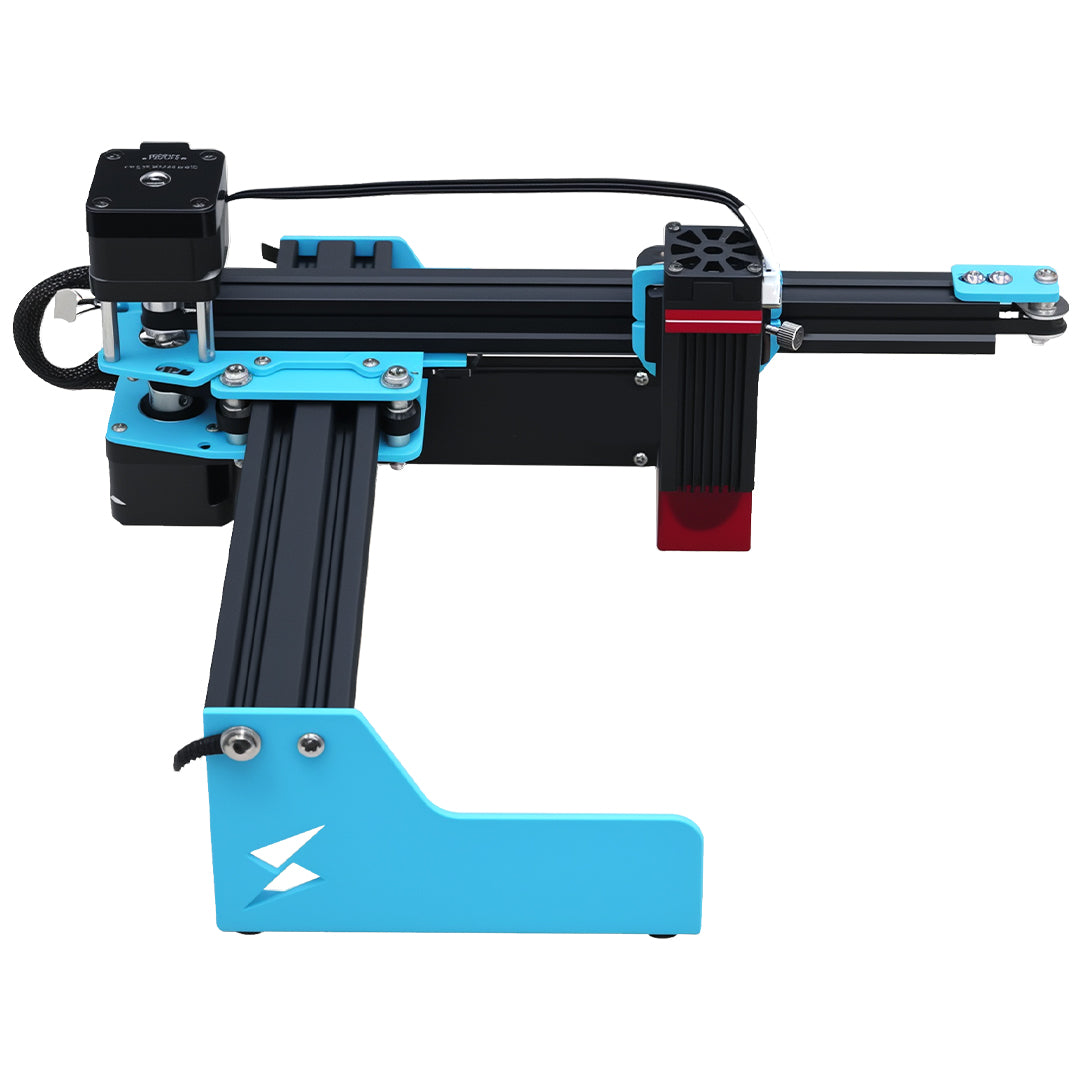
If you have an open-frame laser (the kind without a full enclosure), then you absolutely must wear laser safety glasses every time the laser is on. There's no question about it. Don't even turn it on without them.
How to choose the right laser safety glasses
Not all laser safety glasses are created equal. You need glasses that are specifically designed for the wavelength of your laser. Here's what you need to know:
-
Diode lasers (most common desktop lasers) are usually 450 nm (blue). You need glasses that are rated to block 450 nm light. Look for an optical density (OD) of at least 3+, with 4+ being even better.
-
CO2 lasers are 10,600 nm (infrared). They require different glasses than diode lasers, because the wavelength is completely different. Make sure you get glasses rated for 10,600 nm.
-
Fiber lasers are usually 1064 nm (near infrared). They require glasses rated for that specific wavelength.
The key thing to check is that the glasses are rated for the exact wavelength your laser uses. Glasses that work for one wavelength won't necessarily protect you from another.
Other considerations:
-
Comfort and visibility: You want glasses that are comfortable enough that you'll actually wear them. They shouldn't be too dark — you still need to see what you're doing through the viewing window. For blue diode lasers, the glasses will typically have an orange or red tint that blocks the blue light but still lets you see.
-
OD rating: Optical density (OD) is a measure of how much light the glasses block. Higher OD means more protection. For home use, OD 3+ or OD 4+ is more than enough.
-
ANSI Z136.1 certification: Look for glasses that meet this American National Standards Institute standard for laser safety. It means they've been tested and meet minimum safety requirements.
You don't need to spend a fortune on laser safety glasses. A decent pair for a home machine costs between $50 and $100, which is a small price to pay for protecting your eyesight.
Additional Safety Considerations
We've covered the big three: fumes, fire, and eye protection. But there are a few other safety considerations that every beginner should know about.
Skin protection
People sometimes forget that lasers can burn your skin just like they can burn wood. Even a low-power laser can cause a burn if the beam is focused on your skin for too long. Higher-power lasers can cause serious burns very quickly.
How to protect yourself:
- Never put any part of your body in the path of the laser beam while the laser is on.
- Make sure your machine's interlock system is working — it should shut off the laser if you open the lid while it's running.
- Be careful when removing material or adjusting settings. Always pause or stop the laser before you open the lid.
- If you have an open-frame machine, be extra careful about where you point the beam. Even a momentary touch can cause a burn.
The good news is that skin burns from laser engraving are almost always preventable. Just follow the rules and be aware of where the beam is at all times.
Electrical safety
Laser engravers use electricity, and that means there are some electrical safety considerations to keep in mind:
- Make sure your machine is properly grounded. This helps prevent electric shock and protects against static electricity.
- Don't use damaged power cords or extension cords that are too light for the power draw. If your laser draws a lot of power, use a heavy-duty extension cord that's rated for the amperage.
- Keep liquids away from your laser and its power supply. If you spill water on the electronics, turn off the power at the breaker before you clean it up.
- Don't open the power supply or electronics enclosure while the machine is plugged in. Even when it's turned off, capacitors can hold a dangerous charge. If you need to do maintenance inside, unplug it first and let it discharge for a few minutes.
- If you're modifying your machine or adding aftermarket parts, make sure you know what you're doing. If you're not sure, have an electrician or experienced person check your work.
For the most part, modern laser engravers are designed to be electrically safe when you use them as intended. Just use common sense and don't mess with the high-voltage parts if you don't know what you're doing.
Safety for children and pets
If you have kids or pets in your home, you need to take extra precautions:
- Keep your laser engraver in a room that can be closed off when you're not using it, or use a safety lock to prevent unsupervised use.
- Don't let children operate the laser without adult supervision. Even older kids shouldn't use it when you're not in the room.
- Make sure curious pets can't get into the workspace while the laser is running. A dog or cat knocking into the machine while it's operating could cause an accident.
- Teach everyone in your household the basic safety rules: don't touch the machine when it's running, don't open the lid while it's operating, and tell an adult immediately if something looks wrong.
Essential Safety Checklist for Beginners
Here's a quick checklist you can go through every time you start a laser job to make sure you're following safety best practices:
✅ Before turning on the laser:
- I know what material I'm cutting, and it's safe to laser (no PVC, vinyl, or other toxic materials)
- My ventilation or fume extractor is working and turned on
- The laser bed is clear of debris and scrap material
- The area around the laser is clear of flammable materials
- My fire extinguisher and fire blanket are accessible
- My smoke detector is working
✅ Before starting the job:
- I've double-checked my power and speed settings for the material
- I've made sure the laser is focused correctly
- The enclosure is closed and latched (if enclosed)
- I'm wearing my laser safety glasses
- I'm staying in the room while the job runs — I don't have any plans to leave
✅ After finishing the job:
- Turn off the laser and let the extraction run for a minute or two to clear any remaining fumes
- Unplug the machine if you're not going to use it for a while (optional, but good practice)
- Clean out any debris from the laser bed
- Check for any smoldering material before you leave the workspace
- Close and lock the door if you have kids or pets
Keep this checklist handy when you're starting out. After a while, these steps will become second nature.
Conclusion: How to Engrave Safely at Home
So, going back to the original question: is laser engraving safe? The answer is yes — when you understand the risks, take proper precautions, and follow the rules.
The key takeaways from this guide are:
-
Fumes can be dangerous depending on what you cut, but with proper ventilation and fume extraction, you can keep your air safe. Know which materials to avoid, and never cut unknown materials.
-
Fire is the most serious risk, but it's almost completely preventable. Never leave your laser unattended, keep your machine clean, and always have fire safety equipment nearby.
-
Laser light can cause permanent eye damage. Even with an enclosed machine, wear the proper safety glasses for your laser's wavelength. It's a small investment for permanent protection.
-
Follow basic safety practices for skin protection, electrical safety, and keeping children and pets away from the machine when it's running.
Laser engraving is an amazing hobby that lets you create beautiful, custom projects. It's incredibly rewarding, and thousands of people enjoy it safely at home every day. You don't need to be scared of it — you just need to respect it.
By following the laser engraving safety tips we've covered in this guide, you can minimize your risk and focus on what matters: creating great projects. If you're just starting out, take the time to set up your safety equipment correctly, learn the rules, and always prioritize safety over convenience.
Remember: good safety isn't a restriction — it's what lets you keep enjoying this hobby for years to come.
Got more questions about getting started with laser engraving? Check out our other beginner guides to help you choose the right machine and materials for your projects.
💡 Recommended: The Tyvok P2 2W Galvo Laser is our top pick for metal marking & jewelry engraving. Currently 50% OFF at just $149!