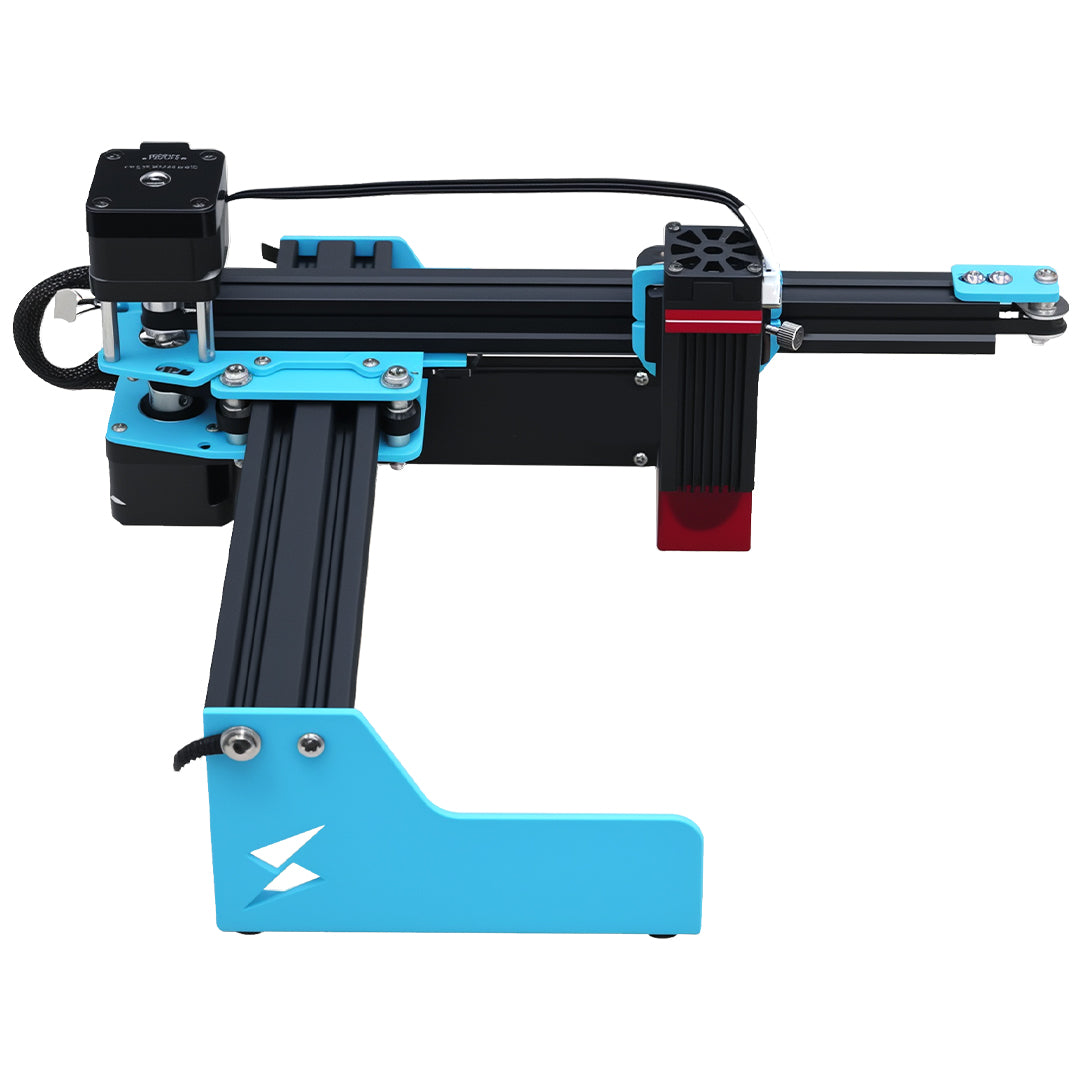


If you've ever wanted to make your own custom rubber stamps – whether for business branding, craft projects, card making, or personal use – you might be wondering if you can do it yourself with a desktop diode laser like the Tyvok A1 Mini or Tyvok P2.

The good news is that yes, you can absolutely make high-quality custom rubber stamps right at home with an entry-level 10W diode laser. In this complete beginner's guide, we'll walk you through everything you need to know, from choosing the right rubber material to getting perfect, sharp stamps every time.
Why Make Your Own Rubber Stamps with a Laser?
There are several great reasons to make your own rubber stamps with a laser engraver instead of ordering them online:
-
Instant results: You can make a custom stamp in under 30 minutes, no waiting days or weeks for shipping
-
Unlimited customization: You can create any design you want – text, logos, graphics, custom sizes
-
Cost effective: After your initial investment in the laser, each stamp only costs you a few dollars in materials
-
Great side business: Many people start a small side business making custom stamps for local businesses and crafters
-
Fun hobby project: It's a satisfying project that gives you a usable, physical result quickly
If you already have a laser engraver, you already have everything you need to start making stamps.
What You Need to Get Started
Let's go over the basic materials and equipment you'll need:
1. Laser Engraver
Minimum requirement: 5W diode laser (we recommend 10W for faster cutting and better results)A 10W diode laser like the one in the Tyvok A1 Mini is perfect for making rubber stamps. It has enough power to cut through the rubber and cleanly engrave the stamp design. For production work where you're making multiple stamps a day, the faster speed of the Tyvok P2 galvo laser can save you a lot of time.
2. Laser-Ready Rubber Stamp Material
Not all rubber is suitable for laser engraving. You need to use laser engraving rubber, which is specifically formulated for this purpose. It's:
-
Designed to cleanly cut and engrave without excessive melting
-
Has the right durometer (hardness) for stamping
-
Doesn't produce toxic fumes when lasered (always ventilate anyway!)
Laser rubber comes in sheets of different thicknesses. The most common thickness for stamp making is 1/4 inch (6.35mm). This is thick enough to give you good depth for the stamp.
You can also get thinner 1/8 inch (3.175mm) sheets for smaller stamps, but 1/4 inch is the most versatile.
3. Mounting Materials
After you cut the stamp shape out of the rubber, you need to mount it to something to make it usable:
-
Wooden block handles: Pre-made wooden handles that you just glue your stamp to
-
Acrylic block mounting: Clear acrylic blocks for repositionable stamps
-
Foam adhesive tape: For attaching the rubber to the handle
-
E6000 or other strong adhesive: For permanent mounting
Most beginners start with pre-made wooden handles because they're simple and ready to go.
4. Basic Tools
You'll also need these common tools:
-
Sharp utility knife or scissors for trimming any stray edges
-
Isopropyl alcohol for cleaning the rubber after lasering
-
Paper towels
-
Safety glasses and a dust mask
-
Ventilation (fume extractor)
Choosing the Right Rubber for Laser Stamp Making
There are a few different types of rubber that work for laser stamp making:
Laser-Specific Natural Rubber
Pros: Best stamping quality, gives crisp ink transfer, long-lasting Cons: More expensive, produces more smoke when cutting Best for: Professional results, high-quality stampsThis is what most professional stamp makers use. The laser cutting is clean, and the ink transfer is excellent.
Laser-Specific Synthetic Rubber (Polymer)
Pros: Cheaper than natural rubber, less smoke, easier to cut Cons: Slightly less crisp ink transfer, may not last as long with heavy use Best for: Beginners, practice, hobby useSynthetic polymer rubber is a good choice when you're just starting out. It's less expensive and easier to work with.
What to Avoid
Avoid these materials for stamp making:
-
Regular craft rubber erasers: They work in a pinch, but they're too soft and don't give clean results
-
Neoprene: Produces toxic fumes when lasered – do NOT use neoprene
-
EVA foam: Too porous, doesn't give a clean stamp edge
-
Ordinary rubber sheeting not designed for lasers: Can melt, produce bad fumes, and give poor results
Always use purpose-made laser engraving rubber. It's worth the small extra cost.
Recommended Settings for Laser Engraving Rubber Stamps
Here are our recommended starting settings for 1/4 inch (6.35mm) laser rubber with a 10W diode laser:
| Process | Speed (mm/s) | Power (%) | Passes | Focus |
|---|---|---|---|---|
| Engraving the stamp design | 300-400 | 60-80 | 1 | Chucked (normal focus) |
| Cutting out the stamp shape | 8-15 | 100 | 2-3 | Chucked |
Important Notes:
- Multiple passes for cutting: You usually need 2-3 passes to cut all the way through 1/4 inch rubber with a 10W diode. Let the rubber cool for a minute between passes to prevent excessive melting.
- Air assist: Use air assist when cutting rubber. It helps keep the cut cleaner and prevents excessive melting.
- Focus: Use normal chucked focus (focus at the surface of the rubber). You don't need any special focus adjustments.
Step-by-Step: How to Make a Laser Engraved Rubber Stamp
Let's walk through the complete process from design to finished stamp:
Step 1: Create or Import Your Design
The first step is getting your stamp design ready. Here are some important design tips:
-
Mirror your design: This is the most common mistake beginners make! You need to reverse (mirror) your design horizontally before engraving. If you don't, your stamp will print backwards.
-
Line weight minimum 0.5mm: Very fine lines can be difficult to clean and may not stamp well. Keep lines at least 0.5mm thick.
-
Avoid very small details: Details smaller than 1mm will be hard to clean and may not stamp clearly.
-
Add a border: Most stamps look better with a clean border around the design.
If you're using design software like LightBurn, you can easily mirror your design in the software before sending it to the laser.
Step 2: Prepare Your Rubber Sheet
Cut a piece of laser rubber that's slightly larger than your stamp design. Peel off any protective backing that's on the rubber (some come with a protective paper covering).
Clean the surface with isopropyl alcohol to remove any manufacturing oils or dust, then let it dry completely.
Step 3: Secure the Rubber to Your Bed
Attach the rubber sheet to your laser bed. We recommend using:
-
Blue painter's tape: Low-tack tape that holds the rubber down but doesn't leave residue
-
Double-sided tape: Works well if you're doing multiple stamps in one sheet
-
Honeycomb bed pins: If your machine has a honeycomb bed, you can use pins around the edges
Make sure the rubber is lying completely flat and doesn't move when you touch it.
Step 4: Set Your Focus
Set the focus at the top surface of the rubber. Double-check this before you start – if you're out of focus, your engraving won't be clean.
Step 5: Engrave the Design First, Then Cut
Always engrave the design first, before cutting out the shape. If you cut the shape first, the piece will be loose and can move during engraving.So your process in the software should be:
1. First operation: Engrave the stamp design (your mirrored image) 2. Second operation: Cut the outline of the stamp shape
This is the correct order – engrave first, cut second.
Step 6: Run the Job
Start the job and let it run. Engraving the design is usually pretty fast, cutting takes longer because you need multiple passes.
Make sure you have good ventilation – cutting rubber produces more smoke and fumes than engraving wood, so your fume extractor should be on.
Step 7: Remove the Cut Piece
When the job is done, turn off the laser and remove your rubber sheet. The stamp piece should pop right out if you cut all the way through. If it's still attached in any spots, just make one more cut pass.
Brush off any debris from the cutting.
Step 8: Clean the Engraving
This is a critical step that many beginners skip. After engraving, there's rubber residue and ash in the engraved areas that you need to clean out before you can use the stamp.
Here's how to clean it properly:
1. Brush the surface with a stiff brush to remove loose residue 2. Rinse the stamp under running warm water while brushing with an old toothbrush 3. Use a little bit of mild dish soap to cut through any oily residue 4. Rinse thoroughly and let it dry completely 5. Check the engraved areas with a magnifying glass – every recess should be clean and open
If you don't clean it properly, the ink will fill the entire surface instead of just the raised parts, and your stamp will be a blurry mess. Take your time with this step – it makes all the difference.
Some people use compressed air to blow out the debris after washing, which works well. Just make sure everything is completely dry before you mount it.
Step 9: Mount the Stamp to the Handle
Once your stamp is clean and dry, it's time to mount it to a handle:
1. If you're using foam adhesive tape: Apply the tape to the back of the rubber stamp, peel off the backing, then press firmly onto the center of the wooden handle. Hold it for 30 seconds to get a good bond.
2. If you're using liquid adhesive: Apply a thin even layer of E6000 or other strong adhesive to the back of the rubber, then press it onto the handle. Wipe off any excess adhesive that squeezes out, then let it dry according to the adhesive instructions (usually 24 hours for full strength).
Step 10: Test Your Stamp
Once the adhesive is dry, you're ready to test your stamp! Ink it up with an ink pad, press it firmly onto paper, and pull it off.
Check that all parts of the design are stamping clearly. If some areas aren't printing, they might still have residual rubber in the engraved grooves – go back and clean those areas again.
Pro Tips for Perfect Stamps Every Time
These tips will help you get better results and avoid common beginner mistakes:
1. Always Mirror Your Design
We mentioned this earlier, but it's worth repeating – always mirror your design horizontally before engraving. If you forget, your stamp will print backwards, and all your work will be wasted. It takes two seconds to check in your software – do it every time.
2. Depth Matters: Don't Engrave Too Deep or Too Shallow
You need enough depth in the engraving so that the ink stays in the recessed areas and doesn't smudge, but you don't want to engrave so deep that you weaken the stamp.
For 1/4 inch rubber, aim for 0.5mm - 1mm depth for the engraving. This is enough depth to prevent ink smearing, and it doesn't cut so deep that it weakens the stamp.
3. Clean It Properly (We Can't Stress This Enough)
The number one reason beginners get bad results is that they don't clean the engraving properly. All that rubber dust and residue has to come out of the grooves. Take the time to wash it thoroughly with a toothbrush. It's only a couple of minutes of work and it makes all the difference.
4. Use a Honeycomb Bed for Cutting
A honeycomb bed helps with air circulation under the rubber when you're cutting, which gives you cleaner cuts through the full thickness. It also helps prevent the bottom of the rubber from melting onto your bed.
If you don't have a honeycomb bed, you can raise the rubber up on slats to create space underneath.
5. For Multiple Stamps, Nest Them
You can fit multiple stamps on one sheet of rubber to save material and time. Just leave about 5mm between each stamp for the cutting.
6. If It's Still Melting Too Much, Slow Down and Do More Passes
If you're getting excessive melting along the cut edges, try reducing your power and adding another pass. This gives the rubber time to cool between passes and results in cleaner cuts.
7. Store Finished Stamps Flat
Store your finished stamps flat in a drawer or on a shelf. Don't leave them where they can get deformed by heavy objects on top.
Common Problems (and How to Fix Them)
Here are the most common issues people run into when making rubber stamps, and how to fix them:
Problem: The stamp prints backwards
Solution: You forgot to mirror the design. It happens to everyone once. Next time, remember to mirror horizontally before engraving.Problem: The stamp is blurry and smudges when I use it
Solution: Your engraving isn't deep enough, or you didn't clean out all the residue from the engraved areas. Increase depth by 0.2mm-0.3mm, and make sure you clean all the grooves thoroughly.Problem: The edges of the cut are melted and sticky
Solution: You're using too much power in one pass. Try cutting at lower power with an extra pass, let it cool between passes, and make sure air assist is on.Problem: Some parts of the design don't print
Solution: You either have residue still in the grooves, or your details are too small. Try cleaning it again, and for next time, don't use details smaller than 1mm.Problem: The stamp falls off the handle
Solution: You didn't use enough adhesive, or you didn't let it cure fully. Next time, use more adhesive and let it dry completely (24 hours for most adhesives). Make sure both the back of the rubber and the handle are clean before gluing.Problem: The cut didn't go all the way through
Solution: Increase the number of passes by one. 1/4 inch rubber usually needs 2-3 passes with a 10W diode. Check after each pass to see if it's through.Project Ideas for Rubber Stamps
Once you get the process down, there are endless projects you can do:
-
Business branding stamps for labeling packaging, envelopes, and bags
-
Address stamps for personal use or clients
-
Date stamps for business and organization
-
Craft and card making stamps for scrapbooking
-
Wedding favor stamps for thank you cards and place cards
-
Custom logo stamps for small businesses and Etsy sellers
-
Holiday and seasonal stamps for gift wrapping and cards
-
Children's craft stamps for kids' activities
Can You Start a Business Making Custom Stamps?
Absolutely! Many people have built successful small businesses making custom rubber stamps with their laser engravers. The markup is good – a custom 2x2 inch stamp that costs you $2-$3 in materials can sell for $20-$30.
If you have the Tyvok P2 galvo laser, you can produce stamps even faster, which makes it easier to handle more orders. The faster engraving and cutting speed means you can complete more jobs in the same amount of time.
The key to a successful stamp business is good marketing (start with local businesses, Etsy, Instagram) and consistently high quality. If you make clean, sharp stamps that last, you'll get repeat business and word-of-mouth referrals.
Final Thoughts
Making custom rubber stamps with a 10W diode laser is actually much easier than most beginners think. As long you follow the right process – engrave first, cut second, mirror your design, and clean it properly – you can get professional-quality results right at home.
It's a great project for beginners because it's relatively quick, gives you a usable finished product, and helps you build confidence using your laser. And if you want to start a small side business,