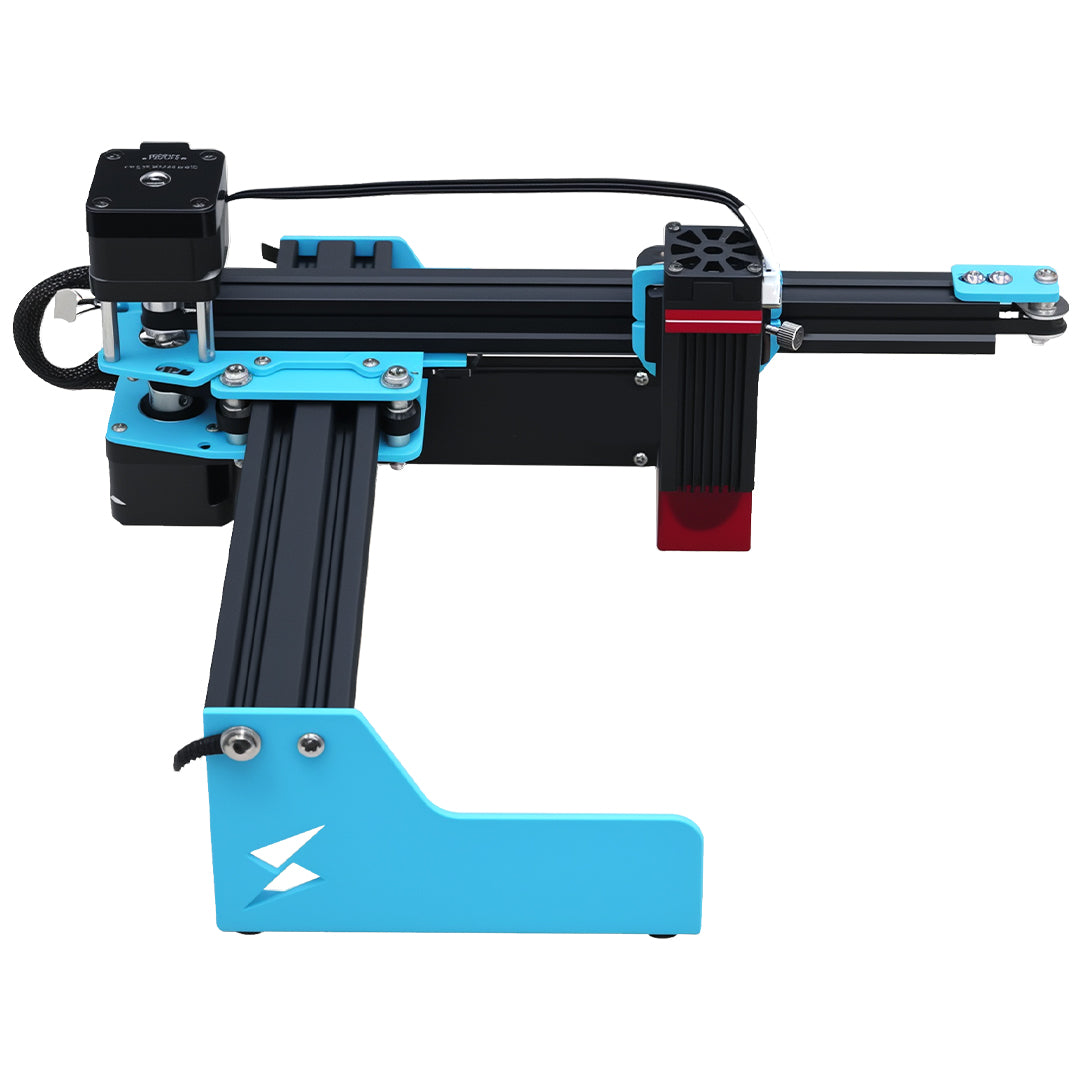


“Can a diode laser engrave stainless steel without marking spray?” is a buying question, not a single settings question. A blue diode can sometimes leave a visible change under particular conditions, but it is risky to promise a repeatable bare-metal result from an arbitrary machine and stainless blank. Coated metal and spray-assisted marking are different jobs from direct marking on bare stainless. TYVOK P2 Ultra uses a 1064 nm fiber source and is marketed for metal-first work, making it the relevant TYVOK machine to sample for direct stainless marking.

Official P2 Ultra image. The comparison below depends on a real sample of your stainless stock.
Name the finish you need
List the customer's acceptance criteria: a decorative dark logo, shallow surface mark, recessed engraving, durable identification, or code that can be scanned after cleaning. These outcomes are not interchangeable. On a painted tumbler, the job might simply remove coating to reveal the base metal. On bare stainless, there is no coating to remove. A marking spray adds a separate material and cleaning step, with its own supplier instructions and finish. Do not compare photos of these processes as if they show the same interaction.
Document grade, surface texture and geometry. A polished sheet can reflect light differently from a brushed bottle; a curved bottle requires a compatible holding or rotary workflow. If you need a regulated durable identifier, ask for its required acceptance method before selecting a machine. A dark, photographable mark is not automatically a verified compliant mark.
Compare the production steps, not only the lasers
The P2 Ultra official page specifies a 20W 1064 nm fiber laser, a 150 × 150 mm marking field, Windows TyvokWorks support and red-light positioning. For bare-metal marking, create a test grid on the exact stainless stock, then inspect after cleaning. With a diode-and-spray route, include coating application, drying, marking, washing and any residue or adhesion check in the timing. With coated stock, include uncertainty about the coating chemistry and thickness. This comparison is especially useful for repeat orders where handling time often dominates the marking pass.
| Job | What to test | Misleading shortcut |
|---|---|---|
| Bare stainless | Contrast, depth, cleaning and repeatability | Assuming a coated-metal photo predicts it |
| Spray-assisted | Application, cure and post-cleaning | Counting only beam time |
| Painted stainless | Coating removal and edge quality | Calling exposed metal a direct bare-metal mark |
| Curved bottle | Focus and full design width | Using a flat coupon as final proof |
Run a fair sample comparison
Use two identical spare blanks from the same lot. Apply the same artwork at the same physical size. Fix the acceptance lighting and handling test before seeing the results. For P2 Ultra, start from the official settings guidance and refine on a sacrificial blank. For a different machine or marking spray, follow its own manufacturer guidance. Record total preparation, processing and cleanup time, accepted contrast and number of rejects.
If both routes meet the finish goal, calculate cost per accepted piece, including consumables and operator labor. If only one passes the durability or readability test, that result matters more than a headline machine price. If neither passes, alter the blank, design or requirement; do not ship a fragile mark merely because it appeared in the preview.
Avoid a false economy in a mixed-material shop
If you already own a diode machine, it may remain useful for wood, coated blanks or other qualified materials while a fiber machine handles direct metal work. Compare the incremental cost of the fiber route with the cost of outsourcing bare-stainless orders and the labor of spray-based processing. Keep a separate sample record for each route so sales staff do not promise a fiber-like result from the existing diode setup. For a one-off decorative piece, outsourcing can be more economical than buying another machine. For recurring tool IDs or stainless plates, predictable direct marking may justify a dedicated station. The right answer follows the accepted order mix, not a single demonstration video.
Buying decision
Choose P2 Ultra when the main order book is small metal products and direct 1064 nm marking is worth qualifying. Its 20W rating does not guarantee a particular color or engraving depth, and its compact field may not fit a large sheet. Choose a different workflow if your business is chiefly wood and acrylic, or if the specific bare-metal sample fails your requirements.
Does “without spray” mean no preparation? No. Cleaning, focus, fixturing and test pieces remain necessary.
Can a coated-tumbler result stand in for bare stainless? No. Those are different surfaces.
What proves the right purchase? A same-blank sample compared on finish, accepted output and total handling time. Review current P2 Ultra specifications and purchase options before ordering.