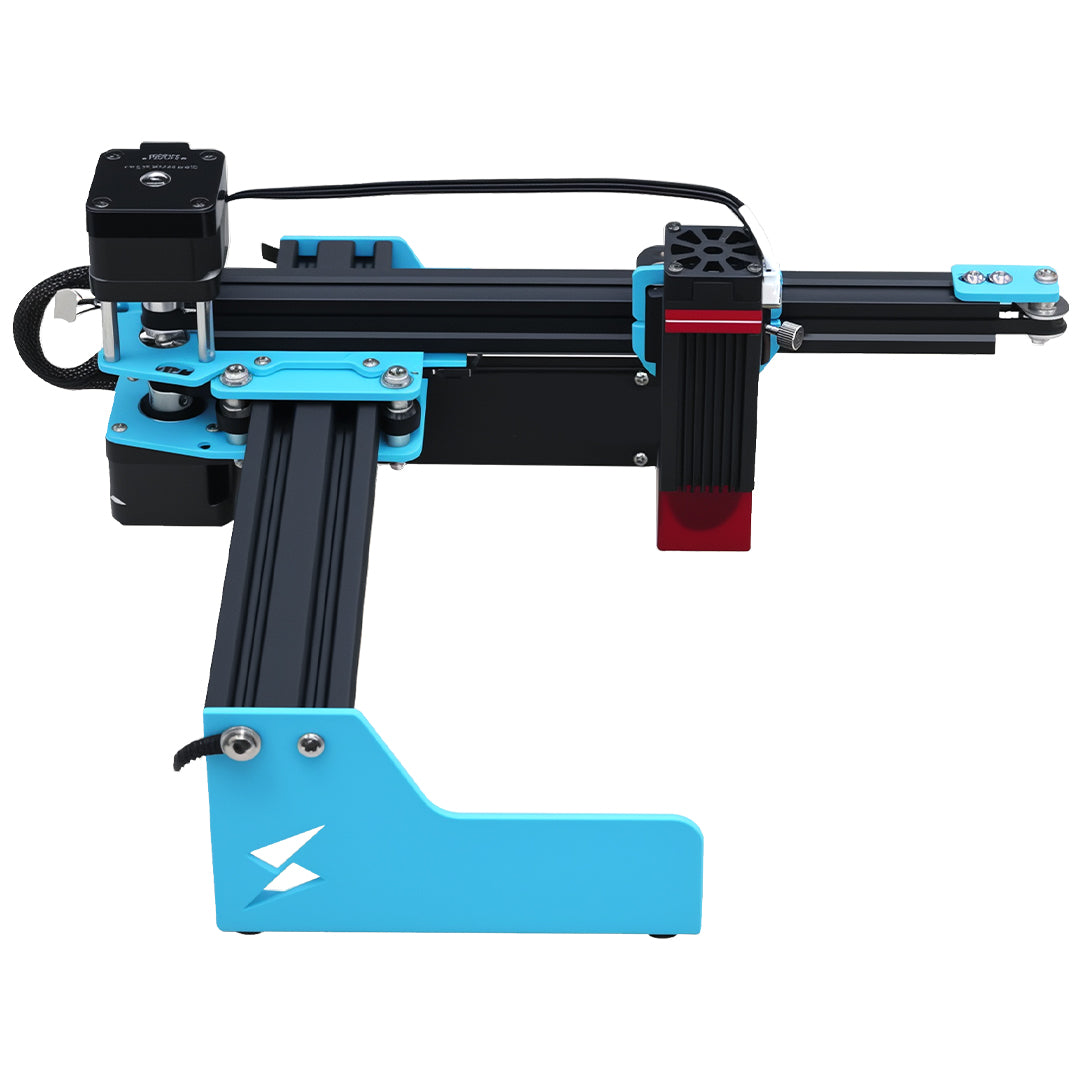


A customer says “engrave a stainless tumbler,” but the surface may be powder coated, painted, plated or bare steel. The method and resulting color change with the surface. Before taking a full tumbler order with TYVOK P2 Ultra, determine which layer must be marked and whether the cylinder can be held and rotated consistently. The official P2 Ultra page describes compatible rotary workflows; confirm the exact accessory and what is included in the offered package before quoting.

Official P2 Ultra product image. A tumbler result must be proved on the customer's actual stock.
Identify the cup you will mark
Request one spare cup from the actual batch. Record brand or supplier, outer diameter where the logo will sit, taper, handle, lid, seam, coating and blank color. A nominal capacity such as 20 oz does not describe the marking geometry. On a tapered cup, the diameter can change over a wide logo; on a handled cup, the handle can collide with a support or limit rotation. Decide whether the customer's artwork is a small front logo, a name beside the handle, or a full wrap. These require different fixtures and acceptance criteria.
If the cup is powder coated, the job may remove coating to expose stainless. If it is bare stainless, the 1064 nm fiber source acts on the metal itself. Do not show a coated-cup photograph as proof that the same contrast will appear on a bare cup. Document whether post-mark cleaning affects the finish. For drinkware, keep the marking area away from food-contact surfaces unless the product supplier and applicable requirements support that use.
Make the rotary setup a measured job
Confirm the specific rotary hardware is compatible with P2 Ultra and capable of supporting the cup safely. Measure the circumference at the actual mark height. Check that the cup sits level, does not walk sideways, and clears the machine throughout rotation. Use an alignment reference on the cup and mark a removable guide on a test unit. The red-light preview can help place the design, but the full motion path still needs a dry check before firing.
The P2 Ultra specifications describe a 20W 1064 nm fiber source and 150 × 150 mm marking area. On a cylinder, that flat-field dimension does not mean any size wrap is possible in one unverified job. Check the accessory's supported diameter and the software's rotary behavior. Start with a small mark on the spare cup, then run the complete design and inspect both start and end points. A seam where the wrap meets is a frequent quality issue.
| Feature to inspect | What to measure or observe | Stop condition |
|---|---|---|
| Cup geometry | Diameter and taper at design height | Logo distorts across changing diameter |
| Holding | Rotation, axial drift, handle clearance | Cup slips or hits support |
| Surface | Coating type and lot | Different contrast than approved sample |
| Wrap | Start/end registration | Visible gap or overlap |
Quote for the whole cup workflow
Time unboxing, masking if needed, placement, preview, marking, cleaning, inspection and repacking. Include a spare cup allowance. A mark that takes seconds can still be a slow personalized order when each cup carries a different name. Ask the customer to approve spelling and orientation in writing. For a bulk logo order, keep the approved first cup at the station so the operator can compare contrast and placement as the batch progresses.
Test durability using the cleaning directions supplied with the cup; do not invent a dishwasher-safe claim from a fresh mark. If the product will be handled daily, inspect after a representative handling and wipe cycle. Requalify when the cup supplier changes or a new coating lot arrives. A different shade of the same marketed color can mark differently.
Account for mixed name orders
For personalized drinkware, separate the blank inspection from the variable-name file. Assign one physical cup to one approved row before it enters the rotary. After marking, read the actual name from the cup and compare it with that row, then close the row as accepted. Put a rejected cup in a separate area; otherwise a rerun can produce duplicate names or a missing customer order. If customers supply their own cups, agree beforehand who pays for a failed test or damaged blank and whether spares are available. These terms are particularly important when the supplier, coating or curvature is unfamiliar. A good fixture cannot correct a wrong name list.
Purchase decision
If stainless drinkware will be a core product, price the P2 Ultra package with the compatible rotary accessory, fixture, extraction and sample cups. If the rotary compatibility or diameter range is unclear, get the accessory specification before accepting the order. For flat tags and cards, a rotary is unnecessary, so buy according to your actual mix.
Will P2 Ultra mark every cup sold as stainless? The surface and finish must be identified and tested.
Is a red-light preview enough? No. Run a safe motion check and inspect an engraved sample.
Can you promise a full wrap from the flat field size? No. Verify the rotary setup and design geometry first. See current P2 Ultra purchase options and confirm accessory contents.