

A wooden floss drop should let you remove the strand you need while leaving the remaining length organized. Before decorating one, load the actual embroidery floss and test extraction. A smooth-looking hole and an attractive label cannot tell you whether the thread arrangement will work.
A cross-stitch discussion about converting bobbins into floss drops explores the difference between winding thread around a holder and hanging it through an opening. Treat those as two storage methods to compare, not as interchangeable shapes with different names.
Test the thread arrangement before finalizing the silhouette
Start with a paper mock-up to choose the general hanging layout, then use a smooth wooden sample for the functional test. Paper can help with label spacing but cannot reproduce the friction of a finished wooden edge. Thread length, bundle size and how the loop is loaded all affect extraction.
Work over a clear table with one color at first. Load the drop in the way you intend to use it, separate one strand from the free end and pull gently while supporting the remaining bundle. Observe where resistance occurs. If the fibers catch at the opening, inspect the edge; if the whole bundle tightens, reconsider how it is looped. Pulling harder makes these two problems difficult to distinguish.
| A1 Mini sample trial | Change only this variable | Useful observation |
|---|---|---|
| Same thread, two hole finishes | Edge preparation | Whether fibers catch at one spot |
| Same drop, short and long lengths | Stored length | Whether loops tangle below the holder |
| Same length, different bundle sizes | Amount of floss | Whether the opening is overcrowded |
| Loaded drop in the actual storage ring | Hanging position | Whether neighbors obstruct access |
Choose a making route that suits the small tool
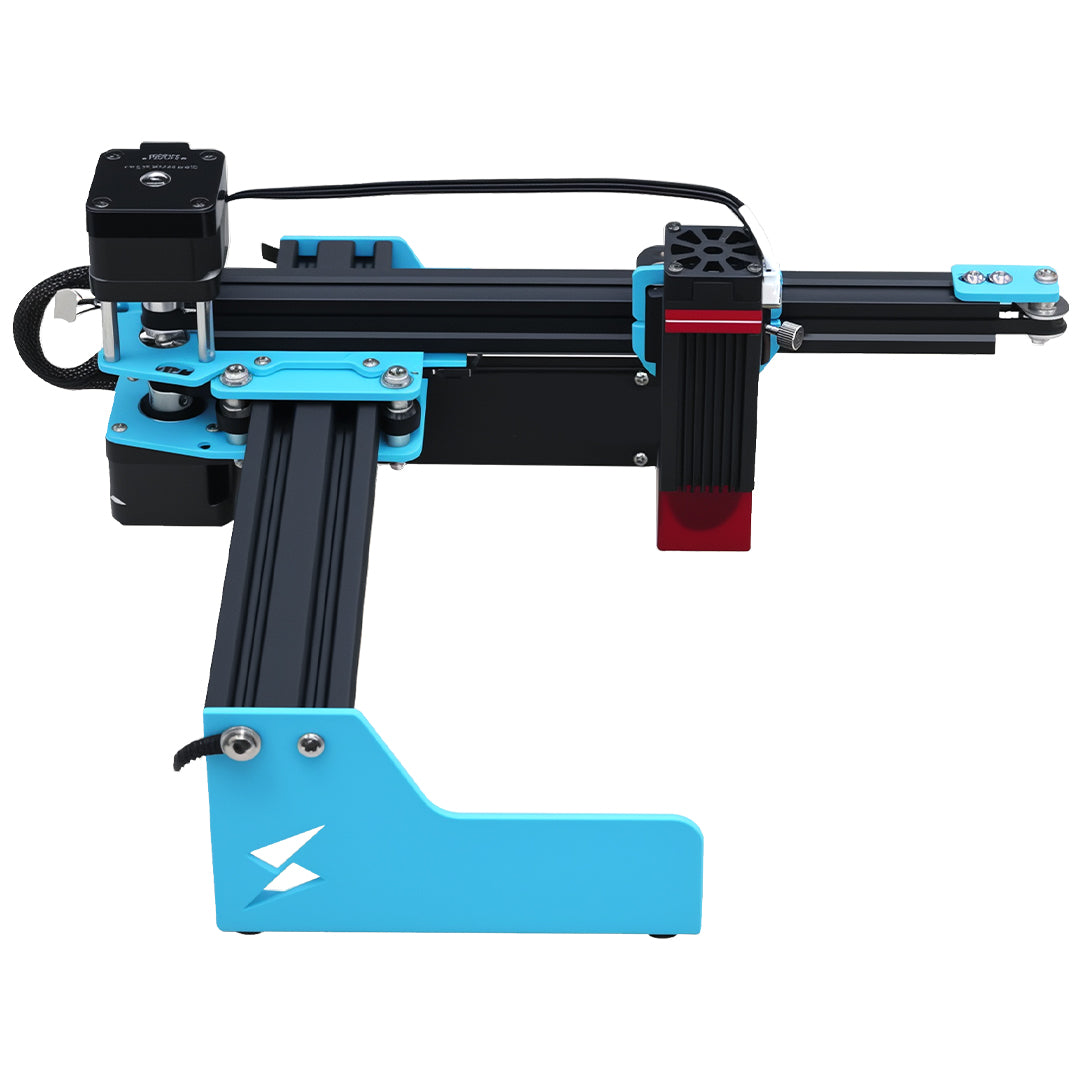
The A1 Mini lists a 120 × 130 mm work area. Keep the entire part and necessary margins within that space, not just its name panel. If a ready-made suitable wood blank is available, precut blanks versus cutting your own is a useful decision before spending time on a new outline. Cutting capability still depends on the actual material and configuration.
For a homemade shape, use known laser-compatible wood, make one sample and smooth the opening appropriately after processing. Keep floss out of the machine; extraction and direct supervision are required while the wood is being engraved or cut. Do not copy a proprietary organizer shape merely because a photograph is available.
Place the color code where it remains visible with the full bundle loaded. Reserve enough room to distinguish similar numbers, but avoid putting deep decoration directly against the thread path. Reload after final finishing and curing to make sure the surface you deliver behaves like the approved sample.
Is a larger floss-drop hole always easier to use?
No. It may give the loop more room but alter how the bundle hangs. Test the intended amount of thread and the actual loading method instead of enlarging without a reason.
Can the same holder store thread wound around its outside?
Possibly, but that is a separate trial. Winding can hide labels or change access to the hanging opening. A flat tatting shuttle provides another example of why wound-thread pay-out must be tested along its complete path.