

Mixed Fonts on Place Cards? Prove the Smallest Baseline First
Prove the weakest combination: the thinnest approved font, the longest name, and the smallest secondary line on supplier-identified laser-compatible card stock. Screen appearance is not acceptance evidence.

Find the weakest name and typeface
A January 2026 user found centered text in software could look or output off-center because font weight and physical alignment change the result (source discussion or guidance).
Review legibility at event distance
- 1. Require composition evidence for the card and coating; refuse unknown laminate, PVC/vinyl, or chlorine-containing stock.
- 2. Create worst-case strings from the real guest list rather than typing a generic sample.
- 3. Keep font files, line spacing, and physical card orientation in the proof record.
- 4. Approve legibility under the event's expected lighting and viewing distance.
Build the place-card proof set
| Proof string | Why selected | Pass observation |
|---|---|---|
| WILLIAM | long name | fits without compressed spacing |
| LILY | thin repeated strokes | no lost stems |
| Table 18 | small secondary line | readable at agreed distance |
| Mixed-case pair | baseline contrast | no false vertical jump |
Why AVA cannot stand in for WILLIAM
A script font may pass on AVA but close the counters in WILLIAM. Pairing the longest name with the thinnest approved face catches that before the seating-card batch.
P2 limits for coated card stock
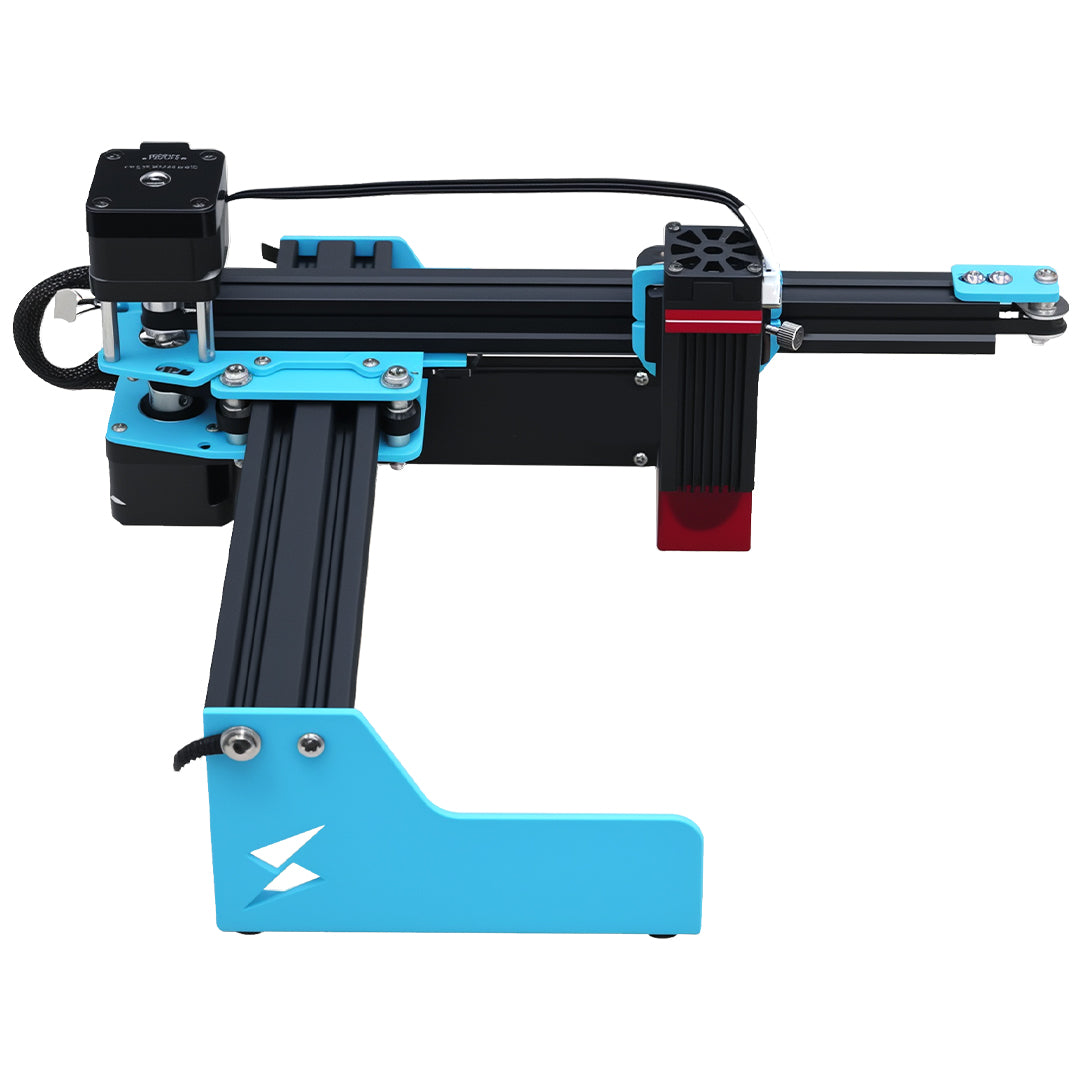
The current P2 page presents a compact 450 nm blue-diode galvo workflow with a 60 × 60 mm listed work area; It is not a fiber or CO2 system, and this guide does not represent it as engraving or cutting bare aluminum; the workflow described for “Mixed Fonts on Place Cards? Prove the Smallest Baseline First” is a user-owned process, not built-in automation or a guaranteed outcome. Check the current TYVOK P2 product page before purchase or use.
Mixed-font place-card questions
Can a small coupon identify a coating?
No. Chemistry must be documented before any output. A proof evaluates appearance only after eligibility is established.
Why test the longest and thinnest names?
They expose different failures: fit pressure and disappearing strokes.
Should every name be manually resized?
Prefer an approved size rule and exception path. Silent one-off scaling creates inconsistent hierarchy and harder reorders.