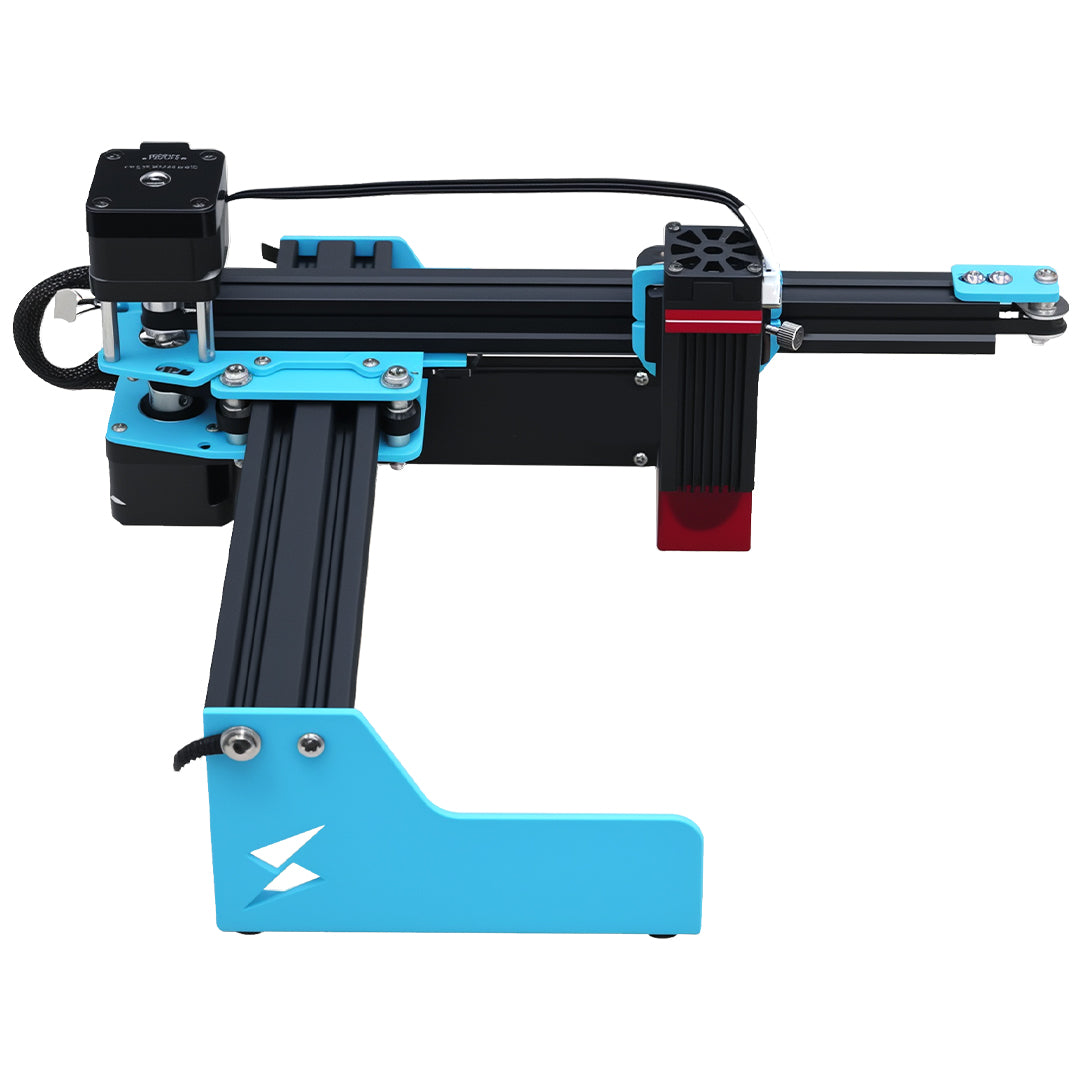


Choose loom spacing by weaving a short strip with the yarn you intend to use. A frame can hold the thread securely and still place the warp too close together for comfortable weaving. Before making a full wooden loom with TYVOK X1S 2026, compare every-slot and alternate-slot threading on a small test section.

The Atomm loom project describes quarter-inch spacing and using different slot intervals for different weaving materials. That is a useful project example, not a universal specification. The comparison below is our practical adaptation for deciding whether your yarn and frame belong together.
Start with the yarn, not the outline
Put aside enough of the actual warp and weft for a hand-sized weave. Yarn labels alone do not describe how a soft, fuzzy strand behaves under tension. Measure the proposed distance between slot centers, then note whether you will occupy every slot or leave some empty. Skipping slots changes the working spacing without changing the frame geometry.
For example, alternate-slot threading doubles the distance between occupied slots. It does not make the slots themselves wider. If a thick strand catches at the entrance, changing the threading interval will not cure that separate problem. Smoothness and opening size still need attention.
| Loom trial | Observe while weaving | Reason to revise |
|---|---|---|
| Every slot occupied | Can the chosen weft pass comfortably? | Thread movement feels crowded |
| Alternate slots occupied | Does the weave remain suitably supported? | Open gaps exceed the intended texture |
| Several rows beaten into place | Does the warp stay seated? | Strands escape or abrade |
| Sample removed from tension | Does the finished texture suit the project? | Fabric closes or spreads unexpectedly |
Record the successful threading interval beside the yarn identification. A photograph with a ruler makes the result easier to reproduce than a note saying “medium yarn.” If you add a matching tool, the weaving-comb pattern-key placement should remain readable while that tool is held.
Keep resizing from changing the experiment
A scaled frame also has scaled slots. The same issue appears when resizing a lacing board around an actual lace tip: the outline may fit the work area while the functional openings become unsuitable. Verify the imported SVG dimensions against a reference square before producing the test section.
The TYVOK X1S 2026 product page is the place to confirm the selected configuration and working area. Use verified laser-compatible wood and settings established for that material. A large-format machine does not establish yarn compatibility or grant commercial rights to a downloaded loom design; check the source license separately.
Questions before making the frame
Can one loom handle both thin and bulky yarn?
Possibly, through different occupied-slot intervals, but slot width, edge smoothness, frame strength, and the desired fabric still matter. Keep a successful sample for each yarn rather than assuming one spacing suits everything.
Should I make the slots deeper to hold loose warp?
Do not assume depth is the cause. First inspect tension, threading direction, and the slot entrance. A deeper slot can weaken a narrow wooden tooth. Try the revised geometry on a short offcut before committing to a complete frame.