

A client with its own laser may still need help with a deadline, an oversized panel, or a temporary capacity gap. Offer a narrowly defined overflow service: which eligible work you can accept, what files and materials you require, how the first sample is approved, and what the client receives back. Ownership of a machine does not remove every production constraint.
An August 2026 engraving discussion asked where businesses find outsourced jobs. Replies included owners whose customers had bought their own equipment. These accounts show a real commercial concern, not measured demand for your location or a guarantee of orders.
Make the offer specific enough to evaluate
Describe one supported service, such as processing approved flat wood panels within your verified setup. Avoid promising to handle every material the customer's equipment can process. Identify any preparation, finishing, assembly, or packing that remains the client's responsibility.
Before reserving machine time, ask for the required finished dimensions, quantity, material identity, deadline, artwork, and acceptance criteria. Ask whether the stock is client supplied and whether a matching sacrificial sample is available. An irreplaceable item without a qualified process needs a different decision from a repeatable panel with spare material.
Do not quote only beam time. Receiving, checking the file, making a proof, sorting parts, and returning unused stock all consume effort. A deadline should account for the client's approval response as well as your available production time.
Agree on the X1S Pro job boundary
| Handoff item | Agreement to record |
|---|---|
| Material | Supplier identification, composition, condition, and process eligibility |
| Artwork | Exact revision, dimensions, and authorized changes |
| Sample | Who supplies it, who approves it, and what appearance is accepted |
| Quantity | Finished count, spare stock, and how rejected pieces are reported |
| Completion | Processing, cleanup, sorting, and packing included in the service |
| Return | Identification and handling of finished parts, unused stock, and retained samples |
These are practical job details rather than a substitute for any contract your business uses. Resolve uncertainties before processing, particularly when a customer expects a finish or tolerance that has not been demonstrated on your setup.
Keep approval attached to the actual file
Once the customer accepts a sample and file revision, establish one released package. If multiple people exchange files through shared storage, use a single-editor release method to prevent an unapproved revision from reaching setup.
Only then prepare the machine-specific output. An editable design and an offline job are different artifacts; the project-versus-offline-file check helps verify that the chosen supported output corresponds to the approved project. A customer-supplied machine file is not automatically suitable for your controller or configuration.
Confirm the machine can accept the job
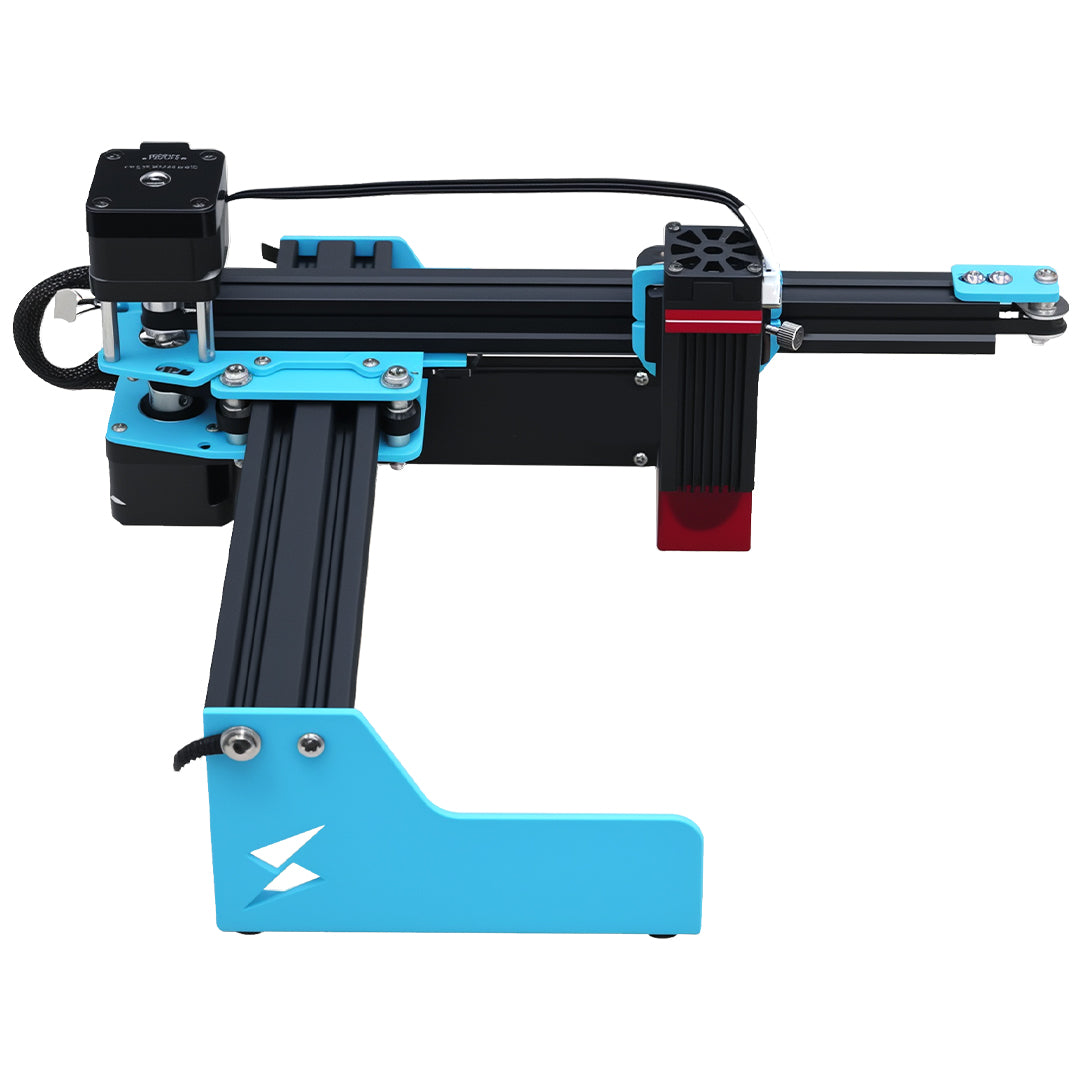
The TYVOK X1S Pro product page lists a large-format diode workflow, an 800 × 2000 mm area, and several operating routes. Confirm your actual module, accessories, usable dimensions, and material compatibility. The listing does not establish industrial metal capability, guaranteed output per hour, or the ability to reproduce another machine's settings.
Keep the service offer tied to samples and completed work you can demonstrate. A small, well-defined overflow job can reveal whether the relationship is workable without committing either shop to a large recurring volume.
Questions from workshop owners
Should overflow work always cost less than direct customer work?
No. A clean repeat file may reduce preparation, while a rush deadline or client-supplied stock can increase handling. Calculate the actual included work and discuss the scope before choosing a price.
What if the client changes the file after sample approval?
Stop release of the affected work, identify the change, and decide whether a new proof is required. Record any schedule or quantity impact before continuing with the revised package.