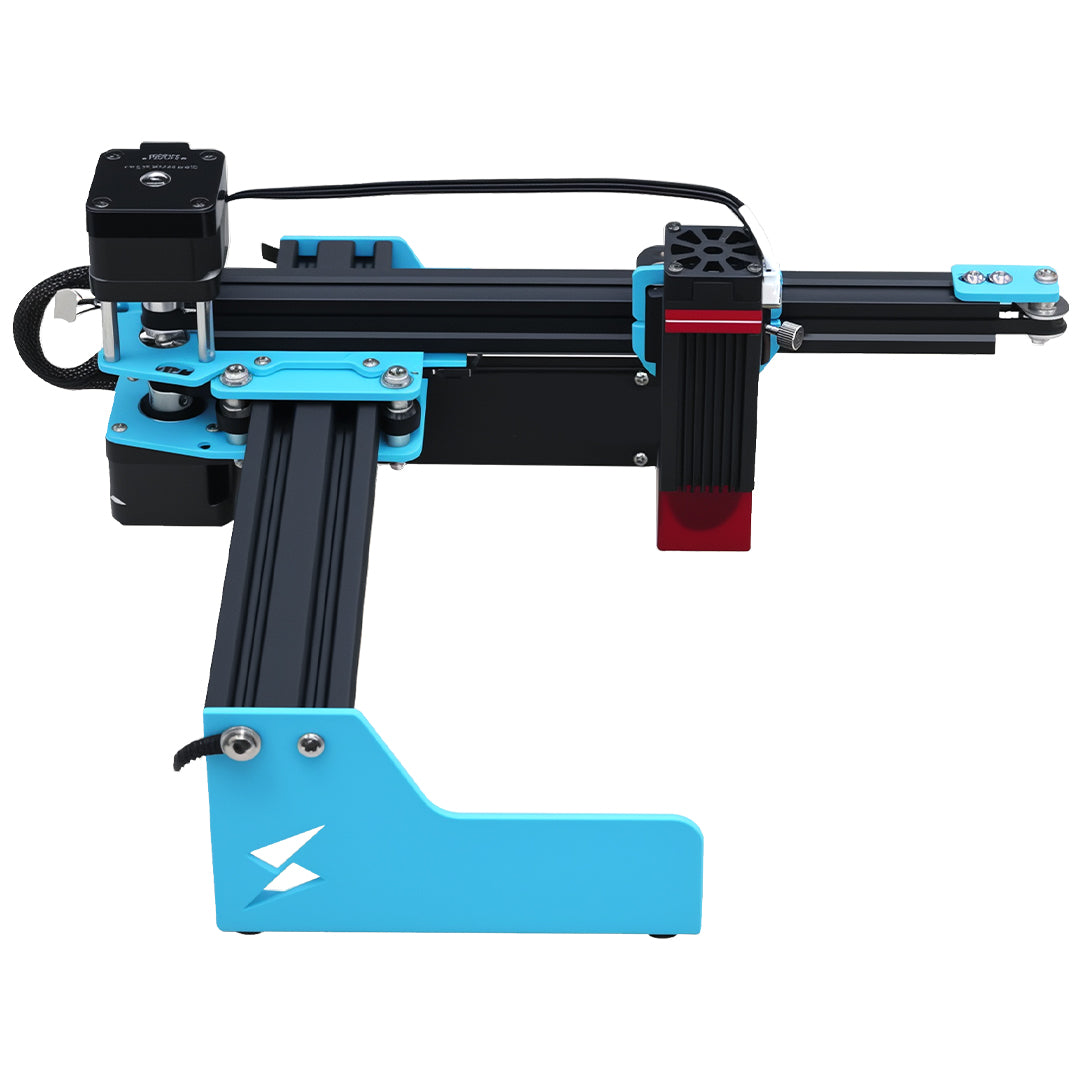


Can the Tyvok A1 Mini Cut? What Thickness Can It Actually Cut in 2026?
If you're thinking about buying a Tyvok A1 Mini, you're probably wondering: "Can it actually cut, or is it just for engraving?" And if it can cut, how thick of a material can it handle?

I've tested my A1 Mini on a bunch of different materials, and I'm going to give you the straight answer — including what it can cut, what it can't, and what thickness you can actually expect.
Quick Answer First
The Tyvok A1 Mini is primarily an engraving machine, but it can cut thin materials. It has a 10W galvo laser, so it's not designed for cutting thick stock like a larger diode laser.
Here's what it can handle:
Material Maximum Thickness It Can Cut
Paper / Cardstock Up to 2mm (no problem)
Thin leather Up to 2-3mm
Basswood / Plywood Up to 3-4mm
Acrylic Up to 2-3mm
Cork Up to 5mm
It cannot cut materials thicker than about 5mm, and it's not meant for heavy cutting like a full-size laser cutter.
Let's Break It Down By Material
1. Paper and Cardstock
Maximum thickness: Up to 2mm (multiple layers)
How well does it cut: Perfectly, no issues.
What people use it for: Paper crafts, invitations, paper cutting templates.
The A1 Mini cuts paper and thin cardstock like butter. Even at relatively low power, it cuts through cleanly with one pass.
2. Leather
Maximum thickness: Up to 2-3mm
How well does it cut: Very good for thin to medium leather.
What people make: Jewelry, keychains, wallets, coasters.
The 10W galvo cuts 2mm vegetable-tanned leather easily in one pass. 3mm might need two passes, but it still works. It doesn't handle thick 4-5mm tooling leather very well — that's too much for 10W.
3. Basswood
Maximum thickness: Up to 3-4mm
How well does it cut: Good clean cuts with 1-2 passes.
What people make: Keychains, ornaments, small wood crafts.
3mm basswood is no problem for the A1 Mini — one pass usually gets through. 4mm needs two passes, but it still cuts through. Anything thicker than 4mm will be very slow and may not cut all the way through even with multiple passes.
4. Plywood
Maximum thickness: Up to 3mm
How well does it cut: Good for thin plywood.
Notes: A1 Mini works best with higher-quality plywood that doesn't have voids. Cheap plywood with lots of gaps will have inconsistent cuts.
Thin 1/8" (3mm) plywood is very popular for A1 Mini projects like coasters and ornaments. It cuts through pretty well, though you might need a second pass on some of the glue layers.
5. Acrylic
Maximum thickness: Up to 2-3mm
How well does it cut: Cast acrylic cuts pretty well, extruded is a bit harder.
What people make: Keychains, ornaments, small signs.
The A1 Mini can cut thin acrylic, but don't expect it to handle the 1/4" (6mm) acrylic that bigger lasers handle. 1/8" (3mm) is about the limit.
6. Cork
Maximum thickness: Up to 5mm
How well does it cut: Cork cuts very easily with the A1 Mini.
What people make: Coasters, trivets, cork boards.
Cork is low-density and the laser cuts through it easily. 5mm cork is no big deal for the A1 Mini.
7. Rubber (for stamps)
Maximum thickness: Up to 3mm
How well does it cut: Perfectly for stamp making.
That's exactly what many people use the A1 Mini for — custom rubber stamps, and it works great at this thickness.
What the Tyvok A1 Mini CANNOT Cut
- Thick wood (over 5mm): 10W isn't enough power to get through.
- Thick acrylic (over 3mm): Won't cut all the way through.
- Glass: Can etch glass, but can't cut it.
- Stone: Can engrave slate and stone, can't cut it.
- Metal: Can engrave coated and anodized aluminum, can't cut any significant thickness.
- MDF thicker than 3mm: MDF is dense and the 10W laser struggles with thicker pieces.
Engraving vs Cutting: What the A1 Mini is Designed For It's important to understand what the Tyvok A1 Mini is designed to do. It's a galvo laser engraver first and foremost. Galvo lasers excel at fast engraving , not deep cutting. The galvo technology gives it:
-
Lightning fast engraving speeds (up to 10,000 mm/s)
-
Excellent detail for photos and fine text
-
Compact size at a budget price What it gives up is:
-
Larger work area
-
Higher power for deep cutting This tradeoff works perfectly for the target market — beginners who want to do engraving and small projects on a budget.
Tips for Better Cutting with Your A1 Mini If you're going to do cutting with your A1 Mini, these tips will help you get better results:
1. Multiple passes instead of one slow heavy pass It's better to do two or three lighter passes at moderate speed than one super slow pass at full power. This gives you cleaner cuts and less charring.
2. Use air assist Air assist makes a huge difference for cutting. It blows away the melted and burned material, giving you cleaner cuts. This is the #1 upgrade for cutting with the A1 Mini.
3. Let it cool between passes If you're doing multiple passes, let the material cool for a minute between passes. This prevents excessive charring and burning.
4. Use a honeycomb bed A honeycomb bed allows the laser to pass through the material after cutting, which prevents reflection back up and gives cleaner cuts on the bottom edge.
5. Always test on scrap first Different batches of material can cut differently. Do a test cut on a scrap piece before you cut your good material.
Recommended Starting Cutting Settings Here are my go-to settings for cutting different materials with the Tyvok A1 Mini: / Material / Thickness / Power / Speed / Passes /
Cardstock / 0.5mm / 30% / 500 mm/s / 1 / / Leather / 2mm / 50% / 300 mm/s / 1 / / Leather / 3mm / 60% / 250 mm/s / 2 / / Basswood / 3mm / 70% / 200 mm/s / 1-2 / / Plywood / 3mm / 70% / 200 mm/s / 2 / / Acrylic / 3mm / 75% / 150 mm/s / 2 / / Cork / 5mm / 60% / 250 mm/s / 2 /
Remember: These are starting points. You'll need to adjust based on your specific material and how new your laser is (laser power decreases slightly over time).
When to Buy the A1 Mini for Cutting, When to Skip It
Buy the A1 Mini if:
-
You mainly want to do engraving, and occasionally cut thin small pieces
-
You want to make things like keychains, jewelry, ornaments, coasters
-
You're on a budget and want galvo speed
-
You have limited desk space Skip the A1 Mini and get a larger diode laser if:
-
You primarily want to cut thicker materials
-
You need a larger work area for bigger projects
-
You plan to cut a lot of wood or acrylic regularly
-
You need to cut 6mm+ material regularly
Final Verdict So can the Tyvok A1 Mini cut? Yes, it can cut thin materials perfectly well. It's not going to replace a full-size 50W+ laser cutter, but for small thin projects, it works great. Most of the profitable things people make with the A1 Mini (keychains, pet tags, jewelry, ornaments, coasters) only require cutting thin materials anyway. So for the intended use, the cutting capability is perfectly adequate. If you're realistic about what it can and can't do, you'll be very happy with what this little machine can do. Do you use your A1 Mini for cutting? Share what you cut and your best settings in the comments below to help other beginners!
Related Reading: Is the Tyvok A1 Mini Worth It in 2026? Full Review for Beginners
Related Reading: Is The Tyvok A1 Mini Worth It In 2026 Full Review For Beginners
Related Reading: Why Tyvok A1 Mini Is The Best Entrylevel Laser Engraver For Beginners In 2026
💡 Recommended: The Tyvok P2 2W Galvo Laser is our top pick for metal marking & jewelry engraving. Currently 50% OFF at just $149!