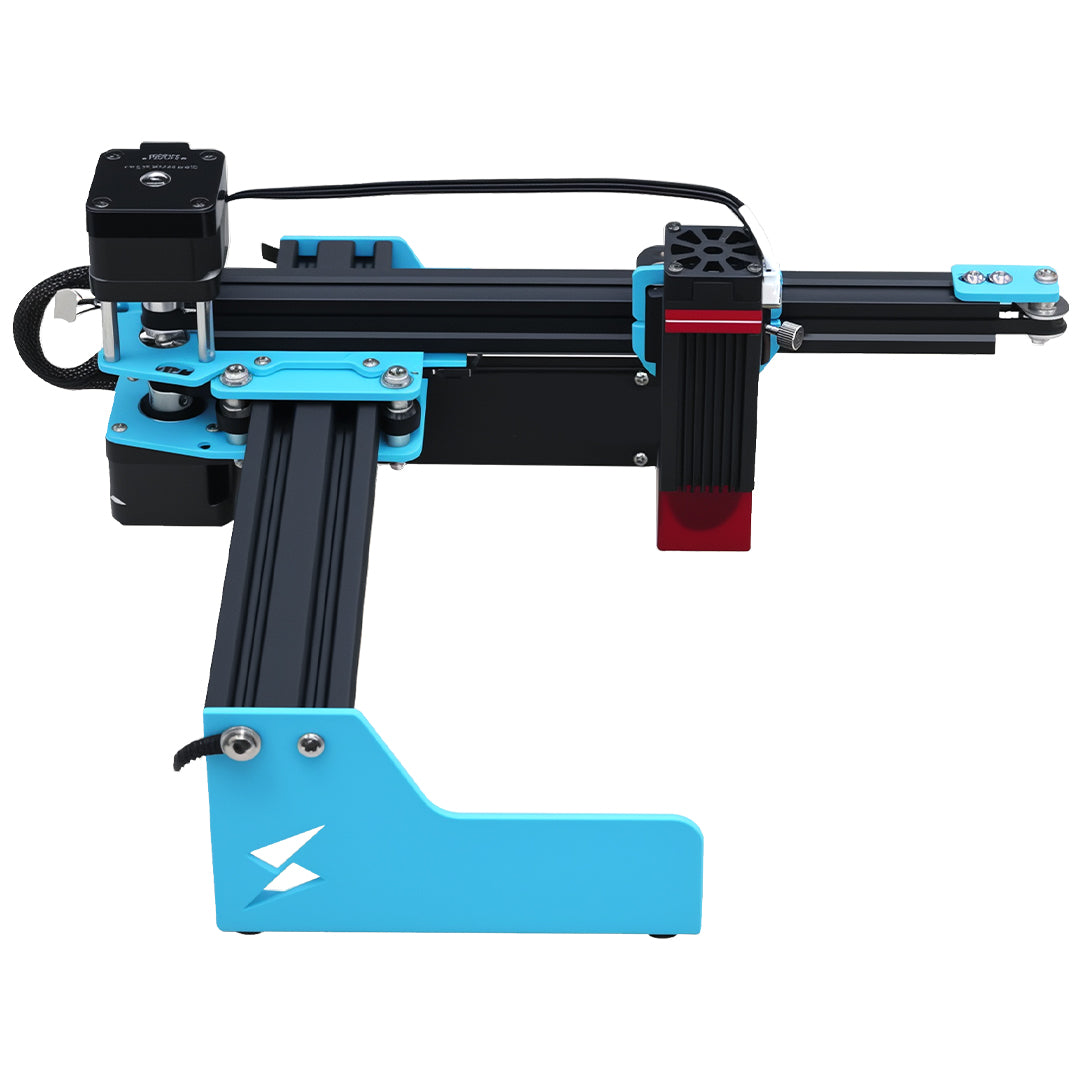


If you're in the market for a mid-range laser engraver and cutter, you've probably encountered two big names: Glowforge and xTool. Both are well-known brands that have made laser technology accessible to home users and small businesses, but they have very different approaches to product design, pricing, and features. In 2026, the market is more competitive than ever, and there are also great budget-friendly alternatives like the Tyvok A1 Mini for beginners and the Tyvok P2 10W Galvo for high-speed production engraving that you might want to consider.

🛒 Check out the Tyvok A1 Mini here
But if you've narrowed it down to Glowforge vs xTool, this complete comparison will help you understand the key differences, which one is better for different use cases, and whether either is actually worth the money in 2026. We'll compare everything from price and features to cutting performance, ease of use, and value.
👉 Learn more about Is the Tyvok P2 10W galvo Under $200 Worth It here
Quick Overview: Glowforge vs xTool
Glowforge essentially created the market for desktop consumer laser engravers when they launched back in 2015. They've built their brand on ease of use, a beautiful design, and a cloud-based workflow. Glowforge focuses on making laser engraving as simple as possible for people who might not be tech-savvy.
🛒 Check out the Tyvok A1 Mini here
xTool is a newer brand that entered the market with a focus on offering more features and better value for the money. They have a wider range of machines, from entry-level diode lasers up to larger CO2 machines, and they tend to offer more power and features for a lower price than Glowforge.
🛒 Check out the Tyvok A1 Mini here
Both brands offer quality machines, but they target slightly different users. Let's dive deeper into the comparison.
Price Comparison
Price is one of the biggest differences between Glowforge and xTool. Let's look at the current prices for comparable machines in 2026:
Glowforge Pricing:
-
Glowforge Basic: ~$999 (40W CO2)
-
Glowforge Plus: ~$1,999 (45W CO2)
-
Glowforge Pro: ~$3,999 (45W CO2 with pass-through
xTool Pricing:
-
xTool D1 Pro 10W: ~$699 (10W diode)
-
xTool P2: ~$2,499 (55W CO2)
-
xTool M1: ~$1,099 (10W diode + blade cutter)
So across the board, xTool offers more power at a lower price point than Glowforge. Even comparing the entry-level CO2 machines, xTool's 55W P2 is $2,499 while Glowforge's Plus is $1,999—but the xTool has 10W more power and a larger work area.
🛒 Check out the Tyvok P2 10W Galvo here
It's also worth noting that for beginners who don't need a large mid-range machine, there are much more affordable options like the Tyvok A1 Mini 10W that gives you 10W diode power for under $300. If you're just getting started and want to test the waters before investing thousands, that's a great way to go. If you need high-speed engraving for production, the Tyvok P2 10W Galvo also offers incredible value compared to both Glowforge and xTool.
🛒 Check out the Tyvok A1 Mini here
What About Subscription Fees?
One thing that's important to note about Glowforge is that their cloud software requires a paid subscription for full functionality. The "Glowforge Premium" subscription costs $50 per month or $600 per year. That's an ongoing cost that adds up to thousands of dollars over the life of your machine.
xTool doesn't require any subscription—you pay for the machine once and you own all the software forever. That's a big difference in total cost of ownership. Over five years, the Glowforge Pro will cost you nearly $7,000 when you include the subscription, while an xTool P2 is around $2,500 with no ongoing fees.
Machine Types: Diode vs CO2
Both brands offer a mix of diode and CO2 lasers, but Glowforge only offers CO2 machines, while xTool offers both diode and CO2.
🛒 Check out the Tyvok K1 CO₂ Laser here
Glowforge's all-CO2 lineup makes sense for them because they were one of the first to bring CO2 to the desktop, but in 2026, diode lasers have improved a lot. A 10W diode like the one in xTool's D1 Pro (or the more affordable Tyvok A1 Mini 10W) can do most of the things that a low-power CO2 can do, for a fraction of the price.
🛒 Check out the Tyvok A1 Mini here
What Does This Mean For You?
If you need the thicker cutting capability that CO2 offers, both Glowforge and xTool have CO2 options. If you're primarily doing engraving and thinner cutting, a diode machine from xTool (or a budget option like Tyvok A1 Mini) will save you a lot of money.
🛒 Check out the Tyvok A1 Mini here
Work Area Size
Work area size is another important consideration. Here's how they compare: - Glowforge Basic: 12" x 20"
-
Glowforge Plus: 12" x 20"
-
Glowforge Pro: 12" x 20" with pass-through for long materials
-
xTool D1 Pro 10W: 13" x 15.8" (can expand to 13" x 31.5")
-
xTool P2: 23.6" x 15.4"
-
xTool M1: 15.5" x 15.5"
The xTool P2 has a significantly larger work area than any Glowforge model, for a lower price than the Glowforge Pro. The Glowforge Pro's pass-through is a nice feature if you need to work with very long materials, but it comes at a steep price.
Cutting Performance
When it comes to cutting performance, we need to compare apples to apples—CO2 vs CO2, diode vs diode.
🛒 Check out the Tyvok K1 CO₂ Laser here
CO2 vs CO2: Glowforge Plus vs xTool P2
-
Power: Glowforge Plus 45W vs xTool P2 55W
-
Cutting thickness: Glowforge can cut up to 1/2 inch wood, xTool P2 can cut up to 3/4 inch wood
-
Speed: xTool P2 is generally faster for thicker materials
👉 Learn more about Is Galvo Laser Faster Than Diode? Real Speed Test Results here
- Clear acrylic cutting: Both CO2 machines do an excellent job cutting clear acrylic, which is one of the main advantages of CO2 over diodes
🛒 Check out the Tyvok K1 CO₂ Laser here
In the CO2 category, xTool gives you more power, a larger work area, and it costs less than the comparable Glowforge model.
Diode vs CO2
What if you're comparing an xTool diode (like the D1 Pro 10W) to a Glowforge CO2? Here's what you need to know:
🛒 Check out the TyvokStudio Laser Software here
-
Price: xTool D1 Pro 10W is about $700, Glowforge Basic is about $1,000
-
Cutting: Glowforge CO2 can cut thicker materials than the xTool 10W diode
🛒 Check out the Tyvok K1 CO₂ Laser here
- Engraving: The xTool diode does excellent fine detail engraving, similar to the Glowforge
🛒 Check out the TyvokStudio Laser Software here
- Clear acrylic: Glowforge CO2 cuts clear acrylic much better than a diode
🛒 Check out the TyvokStudio Laser Software here
- Maintenance: Diode requires less maintenance than CO2
🛒 Check out the TyvokStudio Laser Software here
If you primarily do engraving and only occasionally cut thinner materials, a 10W diode like the xTool D1 Pro—or the more affordable Tyvok A1 Mini 10W—will save you a lot of money and still do 90% of what most people need.
🛒 Check out the Tyvok A1 Mini here
Ease of Use
This is where Glowforge has traditionally had an advantage. Glowforge's whole philosophy is about making laser engraving easy for people who have never used one before. Their cloud-based software is very intuitive, and the machine has a built-in camera that automatically shows you where your material is positioned.
🛒 Check out the TyvokStudio Laser Software here
That said, xTool has improved their software and ease of use a lot in recent years. Their software is still a little more complex than Glowforge's, but it's still very usable for beginners, and it has more advanced features for when you're ready to use them.
Another point: Glowforge's cloud-based software means you need an internet connection to use it. If you don't have reliable internet or you just prefer to work offline, that's a big disadvantage. xTool works offline—you don't need an internet connection to use it after you've installed the software.
Software Features
Glowforge's software is intentionally simple—they've focused on making it easy for beginners to get started. That's great for beginners, but it means it lacks some of the more advanced features that more experienced users want.
xTool's software has more advanced features built-in, including: - More control over settings
- Ability to save custom settings for different materials
👉 Learn more about How to Choose Laser Power for Different Materials here
- More design tools directly in the software
🛒 Check out the TyvokStudio Laser Software here
-
Support for offline use
-
No ongoing subscription fees
The tradeoff is that there's a slightly steeper learning curve. But most beginners get the hang of it pretty quickly, and the extra features give you room to grow.
Camera and Material Alignment
Both Glowforge and xTool have built-in cameras that allow you to see your material on the screen and align your design. Glowforge's camera is generally considered to be slightly better and more accurate, but the difference isn't huge. xTool's camera works well enough for most users.
Air Assist
Air assist is an important feature that helps prevent burning and produces cleaner cuts. Some lower-end machines don't include it, but both Glowforge and xTool include air assist on their mid-range and higher-end models.
On Glowforge, air assist is standard on all models. On xTool, it's also standard on their mid-range models. So this is one area where they're pretty evenly matched.
Reliability and Support
Both brands have good reputations for reliability, but Glowforge has been around longer so they have more of a track record. That said, xTool has been improving their quality and support over the years, and they now have thousands of happy customers.
Glowforge's support is generally good, but because they're a bigger company, sometimes response times can be slower. xTool tends to have more responsive support for their customers.
It's also worth noting that both brands offer warranties—xTool's warranty is generally comparable or better than Glowforge's for the price.
Use Case Comparison: Which Is Better For You?
Let's look at different scenarios and see which brand comes out on top.
If You're a Complete Beginner Who Values Simplicity
If you've never used a laser engraver before and you want something that "just works" with minimal setup, Glowforge is still a solid choice. Their software is extremely easy to use, and the camera alignment works very well. That said, you pay a premium for that simplicity—you'll spend more money and pay ongoing subscription fees.
🛒 Check out the Tyvok A1 Mini here
If you want to get started without spending a lot, consider starting with an affordable option like the Tyvok A1 Mini instead. It's much cheaper, it's still easy to use, and you can always upgrade later if you need a larger machine.
🛒 Check out the Tyvok A1 Mini here
If You Want the Best Value for Your Money
If you're looking to get the most features and power for your money, xTool is the clear winner in 2026. They offer more power, larger work areas, no ongoing subscription fees, and lower prices across the board. For most people, xTool gives you better value.
If You Need to Cut a Lot of Thick Acrylic and Wood
If cutting thick materials is your primary use case, either brand's CO2 model will work, but xTool's P2 gives you more power and a larger work area for less money than Glowforge. So xTool is the better value here.
🛒 Check out the Tyvok K1 CO₂ Laser here
If You're on a Tight Budget but Still Want Quality
If you don't want to spend thousands of dollars on a mid-range machine but still want quality, you have great options in 2026. A 10W diode machine like the Tyvok A1 Mini 10W gives you excellent performance for under $300. That's hard to beat. If you need high-speed engraving for production, the Tyvok P2 10W Galvo is also much more affordable than either Glowforge or xTool's mid-range offerings.
🛒 Check out the Tyvok A1 Mini here
If You Want to Use Your Machine Offline
If you don't have reliable internet or you just prefer not to be dependent on cloud software, xTool is the clear choice. Glowforge requires an internet connection and cloud access to work, while xTool works completely offline.
If You Do a Lot of High-Volume Engraving
If you're running a business and need to do a lot of engraving quickly, neither Glowforge's traditional gantry CO2 nor xTool's gantry diode can compete with a galvo laser like the Tyvok P2 10W Galvo. Galvo lasers use moving mirrors instead of moving the entire laser head, so they engrave much faster than traditional gantry machines. For production work, that speed advantage is a game-changer.
🛒 Check out the Tyvok A1 Mini here
Pros and Cons Summary
Glowforge Pros:
✅ Extremely easy to use for complete beginners
👉 Learn more about Is the Tyvok P2 10W galvo Under $200 Worth It here ✅ Excellent camera alignment ✅ Well-established brand with long track record ✅ Beautiful industrial design ✅ All models include air assist
Glowforge Cons:
❌ Expensive compared to the competition ❌ Ongoing subscription required for full features ($50/month) ❌ Requires internet connection to use ❌ Smaller work area than comparable xTool models ❌ Less power than comparable xTool models ❌ No offline use
xTool Pros:
✅ Better value—more features for less money ✅ No ongoing subscription fees ✅ Works offline ✅ Larger work areas than comparable Glowforge models ✅ More power than comparable Glowforge models ✅ Wider range of machine options (diode and CO2)
🛒 Check out the TyvokStudio Laser Software here ✅ More advanced software features
xTool Cons:
❌ Slightly steeper learning curve than Glowforge ❌ Camera alignment is good but not quite as good as Glowforge's ❌ Brand is newer, so less long-term track record
Are Either Glowforge or xTool Worth It in 2026?
So after comparing everything, is either brand worth the money in 2026? It depends on your situation:
Glowforge is worth it if:
-
You really value extreme simplicity and ease of use above everything else
-
You don't mind paying the premium price and ongoing subscription
-
You want the proven reliability of an established brand
Even then, we'd recommend starting with a more affordable machine like the Tyvok A1 Mini if you're a beginner. You can learn the ropes and see if you really use a laser enough to justify the investment in a more expensive machine.
🛒 Check out the Tyvok A1 Mini here
xTool is worth it if:
- You want the best value for your money
👉 Learn more about How to Make Money Selling Laser Engraved Products on Etsy here
-
You need a larger work area or more power than Glowforge offers at the same price point
-
You want to use your machine offline
-
You don't want to pay ongoing subscription fees
xTool is definitely a better value than Glowforge for most people in 2026.
But before you buy either, consider: If you're a beginner just getting started, you don't need to spend a thousand dollars or more to get a quality machine. The Tyvok A1 Mini 10W offers excellent 10W diode performance for under $300. That's a fraction of the price of either Glowforge or xTool, and it can do 90% of what most beginners need.
🛒 Check out the Tyvok A1 Mini here
If you're running a business and need high-speed engraving, the Tyvok P2 10W Galvo offers galvo-level speed at a price that's much more affordable than mid-range CO2 machines from either Glowforge or xTool.
🛒 Check out the Tyvok A1 Mini here
Final Verdict
In the Glowforge vs xTool battle in 2026, xTool comes out on top for most people. They offer better value, more features, more power, larger work areas, and no ongoing subscription fees. The only area where Glowforge still leads is in pure simplicity for absolute beginners, but that simplicity comes at a very high price.
👉 Learn more about How to Choose Laser Power for Different Materials here
That said, before you spend a thousand dollars or more on a mid-range machine from either brand, consider whether an affordable entry-level diode like the Tyvok A1 Mini might be all you need. It's perfect for beginners, it does most of the things that people actually use lasers for, and it's a fraction of the price. If you later find you need a larger machine, you can always upgrade—and by then, your side hustle might even be profitable enough to pay for the upgrade.
🛒 Check out the Tyvok A1 Mini here
If you need high-speed production engraving, the Tyvok P2 10W Galvo is another great option that gives you professional-level speed at a budget-friendly price that beats both Glowforge and xTool.
🛒 Check out the Tyvok A1 Mini here
Ready to get started with laser engraving without breaking the bank? The Tyvok A1 Mini is the perfect beginner-friendly laser engraver with 10W power at an affordable price. If you need blazing fast engraving for your business, check out the Tyvok P2 10W Galvo—it brings professional galvo speed to a price that's accessible for small businesses.