

Match a kumihimo disk's slots to the actual cord, not just its nominal diameter. A useful slot restrains the strand during braiding but releases it deliberately without scraping or fraying. Test a short section of the intended disk material before committing to the complete shape.
The eight-slot kumihimo project offers different disk sizes and slot choices. That variation makes the cord-to-slot fit a practical selection question. Its machine recipes and any non-wood material options should not be treated as A1 Mini instructions.
Judge three behaviors, not one measurement
Try inserting a strand, drawing it gently into the retaining position and moving it out again. A slot that accepts the cord can still fail to hold it under working tension. Conversely, a slot that grips firmly may damage a fluffy yarn after repeated repositioning.
Make several modest width variations in an original sample section, using identified laser-compatible wood and a proven processing setup. Label the samples outside the yarn-contact area. After cooling, remove loose residue and finish the contact edges appropriately. Compare them with the actual cord instead of selecting the narrowest slot that can be forced open.
| Cord behavior on the A1 Mini sample | Interpretation | Next change |
|---|---|---|
| Slips out while other strands move | Retention is inadequate | Reconsider slot shape or material, then retest |
| Needs a hard pull to release | Excessive grip or rough contact | Improve the edge and test a more suitable opening |
| Leaves visible fuzz after several moves | Repeated contact is damaging fibers | Stop and revise the contact surface |
| Holds and releases consistently | Candidate for a small complete disk | Check all slots in the actual braid |
Size the tool around your hands as well as the field
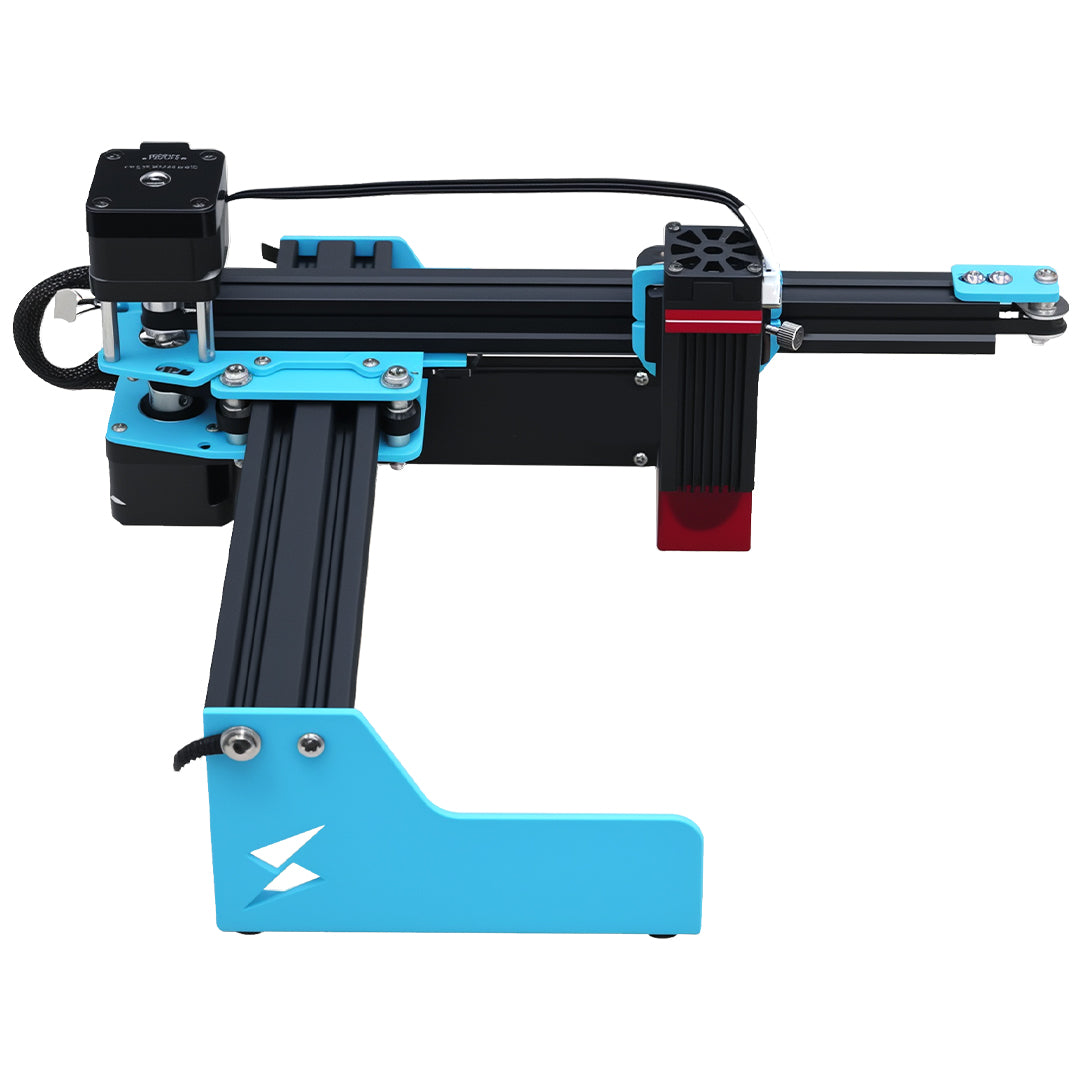
The A1 Mini lists a 120 × 130 mm work area. A nominal 100 mm disk still needs room for margins and the actual fixture; measure the complete drawing and safe machine clearances. A smaller design may fit more easily but crowd fingers and numbering. Do not shrink every dimension of a larger file and assume its slots still match the same cord.
Cutting ability depends on the selected head and verified stock. If a suitable disk blank is available, buying precut wood rather than cutting it can let the A1 Mini handle only the identifying marks. Inspect purchased slots just as carefully as homemade ones.
Keep yarn out of the laser and thread the disk only after all processing and cleanup. Make a short braid, moving every strand through its normal sequence. A rigid heddle also touches yarn, but its slots need free travel to separate threads; a braiding disk intentionally restrains them. One successful yarn tool does not validate the other's slot design.
Will a wider slot work for every thicker cord?
No. A compressible cord and a firm smooth cord can behave differently at the same measured diameter. Test the actual fiber construction, finish and working tension.
Can I leave the laser-cut edges unfinished if they look clean?
Inspect them with the actual cord before deciding. A visually tidy edge can still shed residue or snag fibers during repeated movement. Reject rough or unstable contact surfaces.