

Small Craft Price Floor: Count Design and Packing Time
Build a price floor from measured design, proofing, production, finishing, packing, material, fees, and expected rework; it is a cost boundary, not a sales promise.

Start with measured costs
Time one representative order from opening the customer file through packing. Record design cleanup, messages, proof changes, material preparation, machine setup, supervised run time, cleaning, finishing, inspection, and packing. Use current invoices for blanks and consumables. A price floor is only as useful as these inputs; omitting ten minutes of handling from every item quietly understates cost.
Decision matrix: Small Craft Price Floor
| Check | Evidence to record | Stop or correction |
|---|---|---|
| Design | Measured preparation time | Include revisions by policy |
| Material | Blank plus expected waste | Use current purchase cost |
| Making | Observed supervised time | Include setup |
| Packing | Labor and consumables | Include labels and protection |
Cost formula and worked example
Use: price floor = direct materials + consumables + (total labor hours × labor rate) + machine/electricity allocation + platform/payment fees + expected rework allowance + packing/shipping supplies. Use actual local costs and state whether tax and outbound postage are included.
Worked example: a personalized tag uses $2.20 blank and finish, $0.40 consumables, 18 minutes design/proofing plus 12 minutes setup/finishing/packing at $24 per hour ($12.00 labor), $0.60 machine/electricity allocation, $0.80 expected rework, and $0.75 packing. Before percentage-based selling fees, the floor is $16.75. If a marketplace fee is 10% of selling price, divide $16.75 by 0.90, giving $18.61 as the fee-adjusted floor. This is arithmetic for covering stated costs, not a revenue, demand, sales, or profit promise.
Measure a representative order
- Preserve the received file and material identity.
- Mark final size, orientation, origin, and relevant position.
- Choose one proof containing the most demanding real feature.
- Observe the complete operation and inspect against the written rule.
- Release, revise, or hold; never erase the failed evidence.
The method is deliberately narrow. It avoids a false conclusion from a small easy sample and keeps supplier variation separate from artwork changes. When the comparison is inconclusive, repeat it rather than turning uncertainty into a production assumption. Keep the machine attended throughout operation. Follow current manufacturer instructions for controls, guarding, ventilation, fire precautions, materials, and stopping; uncertainty is a hold condition.
Conservative A1 Mini detail: Small Craft Price Floor
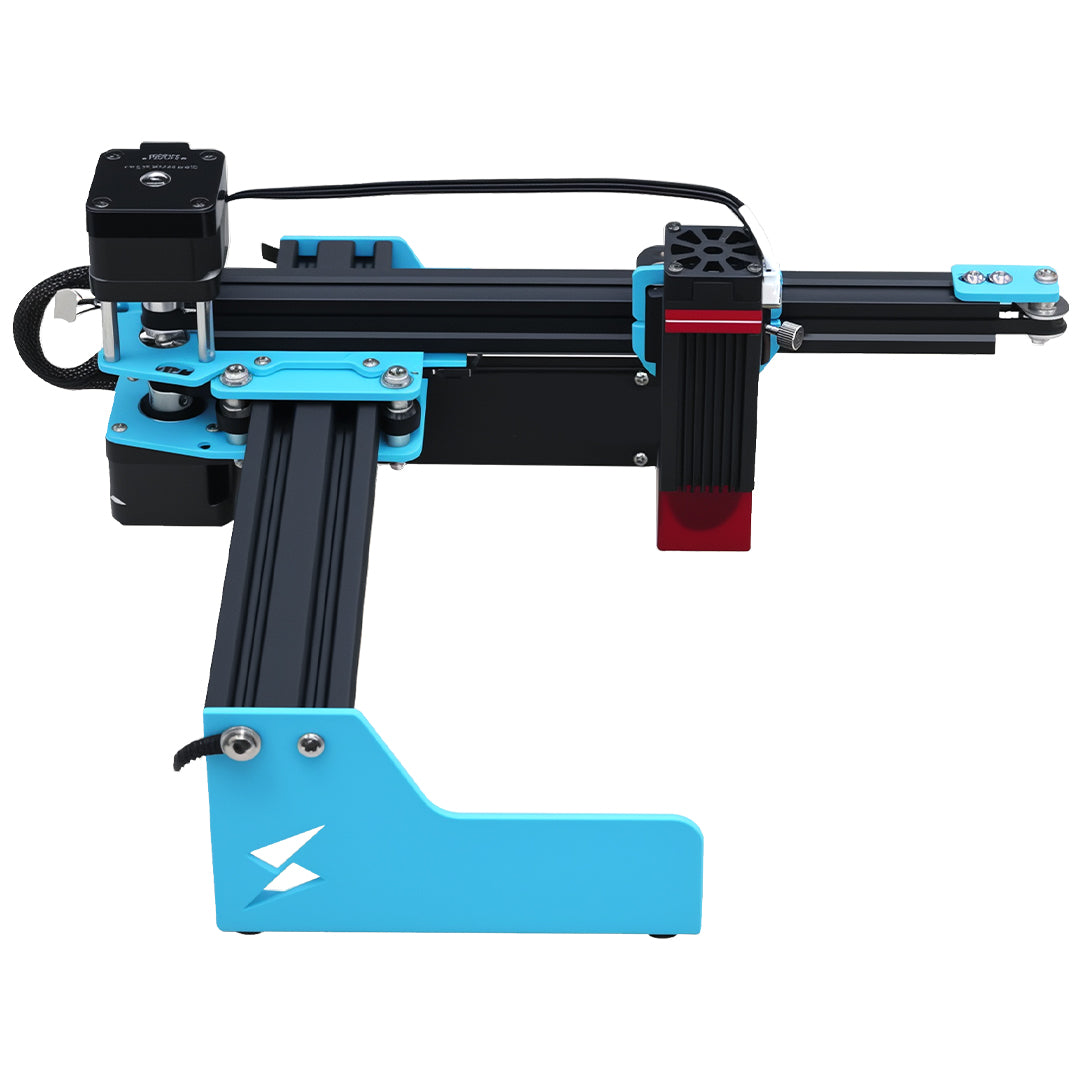
A1 Mini is a compact blue-diode workflow for small-craft learning and proofing. Confirm the live configuration, material guidance, controls, accessories, software, and regional availability before use. Compact size does not make unknown materials safe or replace ventilation, guarding, supervision, or manufacturer instructions. See the current A1 Mini product page for live details. This workflow makes no power, speed, throughput, profit, safety-certification, or universal material-result promise.
Related A1 Mini records
Use the three-tone photo proof when photo preparation is part of the measured work. The project-frequency scorecard helps decide whether a fixture or reusable file is worth developing.
Real buyer questions: Small Craft Price Floor
Should design time be charged on repeat orders?
Include the actual repeat-order design time, even if it is only opening the file, changing a name, checking the proof, and exporting. A separate one-time setup fee is another option, but document the policy consistently.
How do I include failed samples?
Use your observed spoilage rate from comparable jobs. For example, if qualifying runs consume one extra $2 blank for every ten accepted items, allocate $0.20 per item; update the allowance when the evidence changes.
Does a price floor guarantee demand?
No. It only identifies the stated cost boundary. It does not establish market demand, an achievable selling price, conversion, revenue, or profit; validate those separately with real buyers.