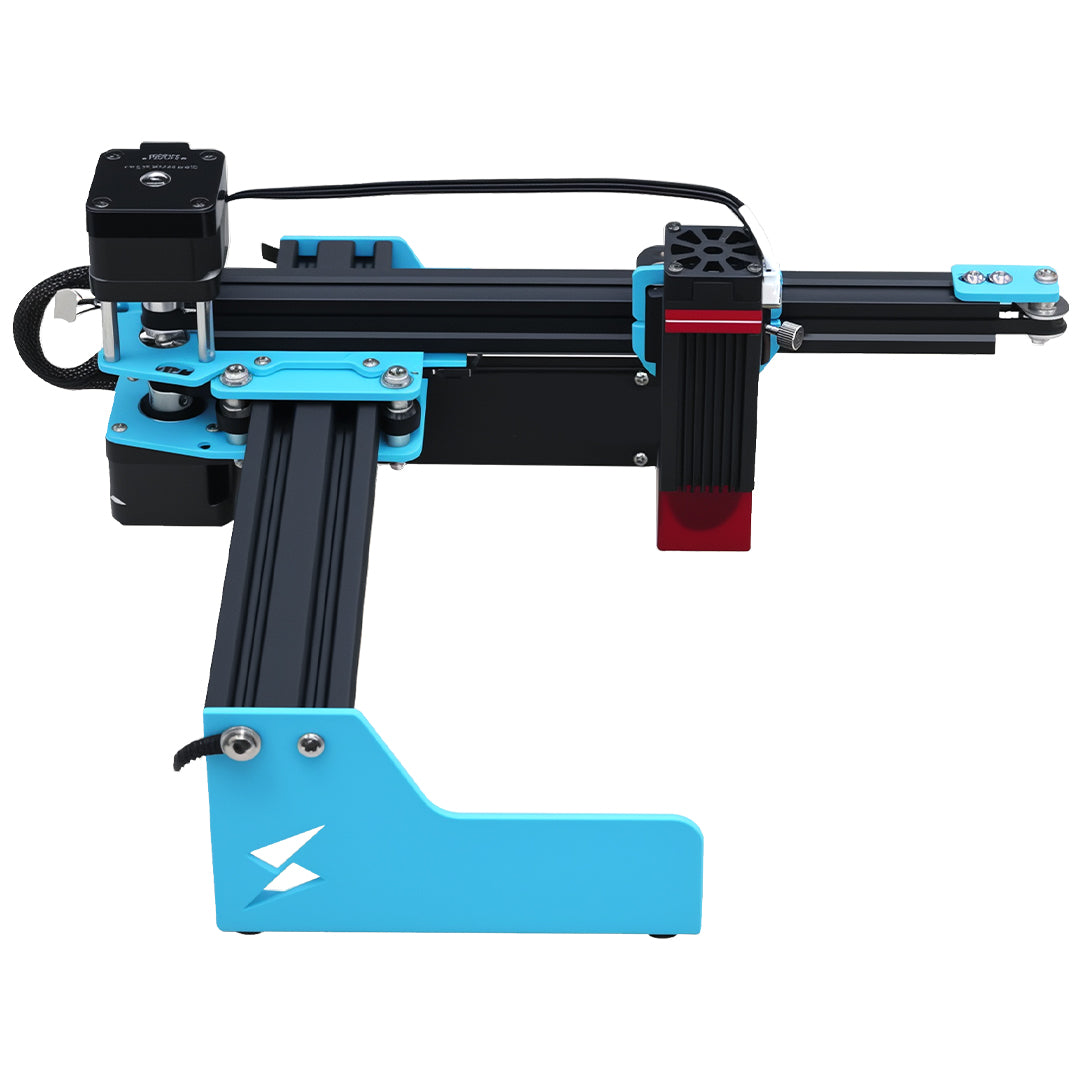


A bottle opener may be described as “metal,” yet the surface a laser sees could be powder coat, paint, anodized aluminum, a plastic sleeve, or bare stainless steel. Those are different marking problems. When a customer brings an opener for a TYVOK P2 personalization order, identify the actual visible layer and make a sample before promising a name, logo, or date. Standard P2 is a blue-diode galvo platform; do not quote it as if it were a 1064 nm fiber machine that reliably marks bare metal.

TYVOK bottle-opener product example; its exact PU and metal construction must be checked before any laser process.
Inspect the object as a finished product
Photograph both sides and measure the flat area that a recipient will see while using the opener. Keep text away from the working lip, sharp edges, rivets, and places where fingers routinely rub. Check whether a magnet, key ring, or handle grip changes its orientation. An engraving that looks centered on the bare object can end up upside down once the opener is attached to a keychain or displayed on a refrigerator.
Ask the supplier or customer for the substrate and coating specification, not just the retail material name. A dark coated aluminum blank may mark by removing the finish, while an uncoated stainless opener may not yield the requested direct mark with the installed P2 blue-diode module. A plastic grip with unknown chemistry should not be processed until its composition and laser compatibility are confirmed. Do not use a visible surface scratch as a substitute for a material data sheet. If identification is impossible, decline the laser job or use a suitable alternative personalization method.
| Surface found | Question before quoting | Practical route |
|---|---|---|
| Known laser-compatible coating | What color appears when the coating is affected? | Test a spare from the same lot |
| Bare metal | Is direct metal marking required? | Evaluate a verified metal-marking process |
| Plastic or rubber grip | What is the exact chemistry? | Stop until supplier confirms compatibility |
| Mixed finish with exposed steel edge | Will the design cross two materials? | Move or split the design after proof |
This table is a decision aid, not a machine preset. The finish can differ by supplier lot and color. The TYVOK P2 offers compact personalization with interchangeable blue-laser modules, while P2 Ultra is the distinct 20W, 1064 nm fiber route for metal-first work. Even on P2 Ultra, exact metal and desired finish require a physical test. Customers should be shown the sample produced on their actual blank before approving a paid run.
Design around use and abrasion
Put a paper mock-up on the real opener and hold it as a customer would. Check that a thumb does not hide a short name and that the mechanism does not scrape a decorated area. For keychain openers, attach the actual split ring during the proof. For magnetic bar openers, test the display orientation on the intended surface. Tiny artwork that seems clear in an enlarged preview can become unreadable after a coating is removed. Make the longest name and the smallest logo detail part of the first sample.
Do not promise that an exposed underlying color will match an illustration. On coated metal the result depends on coating thickness, color, adhesion, and the underlying surface. A sample should be viewed both under neutral light and after normal handling. If the coating softens, flakes, or produces unexpected fumes, stop. If the surface mark wears off with a light wipe, change the process or blank rather than shipping a fragile result. Avoid marking the functional edge or affecting an area that contacts drinks or food.
Quote the whole process
Count inspection, cleaning, fixture setup, a first-piece proof, personalization, cooldown, finishing, hardware assembly, and rejects. A low-priced opener can still carry high labor if its curved handle is difficult to hold or each blank arrives with a different coating. Batch by exact SKU and finish, not just by the word “bottle opener.” Keep a photo of the approved object next to the order list. When the lot changes, repeat the material test before continuing production.
Provide effective exhaust and active supervision for every marking pass. Keep reflective areas and loose hardware clear of the beam path. Reject unknown materials, particularly PVC, vinyl, and halogenated plastics. Stop for flame, unusual odor, or an unstable fixture. The outcome is a repeatable, honestly described personalized object, not a promise that any metal item can be engraved by any laser.
Can P2 directly engrave any bare stainless opener? Do not assume so. Identify the installed laser module and test the exact metal, or choose an appropriate metal-marking process.
Can I use one setting for all opener colors? No. Different coatings and lots may need separate qualification.
Is a design on the working lip a good idea? Generally no; keep personalization away from functional contact and high-wear areas.
Select the right marking route
For identified coated blanks, compare TYVOK P2 purchase options. If the order requires verified bare-metal marking, review P2 Ultra and request a material sample.