

Reject a slate blank before personalization if it has a crack through the body, a loose flake at a working edge, an unstable base, or damage outside the finish standard agreed for the order. Natural cleft texture is not automatically a defect, but engraving will not repair a damaged coaster. Sort the delivery while the blanks are still unmarked.

An August 18 buyer discussion asks where to find slate coasters without chipped edges or surface cracks for a first paid order. That is a purchasing problem as much as an engraving problem: the usable quantity can be smaller than the delivered quantity.
Make one acceptance sample visible
Agree what the customer is buying before inspecting a carton. A rustic, uneven edge and a smooth, uniform edge are different expectations. Keep an unengraved example or clear supplier photograph beside the inspection area. Do not compare each successive blank only with the previous one; that slowly changes the standard.
Examine the top, underside and perimeter in ordinary good light. Handle stone carefully without rubbing fingers across a suspect edge. Set each blank on a stable flat surface and note rocking. Photograph damage with the blank identifier and packaging still available for a supplier query. Keep rejected pieces physically separate from the usable stack.
| Observation before a P2 job | Practical disposition |
|---|---|
| Intact cleft edge matching the agreed sample | Keep for layout assessment |
| Line visible through the thickness or on both faces | Reject from this order; ask the supplier |
| Loose edge fragment or sharp unstable chip | Isolate; do not disguise with artwork |
| Rocking or changed underside support | Hold until the support problem is resolved |
| Cosmetic mark outside the agreed finish | Seek customer acceptance before personalization |
These checks are an acceptance method, not a structural certification. Do not bend a coaster to prove that a suspected crack is harmless.
Count usable blanks before promising the quantity
For an illustrative delivery of 24 blanks, suppose three fail inspection and one remains uncertain. There are 20 accepted pieces, not 24 ready pieces. If the customer ordered 24, resolve the shortage before marking the accepted stack. A later replacement may differ visibly from the first lot.
Surface dust is a separate issue. Once the stone has passed incoming inspection, use an appropriate slate cleanup check before deciding whether a mark is weak. Cleaning residue off sound stone does not make a cracked piece acceptable.
Where the P2 fits
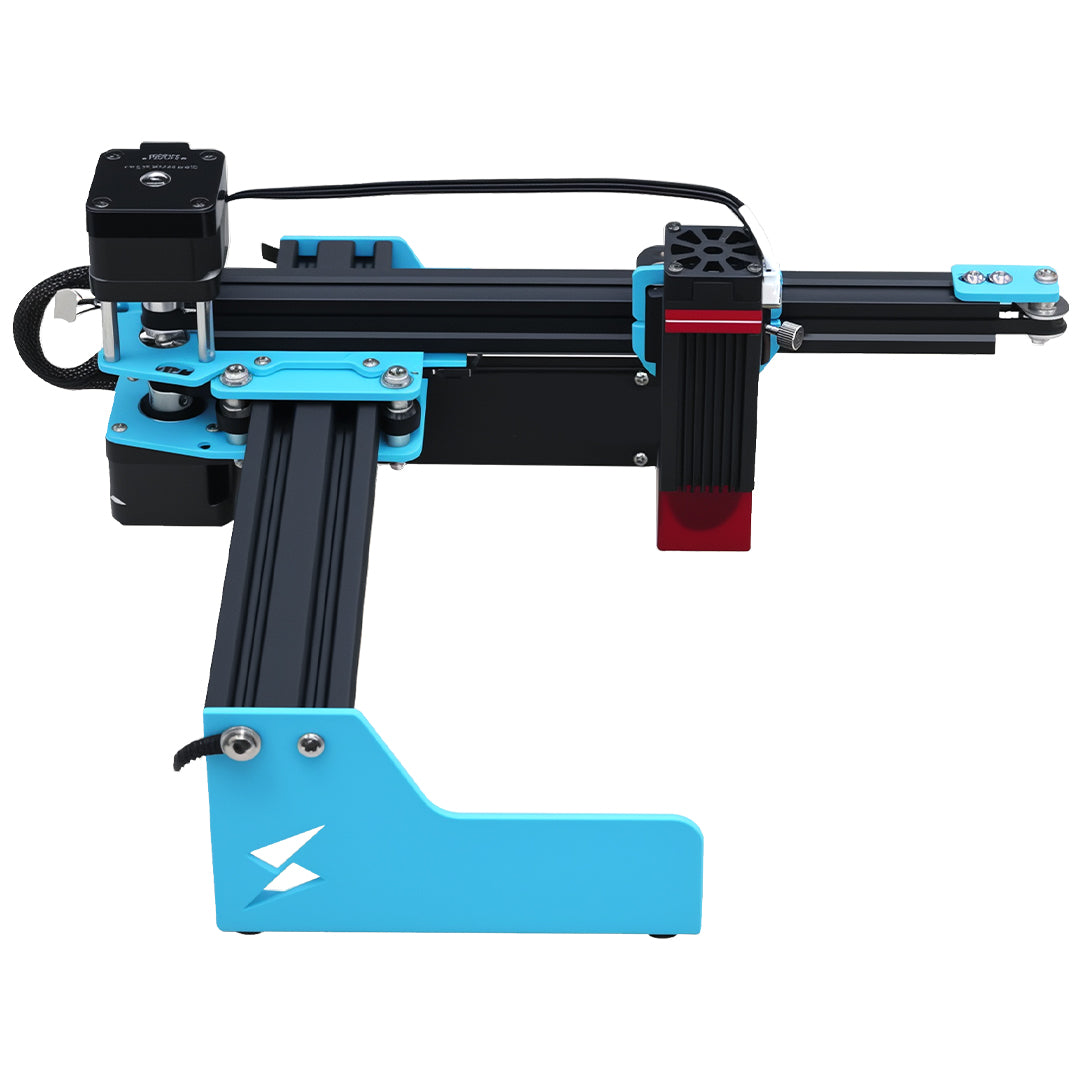
The current TYVOK P2 listing describes a compact galvo platform with a 60 × 60mm working field. Check the selected configuration and qualified slate surface before planning the marking area; a coaster larger than the mark still needs stable, compatible support. Standard P2 is a blue-laser system, not a stone cutter, and no strength improvement follows from engraving.
When a supplier demonstrates an unfamiliar blank, ask for evidence on that exact blank rather than a photograph of another slate finish. Keep any required machine protection, extraction and supervised operation in place during the later approved marking process.
Can I place the monogram over a small crack?
No. Hiding the line visually does not address the damaged stone. Remove that blank from the order and resolve it with the supplier.
Should every irregular edge be rejected?
No. An intact rustic edge may be the intended product. Compare it with the agreed sample, while rejecting loose, unstable or otherwise unacceptable damage.