

P2 Moved in Transit? Verify Registration With a Datum Card
After transport, hold customer work until a sacrificial datum card proves the fixture and saved coordinate reference still agree. Powering on normally says nothing about fixture shift.
Travel resets the registration claim
Portable personalization setups can lose fixture registration during travel even when the machine still powers on normally.
Observation: the post-travel datum is 0.3 mm left and 0.2 mm high, with no skew. Controlled test: reseat a second sacrificial card without moving the fixture and repeat the marks. Interpretation: the same offset twice suggests a stable fixture shift; a different offset suggests looseness or loading variation. Action: correct the stable datum or rebuild the unstable fixture, then prove two fresh cards.
Read X, Y, and skew from one card
| Datum result | Measured condition | Release decision |
|---|---|---|
| Centered within shop limit | X/Y offsets match retained baseline | Release known blank only |
| Consistent offset | Fixture shifted but remains stable | Correct mechanically and repeat |
| Variable offset | Loose stop, debris, or loading variation | Hold and rebuild fixture |
| Skewed mark | Rotation or seating error | Square fixture and re-prove |
Write the accepted offset on the fixture card, not in someone's memory. If the fixture or software origin changes, retire that baseline and create a new controlled one.
Example offsets and their release states
- Before travel, retain one labeled datum card and photograph its seating.
- On arrival, inspect fasteners, stop faces, cables, extraction and the work surface.
- Load a fresh sacrificial card using the normal operator motion.
- Mark the same corner and center references, then measure X, Y and skew.
- Run a second card after reseating before releasing orders.
Measure center and two separated corner targets so rotation cannot hide inside one centered mark. Record X, Y, and diagonal error. A fixture that powers up and frames normally can still have moved during transit; electrical readiness and registration readiness are different checks.
A second seating proves repeatability
Release begins with a known shop blank, not a customer object. The two-card datum result travels with the fixture until the next move or mechanical change.
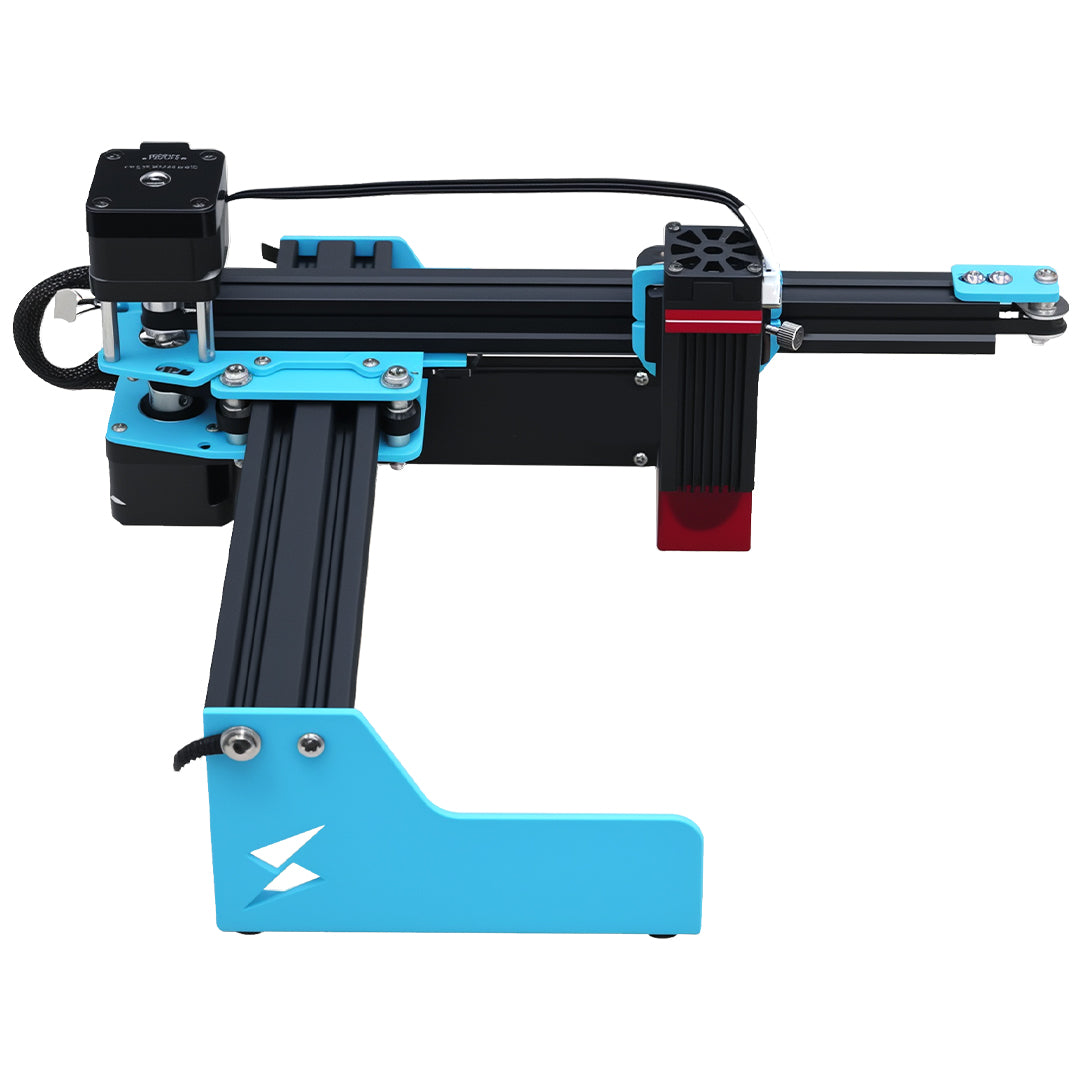
Use the TYVOK P2 product page to confirm the selected configuration after transport. Once registration is proven, Will an Engraved QR Code Still Scan After Cleaning or Clear Coat? covers finished-code validation for event products.
What event operators ask after a move
Can a camera photo replace measurement?
A square, scaled inspection image can support measurement; a handheld perspective photo alone cannot.
Should the first post-travel item be a customer order?
No. Use a replaceable known-composition reference.
Does a datum card prove ventilation?
No. Registration and venue recommissioning are separate release gates.
Two matching datum cards reopen the queue
A single centered mark is setup evidence; two measured seats demonstrate repeatability. Preserve both with the fixture until it moves again.