

Direct Answer
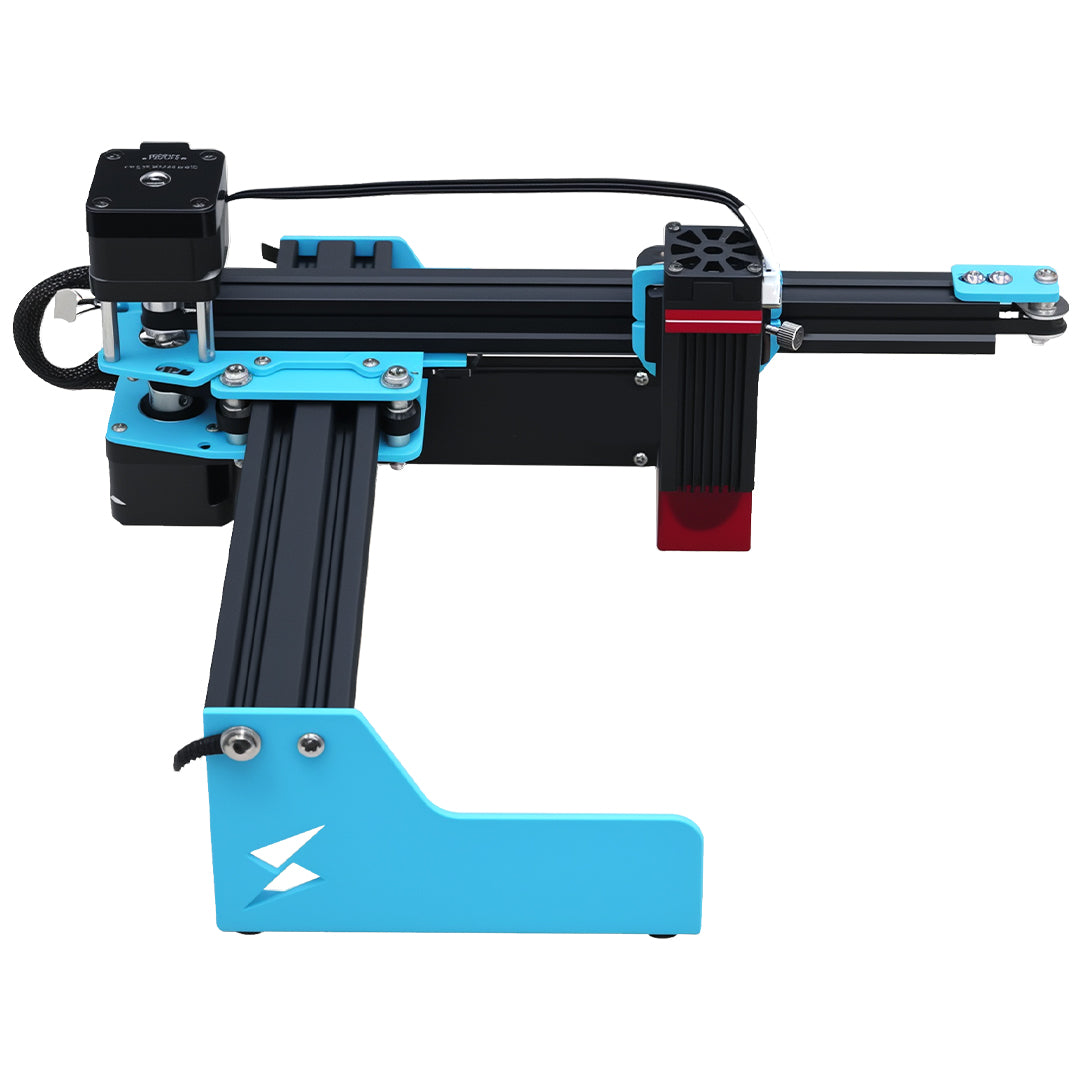
If your real product is a wood sign, campus sign, event sign, long board, wall panel, or custom decor piece over 24 inches, the buying decision should start with work area and alignment risk, not only laser wattage. TYVOK X1S 2026 is built for the large-format route: start with an 800 x 800mm setup, plan toward an 800 x 2000mm workspace path where the live offer confirms it, and build a workflow that can help reduce forced segmented passes when the job fits the workspace.
Check the current X1S 2026 options here: https://tyvok.com/products/tyvok-spider-x1s-laser-engraver-cutter
Quick Checklist
- Measure the largest product you actually plan to sell, not the biggest project you can imagine.
- Decide whether the job can fit in one layout or needs segmented passes.
- Confirm whether the current X1S 2026 offer includes the 800 x 2000mm workspace upgrade for your selected option.
- Choose a power option by workflow: engraving, cutting letters, layered decor, or larger batch production.
- Build your first sign around one material, one layout template, and one proofing process.
- Use LightBurn, LaserGRBL, or TYVOK Studio according to the file workflow your shop can repeat.
- Test on offcuts before promising a customer-ready sign.
What Size Laser Do You Need for 24-Inch, 30-Inch, and 48-Inch Signs?
The first number to translate is simple: 800mm is about 31.5 inches, and 2000mm is about 78.7 inches. That does not mean every sign is automatically simple, because margins, fixtures, board support, artwork direction, and safety space still matter. But it does show why an 800 x 800mm starting area and an 800 x 2000mm upgrade path are relevant for sign buyers.
| Common sign size | 800 x 800mm planning | When 800 x 2000mm matters |
|---|---|---|
| 24 inches | Usually fits within 800mm if the layout and margins are controlled. | Useful if the sign is narrow but part of a longer batch or repeated strip. |
| 30 inches | Often fits, but margins, clamps, and board shape need planning. | Useful when the board is longer than it is tall or has repeated elements. |
| 36 inches | May require rotation, segmentation, or a different layout decision. | Better fit for long-board planning. |
| 48 inches | Usually becomes a long-board workflow. | Strong reason to consider the 800 x 2000mm path. |
| 60-72 inches | Not a compact-sign job anymore. | Plan support surface, alignment, ventilation, and material handling before selling. |
Read the related 800 x 2000mm planning guide here: https://tyvok.com/blogs/news/x1s-800x2000-extension-large-format-guide
Large Sign Buying Table
| Buyer question | Why it matters | X1S 2026 workflow answer |
|---|---|---|
| Is the sign over 24 inches? | Smaller machines may require repositioning or split layouts, depending on final size. | Start from large-format planning instead of treating area as an afterthought. |
| Will the design be one piece or segmented? | Each added segment can add alignment risk and finishing time. | Use the 800 x 800mm base and evaluate the 800 x 2000mm path for long boards. |
| Is this a one-off or repeat product? | Repeat signs need templates and job notes. | Save file versions, material notes, origin rules, and proof photos. |
| Is software already part of your workflow? | Learning a new tool during a paid job creates errors. | Current X1S 2026 messaging references LightBurn, LaserGRBL, and TYVOK Studio workflows. |
| What is the first sellable category? | A machine is useful only when tied to a product plan. | Wood signs, wall art, event signage, decor panels, and long-board layouts are the clearest starting points. |
Why Large Signs Fail on Small Workflows
Many first laser purchases are judged by power, price, and whether the machine can technically engrave wood. That misses the real problem for large signs: keeping the artwork aligned across the whole board.
When a design is larger than the work area, the operator may need to move the material, split the file, or reposition the laser. That can work, but every repositioning step creates a chance for a visible seam, offset, or crooked repeat. For paid signs, the cost is not just the ruined board. It is the time spent explaining the mistake, re-cutting material, and re-running the job.
TYVOK X1S 2026 should be evaluated as a workflow answer to that problem. The value is not only "bigger size." It can mean fewer forced split decisions and a clearer planning path for long-board products.
Start With the Product Category
Before comparing machines, choose the first product you want to make repeatedly. Good X1S 2026 starting categories include:
- Welcome signs for homes, venues, and events.
- Large name signs for offices, schools, and studios.
- Layered wall art and map-style decor.
- Long-board brand panels for retail displays.
- Packaging or decor panels arranged in repeat layouts.
- Seasonal signs where the same board size returns every month.
This matters because "large format" is not one workflow. A 30-inch welcome sign, a layered map, and a sheet of packaging inserts all use different file setup, material handling, and quality checks.
800 x 800mm vs 800 x 2000mm: Think in Jobs, Not Specs
At review time, the live X1S 2026 page presents an 800 x 800mm starting setup and an 800 x 2000mm workspace upgrade path for the first 100 buyers when the offer applies. The practical question is simple: will your profitable products fit inside 800 x 800mm, or will long boards become normal?
Use 800 x 800mm thinking when your work is mostly square signs, wall art panels, decor sheets, and medium batch layouts.
Use 800 x 2000mm planning when the selling point is length: long boards, vertical signs, display strips, large welcome signs, repeated decor panels, or jobs where splitting the design would create too much alignment risk.
Always verify the current bundle and allocation on the live product page before checkout, because launch offers can change.
For broader machine-selection context, compare the X1S / X1S Pro large-format guide here: https://tyvok.com/blogs/news/large-format-laser-engraver-buying-guide-x1s-x1spro
10W vs 20W vs 60W: Choose by Sign Workflow
Do not choose power by the biggest number first. Choose it by the product you want to repeat.
| Workflow | What matters most | Buying guidance |
|---|---|---|
| Engraved signs and surface graphics | Layout size, contrast, file quality, material prep. | Lower-power options may be enough for engraving-focused work if your materials test well. |
| Cut letters and layered decor | Cutting time, material thickness, smoke control, edge quality. | Higher power can matter more, but material testing is still required. |
| Batch decor panels | Repeat layout, naming, templates, and operator handoff. | Choose a setup you can document and repeat, not only the fastest spec. |
| Long boards and 48-inch-plus signs | Workspace, support surface, alignment, and ventilation. | The 800 x 2000mm path may matter more than power alone. |
If you are unsure, start with the product page and compare the live X1S 2026 options before checkout: https://tyvok.com/products/tyvok-spider-x1s-laser-engraver-cutter
Software Workflow: Do Not Learn During a Paid Job
Large signs make software discipline more important. A small gift can sometimes survive a manual adjustment. A long board usually cannot.
For X1S 2026, build a simple software workflow:
- Keep a master template for each board size: 24-inch, 30-inch, 36-inch, and long-board jobs.
- Save origin and alignment notes in the file name or job sheet.
- Keep customer artwork separate from production-ready artwork.
- Use a proof image before engraving.
- Save the final settings and material notes after the first successful run.
- If a job must be split, document the registration marks and stop points before the paid run.
Current site and product messaging references LightBurn, LaserGRBL, and TYVOK Studio workflows. Choose the one your operator can repeat calmly. The best software is the one that makes your second job cleaner than your first.
For a related alignment workflow, see: https://tyvok.com/blogs/news/tyvok-x1s-long-board-engraving-alignment-workflow
Material Handling Is Part of the Machine Decision
Large wood signs are physical objects. They bend, bow, collect dust, and take up bench space. A good buying decision includes the bench, not just the laser.
Before the first customer job, prepare:
- A flat support surface for long boards.
- A way to keep the board from shifting.
- A cleaning and masking routine for the specific wood or finish.
- Offcuts from the same material for test passes.
- A stop rule for warped, cupped, or inconsistent boards.
- Ventilation appropriate for the material, finish, adhesive, and workspace.
- Fire watch and safe operating habits for long jobs.
- Air assist or smoke-control planning when your workflow requires it.
If a board cannot sit flat and stable, do not treat the job as ready. Fix the handling problem first.
Cut vs Engrave: Set the Boundary Before Selling
Wood sign buyers often mix several different jobs together:
- Engraved sign: marking the surface of a board.
- Cut letters: cutting separate wood characters or shapes.
- Layered sign: cutting multiple layers, then assembling and finishing.
- Painted or stained blank: engraving through, onto, or around a surface finish.
Each workflow behaves differently. Wood species, thickness, plywood glue, paint, stain, masking, air assist, and power choice can change results. Treat the first product as a material test, not a promise that every sign material will behave the same way.
A Simple First Sign Workflow
Start with one controlled project:
- Pick a board size that matches your intended product line.
- Create one template with safe margins.
- Add sample text and one logo-style graphic.
- Run a test on an offcut.
- Photograph the approved result.
- Save settings, material source, and file version.
- Repeat the same layout once before adding custom customer work.
This workflow is slower than guessing, but it is faster than rework.
TYVOK X1S 2026 vs xTool P2, Glowforge Pro, and OMTech CO2
Buyers looking at large signs often compare very different machines. The point is not that one format wins every job. The point is matching the machine to the sign workflow.
| Option | Publicly stated work-area signal | Strong fit | Watch-out |
|---|---|---|---|
| TYVOK X1S 2026 | 800 x 800mm start and 800 x 2000mm upgrade path on current TYVOK messaging. | Large wood signs, long boards, wall art, batch layouts, expandable large-format planning. | Open-frame workflow requires serious material handling, ventilation, fire watch, and workspace planning. |
| xTool P2 | xTool support lists 680 x 360mm bed and 600 x 308mm processing area. | Enclosed CO2 workflow, acrylic/wood cutting, camera-assisted desktop production. | Large signs may depend on passthrough/accessories and narrower processing dimensions. |
| Glowforge Pro | Public page lists 495 x 279mm cutting area and passthrough slot. | Enclosed desktop CO2 workflow and pass-through projects. | Bed area is smaller; long projects depend on feeding material through correctly. |
| OMTech 60W CO2 examples | OMTech lists a 16 x 24 inch working-area model in its CO2 lineup. | Traditional CO2 cutting/engraving shop workflow. | Larger footprint, heavier setup, and model selection matter. |
Use this table as a buying filter, not a final verdict. If the sign is long and the business value comes from fewer forced splits, X1S 2026 deserves a close look. If the business value comes from enclosed CO2 cutting, compare CO2 machines carefully.
When X1S 2026 Makes More Sense Than a Compact Engraver
Choose a compact engraver when your best products are small: tags, cards, jewelry, leather patches, and tabletop personalization.
Choose X1S 2026 when the product itself needs physical area: signs, panels, long boards, wall art, retail displays, event decor, and repeated large layouts.
Compare P2 Ultra when the problem is metal-first marking rather than size. Compare X1S 2026 when the problem is layout area and large materials.
Purchase CTA
If your next products are large wood signs, long boards, wall art, or batch layouts, start from the official TYVOK X1S product page and confirm the current X1S 2026 bundle, workspace upgrade offer, power options, and software notes before checkout: https://tyvok.com/products/tyvok-spider-x1s-laser-engraver-cutter
FAQ
Is X1S 2026 mainly for signs over 24 inches?
It is a strong fit for buyers who are moving into larger signs, panels, long boards, and wall decor. The key is not the exact 24-inch number; the key is whether your normal product is too large for compact workflows.
Does 800 x 2000mm mean I should skip the 800 x 800mm setup?
Not always. If your most profitable products fit inside 800 x 800mm, that may be enough for the first workflow. If long boards and large vertical signs are central to the business, the 800 x 2000mm path becomes more important.
What size laser do I need for a 30-inch wood sign?
A 30-inch sign can often fit within an 800mm workspace if the layout, margins, and fixture space are planned. If your 30-inch sign is part of a longer board family, the 800 x 2000mm path may still be worth comparing.
Can X1S 2026 cut wood signs or mainly engrave them?
That depends on the wood species, thickness, glue, finish, power option, air/smoke control, and settings. Treat engraving, cut letters, and layered signs as different workflows and test on offcuts before selling.
Should I choose 10W, 20W, or 60W for signs?
Choose by workflow. Engraved signs depend heavily on layout, contrast, and material prep. Cut letters and layered decor may need more power and more smoke-control planning. Long-board jobs may depend more on workspace and support than power alone.
Can I use LightBurn with X1S 2026?
Current product messaging references LightBurn, LaserGRBL, and TYVOK Studio workflows. Before buying, check the live product page and support notes for the latest compatibility and setup guidance.
What should I test before selling large wood signs?
Test the board source, flatness, surface prep, artwork margins, engraving contrast, masking/cleanup, and packaging. Large signs often fail because of workflow issues, not only because of a single setting.
Is an open-frame laser safe for indoor sign making?
Only if the workspace is planned responsibly. Confirm ventilation, eye protection, fire watch, material safety, smoke control, and local rules before running paid jobs indoors. Avoid unknown materials and finishes.
How do I avoid smoke marks on painted or stained wood?
Use controlled material tests, masking where appropriate, air/smoke management, and a cleanup routine matched to the finish. Do not promise a customer result until the exact board and finish have been tested.
Is X1S 2026 better than a CO2 laser?
It depends on the job. Many CO2 machines are excellent for enclosed cutting workflows. X1S 2026 should be considered when you want a lightweight large-format route and your main need is larger layout planning, long boards, wall art, and expandable workspace. Compare by product type, shop space, software workflow, and material needs.