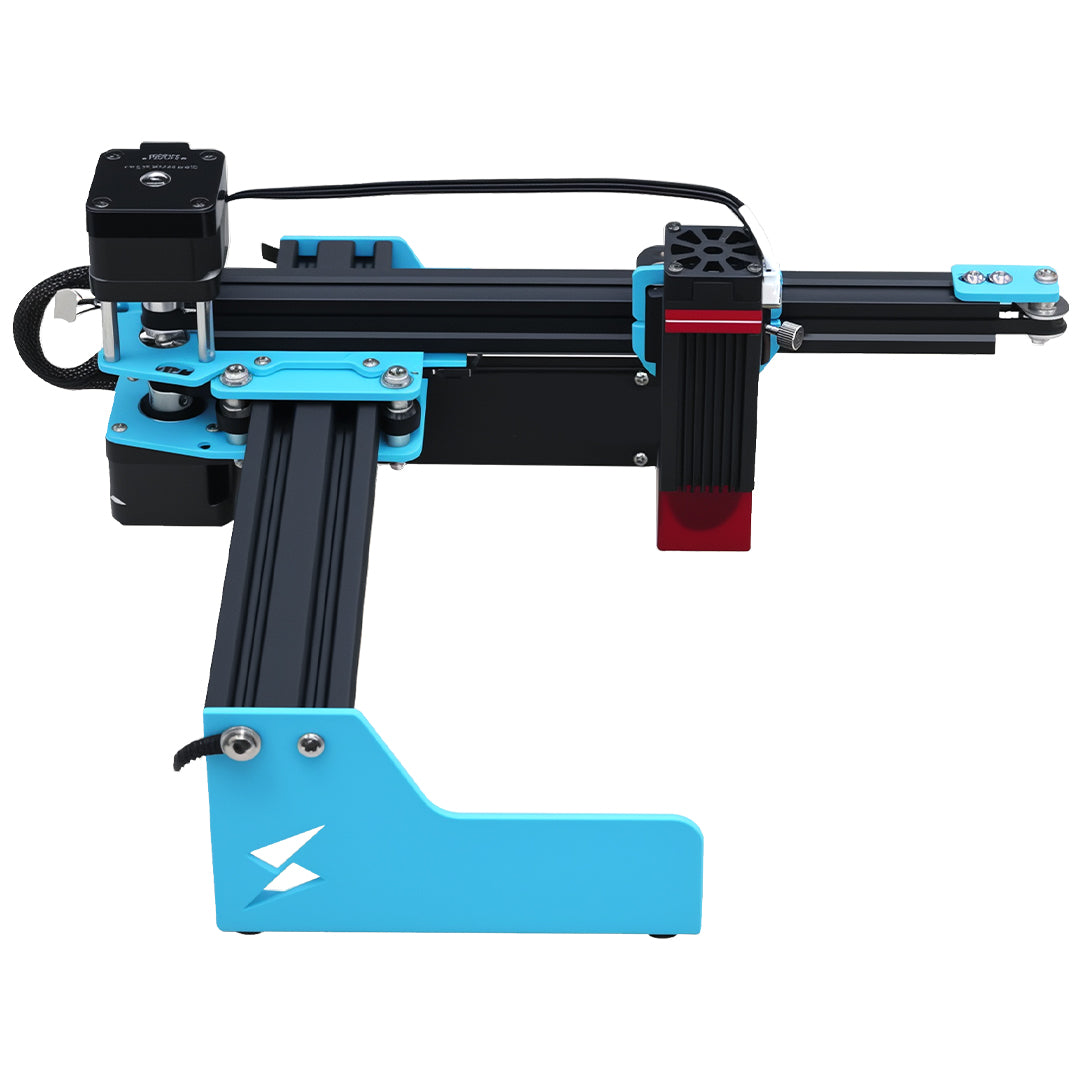


Stop the X1S Pro job using its documented safe-stop procedure when a released part tips upward, moves into a travel path, or loses its known position. Do not reach into an active job or try to press the piece flat. A shifted part changes the physical situation even when the remaining software preview looks correct.
A production discussion about released pieces describes parts sliding or being struck after cutting. Adding a delay is not automatically a solution: time alone does not restore support or registration. The useful preparation is deciding exactly what the attending operator will treat as a stop condition.
Agree on observable triggers before loading
Use descriptions that a second operator could recognize. “It looks a little wrong” is too vague; “the corner is no longer flat against its verified support” gives a clear observation. Include access and visibility in the decision: if the operator cannot see whether a part has moved, that area has not been demonstrated safe to continue.
| Observed event in an X1S Pro batch | Required decision |
|---|---|
| A released corner rises | Stop; do not allow the next pass to approach it |
| A piece slides or rotates | Stop; treat its registration as lost |
| An object enters the travel route | Stop; do not attempt a moving rescue |
| Smoke or flame behavior becomes abnormal | Follow the documented emergency procedure |
| The operator loses a clear view | Withhold continuation until conditions are safely established |
Practice locating the documented stop control before processing. Do not create a tip-up event deliberately as a demonstration. Keep the work attended throughout; an estimated long processing duration is not a reason to leave the machine.
A stopped job becomes a new assessment
Wait for the manufacturer's safe-access conditions before approaching material or support hardware. Follow the applicable shutdown, cooling, and fire-response instructions. Photograph the stopped arrangement only when safe, including the moved piece and nearby unfinished features. Mark the affected position on a separate batch map.
Do not assume the original coordinates remain valid, and do not restart over a displaced piece. Quarantine questionable parts from accepted pieces. If current documentation does not explain a safe restart for the observed event, send the evidence to TYVOK rather than improvising hold-downs, controller settings, or a recovery motion.
The X1S Pro listing does not qualify every small-part support arrangement. Resolve the exact configuration with the current manual. Reducing quantity may improve inspection access; use the fixture batch-count worksheet to select a smaller, independently proved layout. For multiple operations, check the mixed-file layer assignments before that proof.
Can I add a pause and remove each finished piece?
Only if the current machine procedure explicitly permits that workflow and establishes safe access and continuation. A software pause alone does not authorize reaching into the working area.
Is one tipped part grounds to reject the whole batch?
It is grounds to stop and segregate the affected work. Inspect each part against the acceptance criteria; do not count uninspected pieces as good merely because most of the job completed.