

Dry-fit the wooden top on its actual shaft before adding a name or pattern. A loose shaft, tilted hole or poorly seated body can make the top wobble even when the engraving is perfectly centered. Separate a mechanical problem from decoration by testing an unmarked sample first.

The animal and star spinning-top project demonstrates decorated wooden tops. The shaft-fit procedure here is a practical prototype check, not a report that the source design failed. Use your own permitted design and suitable precut parts rather than assuming the source's cutting setup transfers to a small engraver.
Observe the top without changing several things at once
Check whether the shaft sits squarely and securely in the body. On a suitable clear surface, give the assembled adult prototype a gentle hand spin and observe its behavior. Stop if a part loosens. A spinning test should not involve the operating laser or a powered tool.
| Observation before A1 engraving | What to inspect next |
|---|---|
| Body tilts relative to shaft | Hole orientation and seating faces |
| Shaft slips in the hole | Actual mating dimensions and assembly method |
| Top touches down on one edge | Body shape, flatness and shaft position |
| Unmarked sample spins acceptably | Preserve those parts as the comparison sample |
Do not keep deepening an engraving to “balance” an unstable top. Remove the decoration from the diagnosis first. Uneven material removal can introduce another variable without correcting the hole or shaft.
Personalize the separate wooden body
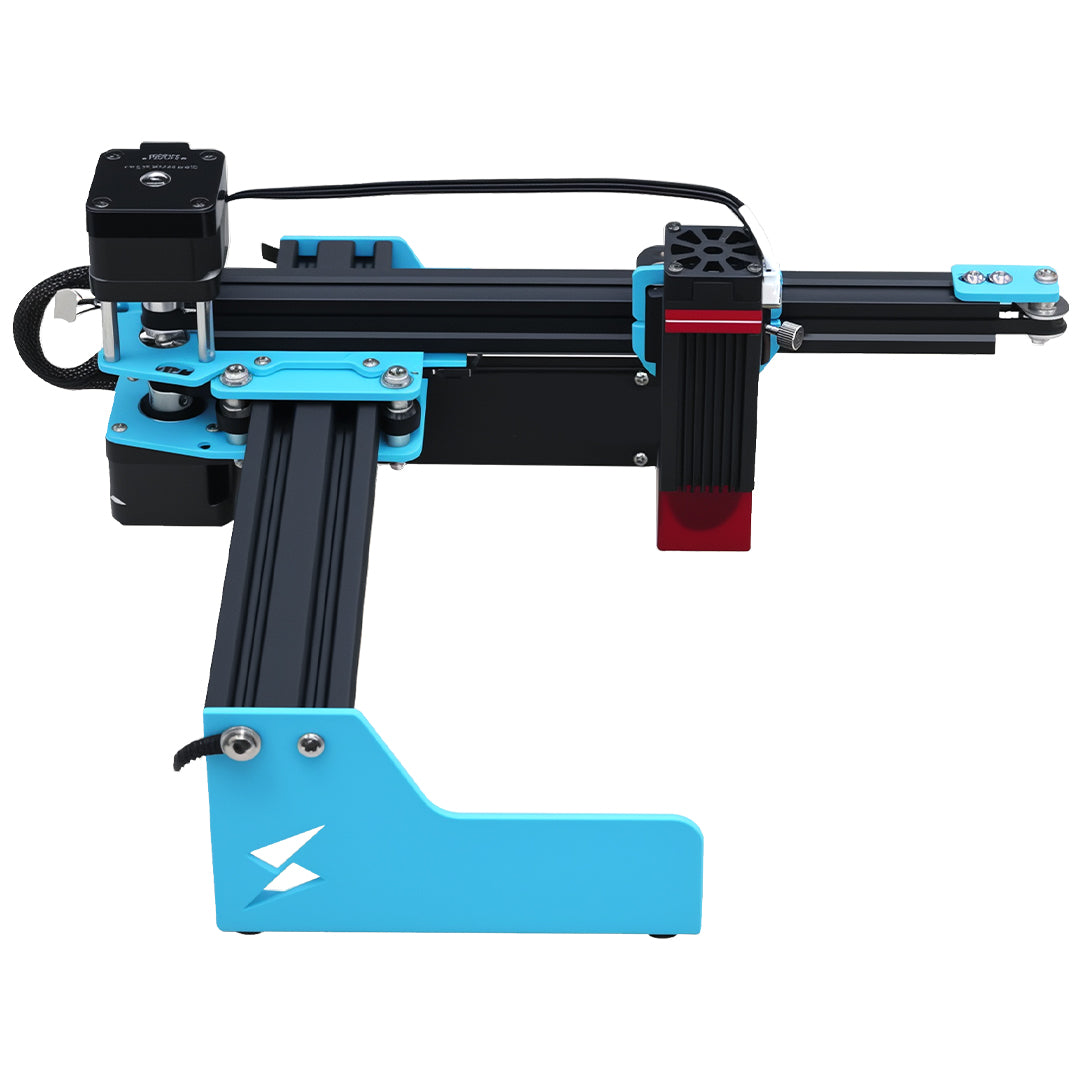
For the A1 Mini, use a compatible flat component within the 120 × 130 mm area. Remove the shaft before placing the body in a suitable supported position. Inspect the actual engraving setup and keep the intended design away from the mating hole where it could obscure a useful assembly reference. Use ventilation, required eye protection and continuous supervision.
The precut-blank decision matters here: this workflow does not promise to cut a thick top body. An unknown plastic shaft, painted scrap or unidentified coated wood should not be included in the laser process.
After marking, reassemble using the same accepted method and compare behavior. The lace-tip resizing check is another example of why functional holes cannot simply shrink with a decorative outline. For a larger moving assembly, the marble-run inlet test extends that principle to the transitions between parts.
Will a centered engraving guarantee that the top balances?
No. Centered artwork is a visual property. The mass distribution, body geometry, hole and shaft assembly determine mechanical behavior, and a finished sample still needs a physical check.
Is a small handmade top automatically suitable for children?
No. Small parts, detachable shafts and finishes require a separate age-appropriate safety assessment. This is an adult craft prototype procedure, not toy certification or permission for children to operate a laser.