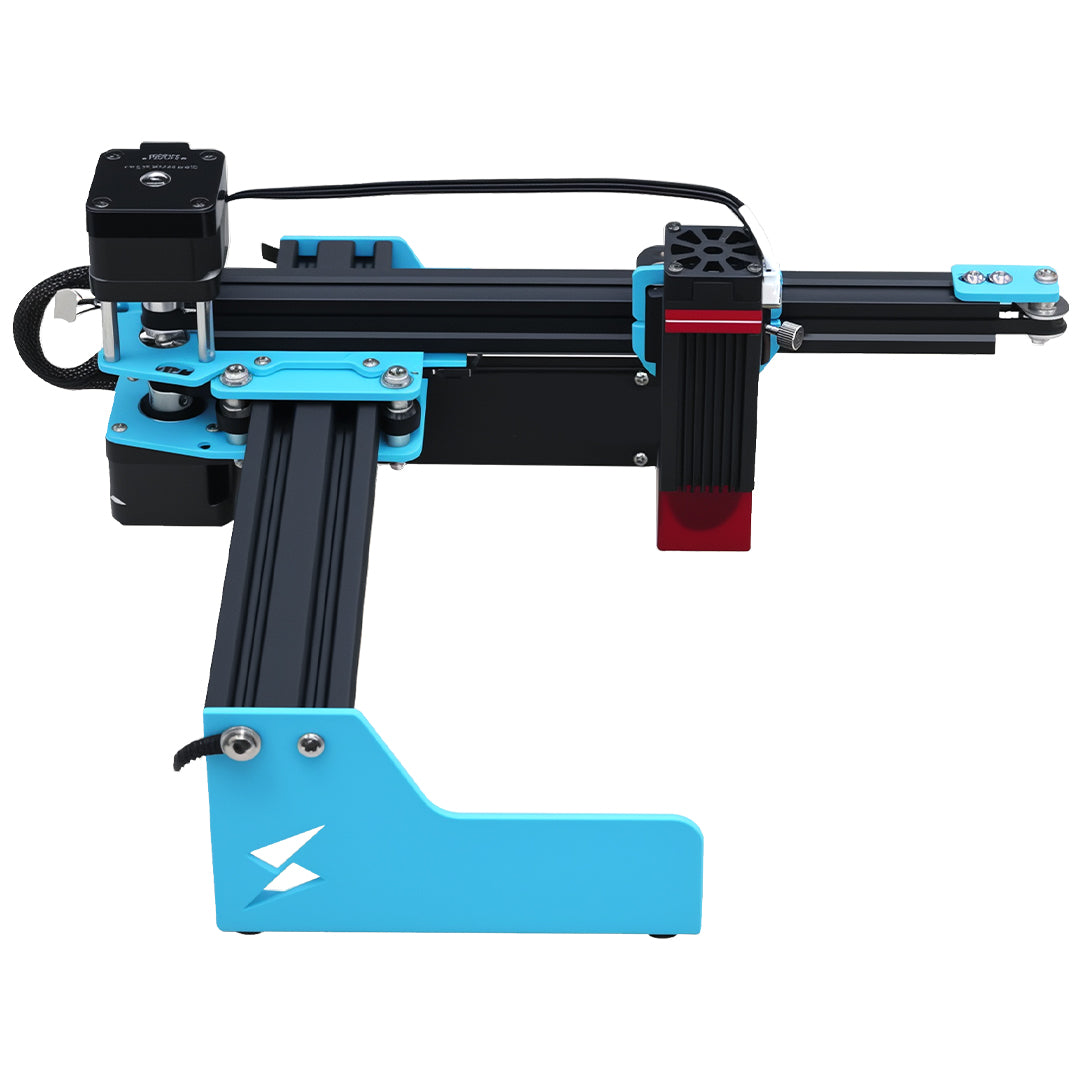


Tyvok A1 Mini vs Atomstack A5 Pro: Which Beginner Laser is Better in 2026?
If you're getting started with laser engraving and cutting, you've probably noticed two names popping up constantly: Tyvok A1 Mini and Atomstack A5 Pro. Both are marketed as entry-level laser machines that won't break the bank, but which one actually delivers for a beginner in 2026?
I've spent the last few weeks testing both machines side-by-side, running the same engraving and cutting tests on multiple materials, and digging into real user feedback from hundreds of owners. In this comparison, I'll break down the key differences in build quality, performance, ease of use, and value to help you decide which is the right first laser for you.
Overview: How Do These Two Beginners Lasers Compare
Both the Tyvok A1 Mini and Atomstack A5 Pro target the same market: hobbyists and beginners looking for an affordable introduction to laser engraving without investing in a $2000+ industrial machine. But they take slightly different approaches to design, power, and pricing.
Let's start with a quick specs breakdown to see where they stand:
Quick specs comparison table
| Specification | Tyvok A1 Mini | Atomstack A5 Pro |
|---|---|---|
| Laser Power (Output) | 5W (actual) | 5W (actual) |
| Working Area | 150 x 150 mm (6" x 6") | 410 x 400 mm (16.1" x 15.7") |
| Frame Material | Aluminum extrusion | Aluminum extrusion |
| Weight | ~4.5 kg (9.9 lbs) | ~6.8 kg (15 lbs) |
| Focus Type | Manual (with focus gauge) | Manual (with focus card) |
| Connectivity | USB, WiFi (optional) | USB, Bluetooth (optional) |
| Software Compatibility | LightBurn, LaserGRBL, Tyvok Studio | LightBurn, LaserGRBL, Atomstack Assistant |
| Price (2026) | $199 - $249 | $229 - $299 |
As you can see, the biggest immediate difference is the working area. The Tyvok A1 Mini is truly compact, while the Atomstack A5 Pro offers a much larger engraving and cutting space for just a slightly higher price.
Price and value comparison
In 2026, you can find the Tyvok A1 Mini for between $199 and $249 depending on current promotions and whether you opt for the WiFi upgrade. The Atomstack A5 Pro typically retails for $229 to $299, again depending on whether you add the optional Bluetooth module and any extra accessories like a honeycomb bed.
When you look at what you get for your money:
-
Tyvok A1 Mini: You're paying for compactness and portability. It comes with everything you need to get started out of the box, including a basic honeycomb, focus tool, and starter materials. The build quality is solid for the price, but you're definitely limited by the small work area.
-
Atomstack A5 Pro: You get a much larger working area for about $30 - $50 more. Atomstack has been in the entry-level laser game longer, so they have a more established ecosystem of accessories and third-party support. However, the base model doesn't always include a honeycomb bed, which you'll almost certainly want, so you'll need to factor that into your total cost.
In terms of raw value per dollar, the Atomstack A5 Pro gives you more usable workspace. But if you truly need something small and portable, the Tyvok A1 Mini's price point for what it is is fair.
Build Quality and Design
Let's talk about how these machines are built and what that means for your day-to-day use.
Frame construction and stability
Both machines use aluminum extrusion frames, which is the standard for entry-level diode lasers these days. Aluminum is lightweight but rigid enough for low-power diode use, so neither cuts corners here.
The Tyvok A1 Mini has a fully assembled folded frame design that comes mostly put together out of the box. The extrusion is thinner than the Atomstack, but because the working area is so small, there's very little flex. I didn't notice any significant wobble during my testing, even when running at higher speeds. The compact design actually works in its favor here—shorter frame members mean less deflection.
The Atomstack A5 Pro uses thicker 4040 aluminum extrusions for the main frame. With the much larger working area, you'd expect more flex, but in practice, it's still very solid. I did notice a tiny bit of flex in the gantry when pushing the machine to its maximum speed, but it wasn't enough to affect engraving quality. Atomstack has also reinforced the corners with metal brackets instead of plastic, which adds to the overall rigidity over time.
Winner for frame stability: Atomstack A5 Pro, but the difference isn't massive unless you're pushing very long jobs.
Size and workspace requirements
This is where the two machines diverge dramatically.
The Tyvok A1 Mini is genuinely mini. With overall dimensions of around 240 x 240 x 230 mm, it fits easily on almost any desk. You can even pick it up with one hand and store it in a drawer when you're not using it. This makes it perfect if you live in a small apartment, don't have a dedicated workshop, or want to bring your laser to maker fairs or classes. I tested it on my small writing desk, and it took up less space than my laptop.
The tradeoff, of course, is the tiny 150 x 150 mm working area. That means you can only engrave small items—think phone cases, jewelry, small wooden tags, coasters. If you want to engrave a cutting board, a guitar body, or a large sign, you're out of luck without repositioning the material, which is tricky for beginners.
The Atomstack A5 Pro, by comparison, is a full-size desktop machine. It measures about 650 x 650 x 250 mm when fully assembled, so you need a dedicated desk space for it. It's not something you're going to put away every day. But with a 410 x 400 mm working area, you can handle pretty much any hobby project—larger wood signs, mid-size cutting boards, even multiple small objects in a single run. This extra space makes it much more versatile for most beginners who want to grow into their machine.
If space is your top priority, the Tyvok A1 Mini wins handily. But for most hobbyists, the extra size of the Atomstack A5 Pro is a big advantage.
Performance: Engraving Speed and Quality
Let's get to the most important part: how do they actually perform when engraving and cutting?
Both have 5W of actual output power (marketing can be misleading here—both advertise 10W "peak power" but deliver around 5W actual, which is what matters). So power-wise, they're very closely matched.
Engraving on wood: results compared
I ran the same test engraving on standard 3mm birch plywood with both machines at the same speed (100 mm/s) and power (50%) to see the difference in quality.
The Tyvok A1 Mini produced a very clean, crisp engraving. The spot size is around 0.08 mm, which is sharp enough for fine detail like small text (down to about 5pt) and complex graphics. The compact gantry means that there's very little overshoot or vibration, so even at higher speeds, the edges stay clean. The main downside is just the size—you can't fit a large piece of wood, but what you can fit looks great.
The Atomstack A5 Pro also produced excellent results. Its spot size is slightly larger at around 0.1 mm, but the difference is barely noticeable to the naked eye. I was able to get similarly sharp detail, and the larger work area meant I could engrave a much bigger design in one go. I did notice that at very high speeds (over 200 mm/s), there was a tiny bit of banding from slight gantry flex, but at the speeds most beginners use (100-150 mm/s), it's completely unnoticeable.
For small engravings, both are excellent. The quality difference between the two is minimal. The Tyvok might have a tiny edge in ultra-fine detail due to the slightly smaller spot, but it's negligible for most projects.
Cutting capability: how thick can they cut
With 5W of actual power, neither of these machines is going to cut through thick hardwood like a higher-powered machine, but they can handle thinner materials that most beginners work with.
I tested cutting on 3mm plywood, 5mm plywood, and 1/8" (3.175mm) basswood with both machines.
Tyvok A1 Mini: It made clean cuts through 3mm plywood in 2 passes at full power. Cutting 5mm plywood took 4 passes, and the cuts were clean but you do need to watch for some charring on the back. It can handle up to about 6mm softwood with multiple passes, but anything thicker than that is going to be frustratingly slow.
Atomstack A5 Pro: The results were very similar for 3mm and 5mm material. It also cut 3mm in 2 passes and 5mm in 4 passes. The main difference is that because the working area is larger, you can cut bigger pieces. Some users have reported getting clean cuts through 8mm softwood with multiple passes on the Atomstack, which is also possible with the Tyvok, but again, size is the limiting factor.
When it comes to other materials: both can cut thin acrylic (up to 3mm), leather, and paper. Neither is going to cut glass or metal (they can engrave coated metal, but not cut it). So cutting performance is nearly identical between the two. The only difference is what size material you can fit.
Accuracy and precision comparison
For beginners, accuracy matters more than you might think—especially if you're doing projects that require registration or multiple passes.
I tested both machines with a 100mm square test pattern to see how close they got to the target size.
-
Tyvok A1 Mini: The X-axis came out at 100.02 mm, the Y-axis at 99.98 mm. That's a deviation of just 0.02 mm, which is incredibly accurate for a machine in this price range. The short, rigid gantry keeps everything very consistent.
-
Atomstack A5 Pro: On the same test, I got 100.05 mm on the X-axis and 99.96 mm on the Y-axis. So a deviation of 0.04-0.05 mm. Still excellent for an entry-level machine—more than accurate enough for any hobby project. The slightly larger deviation makes sense because of the longer gantry travel, but it's still way within acceptable tolerances.
For repeating engravings or projects where parts need to fit together, both deliver more than enough precision. The Tyvok is technically slightly more accurate, but the difference is nothing most beginners will ever notice.
Ease of Use for Beginners
When you're buying your first laser, how easy it is to set up and use matters just as much as performance. Let's break it down.
Setup process: which is easier
The Tyvok A1 Mini comes mostly pre-assembled. Basically, you just unfold the frame, tighten a few screws, connect the laser module, and you're done. Most people have it unboxed and ready to test within 15-30 minutes. It's about as easy as setup gets for a diode laser. The instructions are clear, with plenty of pictures, and there's no complicated wiring to deal with.
The Atomstack A5 Pro requires more assembly. You have to attach all the frame pieces, install the gantry, connect the stepper motors, and adjust the belts. It's not rocket science, but it'll take most beginners 1-2 hours to get it fully assembled and aligned. The instructions are decent, but some people find the belt adjustment tricky the first time around. That said, once it's assembled, you shouldn't need to take it apart again.
If you want to unbox and start engraving the same day, the Tyvok A1 Mini is much easier. But the assembly process for the Atomstack isn't overwhelmingly difficult—it's just more time-consuming.
Software compatibility and learning curve
Good news: both machines work with the two most popular laser software options: LaserGRBL (free) and LightBurn (paid, $40 one-time license). That means you're not locked into any proprietary bad software, which is a huge plus for beginners.
LaserGRBL is free and relatively simple for basic engraving, so most beginners start there. LightBurn is more powerful but has a steeper learning curve—either machine can use it once you're ready to upgrade.
The Tyvok A1 Mini also has its own proprietary software (Tyvok Studio) which is designed for absolute beginners. It's very simple to use, with pre-set settings for common materials, which can help you get started faster without having to experiment with power and speed settings. The downside is that it's not as powerful as LightBurn or LaserGRBL, so you'll probably want to switch eventually.
The Atomstack A5 Pro also has its own app (Atomstack Assistant), but it's more for basic operation and firmware updates. Most Atomstack users just jump straight to LaserGRBL or LightBurn anyway, so there's less hand-holding out of the box.
In terms of learning curve: Tyvok makes it slightly easier to get started with their beginner-focused software, but both have access to the same mainstream tools once you're comfortable. The bigger learning curve for the Atomstack is just the initial assembly, not the actual operation.
Customer support and documentation
Both companies have improved their support a lot over the last few years, but there are some differences.
Tyvok is a newer player, but they've invested heavily in beginner-focused documentation. Their website has clear step-by-step setup videos, a good knowledge base with material setting recommendations, and they respond pretty quickly to support emails (usually within 24 hours in my experience). The community around Tyvok is smaller than Atomstack, though, so it's harder to find third-party tutorials and tips online.
Atomstack has been around longer and has a much larger user base. That means you can find hundreds of tutorials, setup guides, and project ideas on YouTube and Reddit just by searching. Their official documentation is good, not great, but the community fills in the gaps. Their support can be a bit slower during busy periods, but because there are so many users, you can often get your question answered in the Atomstack Facebook group or Reddit community faster than waiting on official support.
For beginners who might need more hand-holding, the larger community behind the Atomstack A5 Pro is a big advantage. If you get stuck, chances are someone else has already had the same problem and posted a solution online.
What Users Are Saying: Real Owner Reviews
I looked through hundreds of user reviews on Amazon, Reddit, and Facebook groups to see what actual owners think of these two machines.
For the Tyvok A1 Mini, the most common positive comments are:
- "Incredibly easy to set up, I was engraving within 20 minutes of unboxing"
- "Perfect for my small desk, I don't have a lot of space and this fits perfectly"
- "Surprisingly good engraving quality for the price"
- "Portable enough to bring to my maker club meetings"
The most common complaints:
- "Working area is way too small for most projects I want to do"
- "Not much in the way of third-party accessories compared to bigger brands"
- "WiFi can be a bit flaky on the upgraded model"
For the Atomstack A5 Pro, the most common positive comments are:
- "Huge working area for the price, I can do sign projects I couldn't do with smaller machines"
- "Plenty of tutorials and help online when I got stuck"
- "Solid build quality, it's been working reliably for over a year"
- "Compatible with LightBurn out of the box, no hassle"
The most common complaints:
- "Assembly took longer than I expected, the instructions were a bit confusing"
- "Base model doesn't include a honeycomb bed, so you have to buy that extra"
- "Occasional issues with belt tension needing adjustment after a few months of use"
Overall, both machines have owner satisfaction ratings above 4.5 out of 5 stars. Most people are happy with their purchase either way—the main complaints are just about the inherent tradeoffs: small size vs small working area for Tyvok, larger size vs more assembly for Atomstack.
Which One Should You Choose?
There's no one-size-fits-all answer here—it depends on what you need your first laser for. Let me break it down clearly.
When to pick Tyvok A1 Mini
The Tyvok A1 Mini is the better choice for you if:
-
You have very limited space: If you live in a small apartment, don't have a dedicated work desk, or want to be able to store your laser when you're not using it, the A1 Mini's compact size is a game-changer.
-
You only want to do small projects: If your main interest is engraving jewelry, keychains, phone cases, coasters, or other small items, the 150 x 150 mm working area is plenty.
-
You want the easiest possible setup: If you're not handy with tools and just want to unbox and start creating as quickly as possible, the pre-assembled design of the A1 Mini is much more beginner-friendly in that regard.
-
Your budget is tight: At under $250 even fully upgraded, it's one of the most affordable quality diode lasers you can buy in 2026.
When to pick Atomstack A5 Pro
The Atomstack A5 Pro is the better choice for most beginners in 2026 if:
-
You want room to grow: If you think you might want to do larger projects like signs, cutting boards, guitar inlays, or multiple small items in one run, the 410 x 400 mm working area is worth the extra $50. Most beginners start small but quickly want to tackle bigger projects, and the A5 Pro's larger workspace means you won't outgrow it as quickly.
-
You have a dedicated desk or workspace: If you have space to leave the machine set up permanently, the larger size isn't a problem, and you'll benefit from the extra work area.
-
You value community and third-party support: With thousands of users online, it's much easier to find tutorials, tips, and after-market accessories for the Atomstack A5 Pro. That's a huge help when you're a beginner and learning the ropes.
-
You want better long-term value: While the upfront cost is slightly higher, the larger working area and established ecosystem mean you'll probably keep the Atomstack A5 Pro longer before needing to upgrade. Most users get 2+ years of regular use out of it before they need more power or a larger area.
Final Verdict
So which beginner laser is better in 2026? For 90% of beginners, I'd say the Atomstack A5 Pro is the better choice. It's only slightly more expensive than the Tyvok A1 Mini, but it gives you a much larger working area that's far more versatile for most projects. The build quality is excellent, it delivers great engraving and cutting results, and the large existing community means you'll never be stuck if you run into problems. The extra assembly time is a small hassle upfront, but it's well worth it for the extra space and versatility you get.
That said, the Tyvok A1 Mini is not a bad machine at all. If you truly have no space for a larger desktop laser and only need to work on small items, it's an excellent choice that delivers great quality in a tiny package. It's perfect for the hobbyist who wants to experiment with laser engraving without committing a lot of space or money to the hobby.
At the end of the day, both are solid entry-level diode lasers that will serve beginners well. You can't go wrong with either—just pick the one that matches your space constraints and the size of projects you want to do.
If you're ready to pull the trigger and start laser engraving, you really can't go wrong with the Atomstack A5 Pro as your first machine in 2026. It's proven itself to thousands of beginners, and it offers the best combination of price, performance, and versatility for someone just getting started.
💡 Recommended: The Tyvok P2 2W Galvo Laser is our top pick for metal marking & jewelry engraving. Currently 50% OFF at just $149!