




How Much Does a Laser Engraver Cost in 2026? (Complete Buyer's Guide)
Everything you need to know about laser engraver pricing, from $200 beginner machines to $10,000+ industrial systems. Which one is actually worth your money?---

Introduction: Don't Waste Money on the Wrong Laser
One of the most common questions we get: "How much should I actually spend on a laser engraver?"
It's a great question. Spend too little, and you'll get a garbage machine that breaks in 3 months and produces results customers won't pay for.
Spend too much, and you've got an expensive paperweight sitting in your garage while you're still trying to get your first 10 customers.
In this guide, we'll break down exactly what you get at every price point, what features matter, and - most importantly - which laser actually gives you the best return on your investment.
---
Laser Engraver Price Categories (2026)
Category 1: Budget Hobbyist ($150 - $400)
What you get:- Diode laser (5W - 10W)
- Small work area (200×200mm typical)
- Basic frame, sometimes 3D printed parts
- No included software, or software that doesn't work well
- Minimal support (if any)
- Plastic optics that degrade quickly
- Cheap entry point
- Good enough for testing if you even like laser engraving
- Slow
- Poor quality results
- High maintenance
- Customer support is basically non-existent
- You'll outgrow it in 2-3 months if you actually start making sales
---
Category 2: Professional Beginner / Side Hustle ($400 - $1,500)
This is the sweet spot for 90% of people starting a laser business. What you get:- Quality diode laser (10W - 20W) OR entry level Galvo
- Larger work area (400×400mm typical)
- Better frame and mechanical components
- Works with LightBurn (industry standard software)
- Decent support from the manufacturer
- Glass optics that last thousands of hours
- Air assist included or available as upgrade
- Produces professional quality results you can charge money for
- Fast enough for real production work
- Reliable enough to run 5-10 hours a week
- Good support when you have questions
- Will last 2-5 years with proper maintenance
- Still not industrial speed
- Most diode lasers in this range can't do true color marking on metal
---
Category 3: Small Business / Production ($1,500 - $5,000)
For people who know they have consistent demand and need production capability. What you get:- Higher power diode lasers (20W - 40W) OR mid-range Galvo
- Large work areas (600×600mm+)
- Industrial grade components
- All accessories included (air assist, exhaust, honeycomb)
- Priority support from the manufacturer
- Built for 20+ hours a week operation
- Fast production speeds
- Handle bulk orders easily
- Consistent, reliable results
- Built to last 5+ years
- Big upfront investment
- Overkill for someone just starting out
- You might not have enough orders to justify the cost
---
Category 4: Industrial / Commercial ($5,000+)
For full time production shops, not beginners or side hustlers. What you get:- High power fiber lasers (50W - 100W+)
- Very large work areas
- Industrial everything - motors, optics, frame
- Dedicated support, sometimes on-site
- Built for 40+ hours a week operation, 10+ year lifespan
- Incredibly fast
- Extremely precise
- Can run 24/7 if needed
- Will last a decade or more
- Extremely expensive
- Overkill for 99% of people reading this
- Requires dedicated space and electrical
- You better have a lot of orders lined up
---
The Hidden Costs of Laser Engraving (Most People Forget These!)
The laser itself is only 60-70% of your total startup cost. Don't forget these:
| Item | Typical Cost | Why You Need It |
|---|---|---|
| Honeycomb Bed | $39-$99 | Clean cuts, no back burning |
| Air Assist System | $49-$149 | Cleaner engravings, less fire risk |
| Exhaust Fan / Fume Extractor | $59-$299 | Health protection + optics longevity |
| Safety Glasses | $25-$75 | Non-negotiable eye protection |
| LightBurn Software | $80 | Industry standard, worth every penny |
| Materials to Practice | $50-$100 | Wood, acrylic, leather to learn on |
| Total Extras | $302-$802 | |
---
ROI Calculator: Which Laser Actually Makes You the Most Money?
Price isn't the real question. Return on investment is the real question.
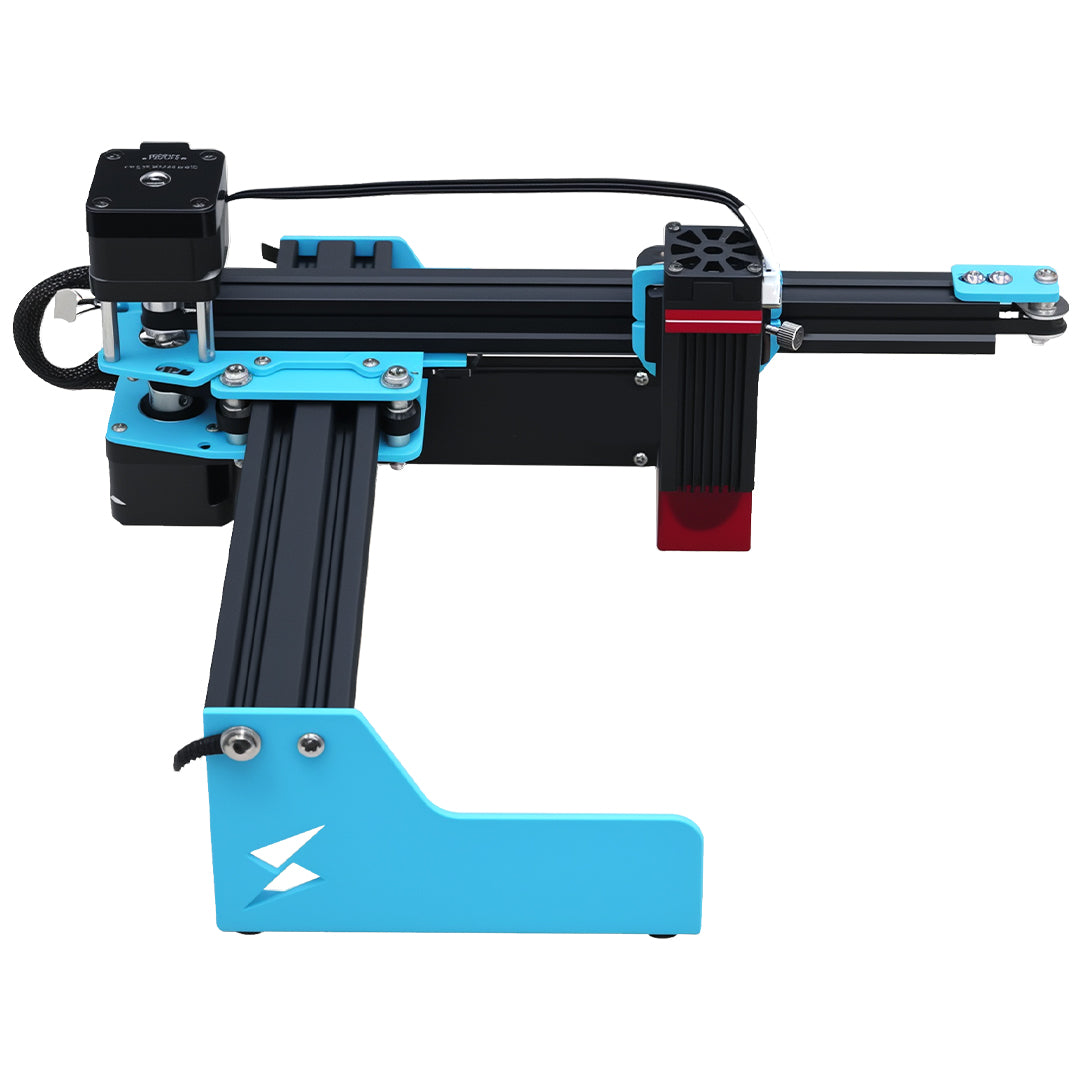
Scenario 1: Tyvok A1 Mini ($299 + $250 accessories = $549 total)
- Profit per average order: $25
- Orders needed to break even: 22 orders
- Timeline to break even: 2-4 weeks for most people
Scenario 2: Tyvok P2 10W Galvo ($1,199 + $250 accessories = $1,449 total)
- Profit per average order: $30 (higher quality, faster production, color marking = premium pricing)
- Orders needed to break even: 48 orders
- Timeline to break even: 1-2 months for most people
Also incredible, and the P2 will make you money much faster long term due to its speed. But you should probably start with the A1 Mini, prove you can get customers, then upgrade.
Scenario 3: $3,000 "Professional" Diode Laser ($3,000 + $400 accessories = $3,400 total)
- Profit per average order: $25 (same quality output as the A1 Mini, just faster)
- Orders needed to break even: 136 orders
- Timeline to break even: 3-6 months minimum
This is the trap many people fall into. They buy an expensive laser thinking it will make them money faster, but then they spend 6 months just trying to pay it off instead of profiting.
---
Our Recommendation: Start Small, Upgrade With Profits
This is the #1 advice we give to every new laser business owner:Step 1: Start with the Tyvok A1 Mini ($299)
- Lowest risk way to get started
- Produces professional quality results you can actually sell
- Pays for itself in just 20-30 orders
- You'll know within 1-2 months if this is something you want to do long term
Step 2: Upgrade to Tyvok P2 Galvo ($1,199) WHEN you have consistent sales
- Upgrade with profits, not with your savings
- 10× faster = 10× more orders per day = 10× more profit
- Color marking on stainless steel = premium pricing your diode competition can't match
- Perfect when you're getting 20+ orders a month and turning work down
Step 3: Upgrade to industrial only when you absolutely need it
- Don't even think about $5,000+ lasers until you're doing $10,000+/month in revenue
- By then you'll know exactly what you need
---
Common Buying Mistakes to Avoid
❌ Mistake #1: Buying the Cheapest Thing You Can Find on Amazon
$200 lasers are $200 for a reason. They'll frustrate you, produce garbage results, and break right after the return window closes. You'll end up spending more money replacing it than if you just bought the right one first.❌ Mistake #2: Buying Too Much Laser Before You Have Customers
This is the second most common mistake. People drop $3,000 on a "professional" laser, then realize they don't know how to get customers. Start small, prove the business works, then upgrade.❌ Mistake #3: Forgetting About Software
LightBurn ($80) is the industry standard for a reason. If a laser doesn't work with LightBurn, don't buy it. Period.❌ Mistake #4: Not Factoring in Support
When your laser breaks at 8pm the night before a big order, you want real people who answer emails. Not a Chinese company that responds 3 days later with Google Translate.---
Final Price Verdict (2026)
| Your Situation | What You Should Buy | Total Investment |
|---|---|---|
| Just testing the waters, hobby | Tyvok A1 Mini | $299 |
| Starting a side hustle / small business | Tyvok A1 Mini + essential accessories | ~$550 |
| Consistent sales, ready to scale production | Tyvok P2 10W Galvo | ~$1,450 |
| Full time production shop, 40+ hours/week | Industrial fiber laser | $5,000+ |
---
Ready to Buy the Right Laser for Your Business?
90% of people reading this should start with the Tyvok A1 Mini. It's the best value on the market by a mile, and it pays for itself faster than any other laser available.If you already have consistent sales and you're ready to scale, the Tyvok P2 Galvo will 2-3× your production capacity and unlock premium color marking pricing that your competition can't touch.
---
Ready to get started?👉 Get the Tyvok A1 Mini → Best value beginner laser, pays for itself in 20-30 orders 👉 Upgrade to Tyvok P2 Galvo → For when you have consistent sales and need faster production + color marking
Last updated: April 2026 | Published by: Tyvok Technical Guides Team


)