

AUTHOR: Tyvok Team
TAGS: galvo vs diode laser, which laser engraver for beginners, Tyvok P2, Tyvok A1 Mini, laser engraver comparison
BODY_HTML:

Galvo vs Diode Laser Engraving: Which Is Better for Beginners in 2026?
If you're shopping for your first laser engraver in 2026, you've probably noticed that both galvo and diode lasers are available at entry-level price points now. But what's the real difference between them, and which one should you choose as a beginner? In this comparison, we'll break down the pros and cons of galvo vs diode laser engraving to help you make the right choice.
At Tyvok, we offer both types: the Tyvok P2 10W Galvo and the Tyvok A1 Mini 10W Diode, so we can give you an unbiased look at which one fits your needs.
Quick Overview: How Do They Work?
Before we dive into the comparison, let's quickly explain how each technology works in simple terms:
Diode Laser Engravers
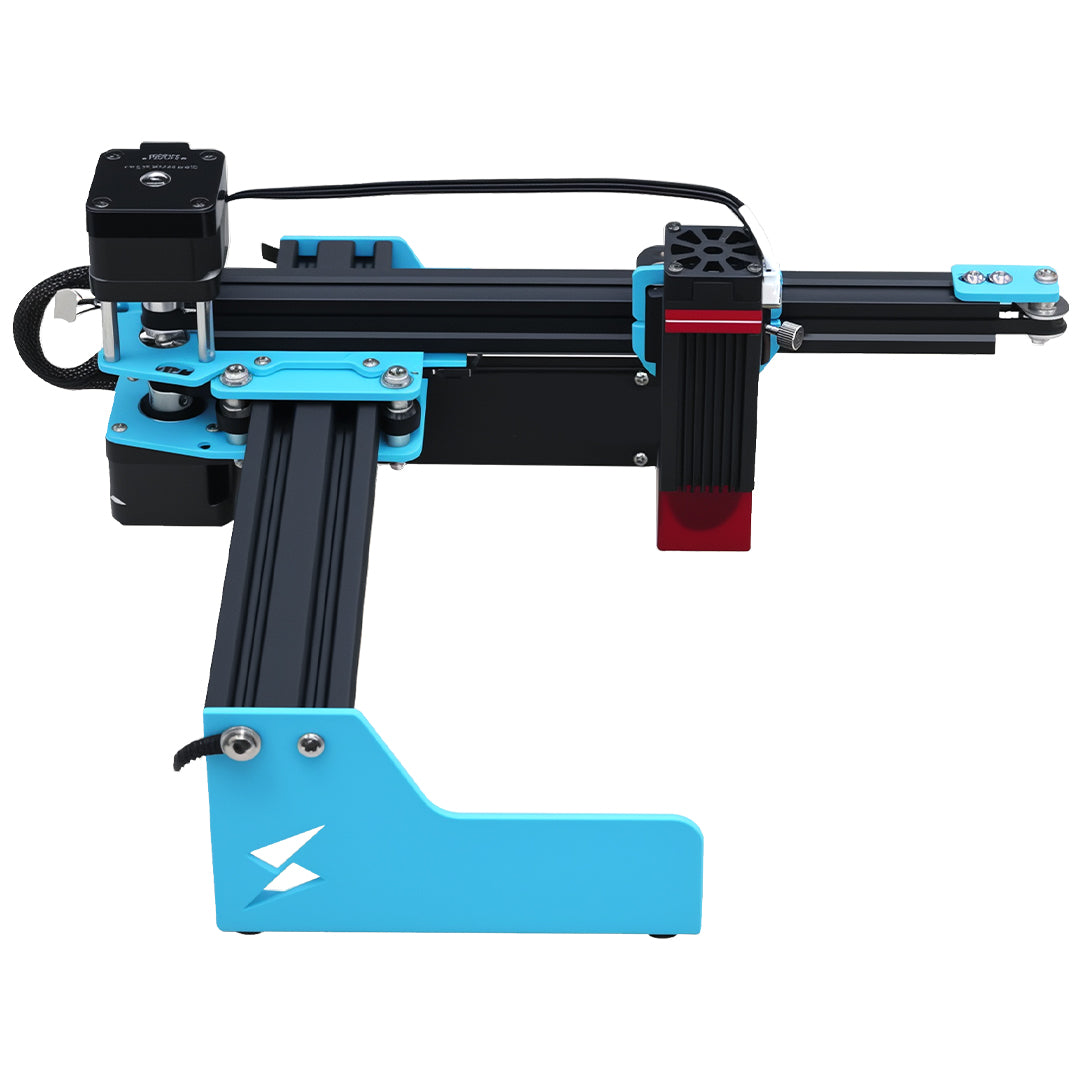
In a traditional diode laser engraver, the entire laser module moves along X and Y axes (like a printer head moving across the page) to create your engraving. The laser moves mechanically across the work area to cover the entire design.
Examples: Tyvok A1 Mini, Atomstack A5 Pro, most entry-level lasers under $1000
Galvo Laser Engravers
In a galvo laser, the laser stays stationary, and two small moving mirrors (galvanometers) steer the laser beam across the work area. Because the mirrors are lightweight, they can move much faster than a mechanical system.
Examples: Tyvok P2 10W Galvo, LaserPecker 4, other entry-level galvos
Speed Comparison: Galvo Wins by a Mile
When it comes to speed, galvo lasers are dramatically faster than traditional diode lasers. How much faster? Typically 5-10 times faster for most engraving jobs.
For example:
- A small text engraving that takes 2-3 minutes on a diode might take 10-15 seconds on a galvo
- A detailed photo engraving that takes 20-30 minutes on a diode could take 2-3 minutes on a galvo
This speed difference doesn't matter much if you're just doing occasional projects as a hobby. But if you're planning to sell your work and do production runs, the speed advantage of galvo is game-changing.
With a galvo like the Tyvok P2, you can complete 5-10 times more orders in the same amount of time compared to a traditional diode.
Work Area Size: Diode Typically Offers More Space
The trade-off with entry-level galvo lasers is that they usually have a smaller work area. The Tyvok P2 has an 110mm x 110mm work area, which is perfect for most small products like jewelry, pet tags, phone cases, and small gifts. But it's not ideal for larger projects like big signs or large cutting boards.
Diode lasers like the Tyvok A1 Mini typically offer a larger work area (200mm x 200mm or more) in the same price range. This gives you more flexibility for larger projects.
What this means for you:
- If you mostly do small items (jewelry, tags, phone cases, small gifts), galvo's smaller work area is fine
- If you want to do larger projects (signs, cutting boards, large decor), diode's bigger work area is better
Precision and Detail: Galvo Takes the Lead
Because galvo systems steer the beam with mirrors instead of moving heavy mechanical parts, they can achieve incredible precision, especially for fine details. Small text, intricate patterns, and detailed photos all come out crisper and sharper on a galvo.
This makes galvo ideal for applications where fine detail matters:
- Jewelry engraving
- Small text marking
- Photographic engravings
- Detailed logos
That doesn't mean diode lasers aren't precise – for most applications, the precision of a quality diode like the Tyvok A1 Mini is more than enough. But for ultra-fine detail, galvo has the advantage.
Price Comparison in 2026
In the past, galvo lasers were much more expensive than diodes, but that gap has closed dramatically. Here's what you can expect to pay in 2026:
| Type | Entry-level 10W Price Range |
|---|---|
| Quality Diode | $300 - $600 |
| Entry-level Galvo | $600 - $1000 |
So galvo is still more expensive, but it's no longer out of reach for beginners and small business owners. The Tyvok P2 brings galvo technology in at the lower end of this range, making it accessible for more people.
Cutting Capabilities: Diode Generally Better
If you want to cut materials as well as engrave, a diode laser is usually the better choice for entry-level users. Diode lasers with the same power as galvo are generally better at cutting because they cover the larger work area needed for bigger cut-outs.
Galvo lasers can cut thin materials, but they're primarily designed for engraving. If cutting is a major part of what you want to do (like making wooden signs, box joints, or 3D puzzles), you'll be happier with a diode.
Ease of Use: Similar Learning Curve
One common misconception is that galvo lasers are harder to use than diodes. In reality, the software workflow is almost identical. Both galvo and diode lasers work with popular software like LightBurn, so you don't need to learn a completely new program if you switch technologies.
The setup process is also very similar. Both the Tyvok A1 Mini and the Tyvok P2 come with detailed setup instructions that make getting started easy for beginners.
Neither technology has a significant advantage when it comes to ease of use for beginners.
Maintenance: Galvo May Require Less
Because galvo systems have fewer moving mechanical parts, they generally require less maintenance over time. There are no belts to tighten or rails to clean as frequently. Diode systems have more mechanical moving parts that can wear out over time, though with quality machines like the Tyvok A1 Mini, this isn't a major issue.
Both types of machines require regular cleaning of the lens, which is a simple process that only takes a minute.
Who Should Choose a Diode Laser?
A diode laser like the Tyvok A1 Mini is the better choice if:
- You're on a very tight budget (under $500 total)
- You want a larger work area for bigger projects
- You need to cut thicker materials regularly
- You're a hobbyist who only does occasional projects
- You want to do a mix of engraving and cutting
For most absolute beginners getting their first machine, a quality diode like the A1 Mini is still the best starting point in 2026. It gives you more versatility for different types of projects at a lower price point.
Who Should Choose a Galvo Laser?
A galvo laser like the Tyvok P2 is the better choice if:
- You're running a business doing production engraving
- You primarily engrave small items (jewelry, tags, phone cases)
- Speed is important to you (more orders = more profit)
- You need the best possible fine detail for intricate work
- You have the budget to invest in better productivity
- You already have another laser for larger projects and cutting
What many small business owners do is start with a diode to get going, then add a galvo later when they start doing more volume. But if you know from day one that you're going to be doing high-volume small-item engraving, starting with a galvo makes sense.
Can You Have Both? Absolutely!
Many laser business owners end up with both a diode and a galvo. Each has its strengths:
- Use your diode for cutting and larger engraving projects
- Use your galvo for fast production of small detailed items
This combination gives you the best of both worlds. You can handle any project that comes your way, and you get the speed advantage of galvo for your high-volume work.
Starting with the diode and then adding the galvo as your business grows is a common and sensible path.
Our Recommendation for Beginners in 2026
If you're still not sure which to choose, here's our simple recommendation:
If this is your first laser and your budget is under $500: Go with the Tyvok A1 Mini 10W Diode. It gives you more versatility for different projects at a price that fits a beginner budget.
If you're starting a business focusing on small engraved products: Invest in the Tyvok P2 10W Galvo. The speed advantage will pay for itself quickly through increased productivity.
If you already have a diode and you want to increase production: Add the Tyvok P2 galvo to your workshop. You'll be amazed at how much faster you can turn around orders.
Don't Forget the Platform: A Good Engraving Plate Improves Results Either Way
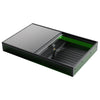
No matter which type of laser you choose, a quality honeycomb engraving plate improves your results. The Tyvok aluminum honeycomb plate provides the flatness and ventilation you need for consistent results with either galvo or diode lasers.
Frequently Asked Questions
Is galvo better than diode for beginners?
It depends on your goals. If you're on a budget and want versatility, diode is better for most beginners. If you're starting a business focused on small engraved products, galvo can be better from day one.
Can a 10W galvo cut through wood?
Entry-level 10W galvos like the Tyvok P2 can cut thin wood (under 3mm), but they're primarily designed for engraving. If you need to cut thicker materials regularly, a diode is a better choice.
Do I need different software for galvo vs diode?
No, both types work with popular software like LightBurn. The workflow is almost identical.
Which one makes more money?
For small product engraving, galvo can help you make more money because you can process more orders in less time. But diode gives you more versatility for different types of products. The amount you make depends more on your marketing and product selection than the technology.
Conclusion
The galvo vs diode debate isn't about which one is absolutely better – it's about which one is better for your specific needs. If you're a beginner just starting out on a budget, the Tyvok A1 Mini 10W Diode gives you incredible versatility at an affordable price. If you're ready to scale your engraving business and need speed for production, the Tyvok P2 10W Galvo brings professional galvo performance to an entry-level price point.
Whichever you choose, both types of machines are capable of producing professional-quality results that you can be proud of. The most important thing is to get started, learn, and start creating.