

A1 Mini First-Month Consumables: Track Cost per Project
Separate one-time setup tools from recurring project consumption, then divide recurring cost by accepted—not started—projects. Include rejected blanks, masking, fixture wear, cleanup and extraction maintenance.

Accepted projects are the denominator
Beginner budget discussions show that cleanup, masking, fixtures, rejected blanks, and extraction maintenance appear after the machine purchase.
Observation: the card statement shows many small purchases but no cost per accepted project. Controlled calculation: recurring cost per accepted project = (blanks used + masking + cleanup + fixture wear + extraction allocation) ÷ accepted projects. Keep one-time tools outside that numerator. Interpretation compares project mixes. Action adjusts pricing or learning stock.
Separate opening tools from recurring use
| Ledger group | One-time or recurring | Allocation method |
|---|---|---|
| Measuring and basic fixture tools | One-time | Amortize only if useful |
| Known practice blanks | Recurring learning | Assign to training |
| Masking and cleanup | Recurring | Measure actual use |
| Rejected blanks | Recurring loss | Divide by accepted output |
| Extraction filters or service | Recurring interval | Allocate by jobs or hours |
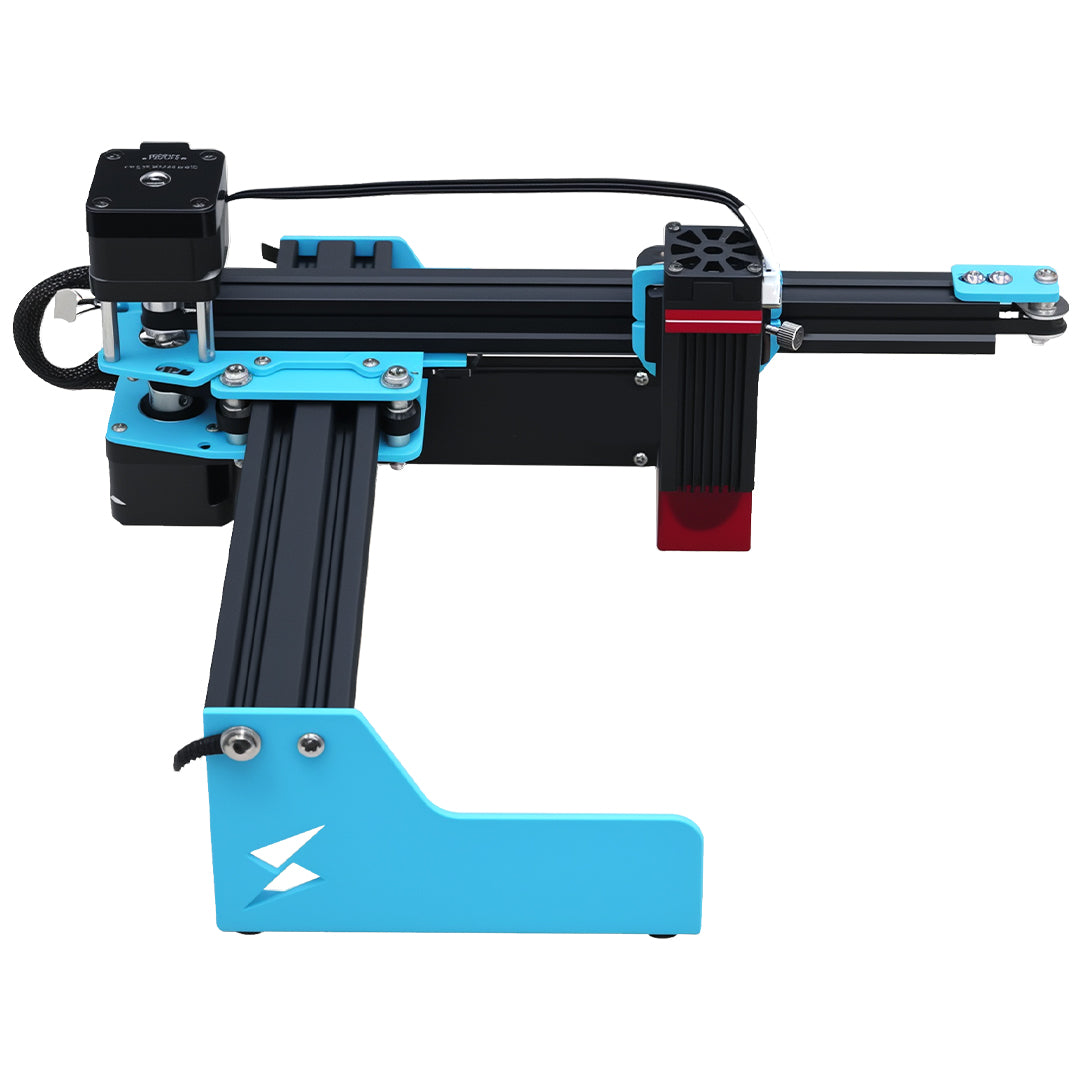
A1 Mini is a compact beginner workflow with current 3.5W, 5W and 10W options and a listed 120 × 130 mm area. Confirm the live package before costing accessories.
Worked practice-heavy month
- Record opening quantity and price for every consumable.
- Log each project family rather than mixing unlike jobs.
- Count accepted pieces and rejected pieces separately.
- Enter fixture replacement and cleanup use on the day observed.
- Compare two user-entered mixes: practice-heavy and repeat-order-heavy.
Practice-heavy month: $48 blanks + $12 masking + $10 cleanup + $8 fixture + $12 extraction = $90; 15 accepted projects cost $6.00 each. Repeat-order month: $72 + $8 + $9 + $6 + $15 = $110; 44 accepted projects cost $2.50 each. Rejected blanks remain in cost but not the denominator.
Worked repeat-order month
Reconcile opening and closing quantities instead of estimating forever. The ledger reveals whether improvement came from yield, fewer fixture replacements, or simply a different project mix.
The A1 Mini product page lists the current machine options. When Should You Replace an A1 Mini Sacrificial Fixture? provides the observed-condition evidence behind one recurring ledger line.
Questions about what belongs in monthly cost
Should the machine price be in consumables cost?
No. Keep capital cost separate so recurring use is visible.
What if a mask roll lasts several months?
Allocate actual length or a reasonable measured share, then reconcile later.
Why divide by accepted projects?
Customers pay for accepted output; failures still consume resources.
Reconcile cost with accepted output
Close the month with opening stock, purchases, remaining stock, rejections, and accepted projects. That explains the change in cost per project.