

Two registration marks spaced apart reveal both translation and rotation when a long board is repositioned. Use a documented coordinate and framing workflow, prove the marks on disposable stock, and stop if either reference cannot be reacquired without moving into unsupported machine behavior.

Registration questions for long work focus on correcting both offset and rotation; two separated references answer a different problem from end-margin planning. Current demand source. The external reference establishes a current decision or failure pattern, not a machine specification, compatible-material list or promised result.
Place references outside the finished artwork
Choose two durable, measurable datums with enough separation to expose angular error. Keep them in waste or fixture space, not where the customer product will be damaged. Record the distance between marks and their relation to the file origin.
Correct translation before rotation
After repositioning, acquire the first mark using the documented non-emitting or framing method. Use the second mark to observe angular drift. Make one physical adjustment at a time, then recheck both; chasing the second mark alone can move the first out of tolerance.
Prove the seam with a low-risk overlay
Use a disposable strip or non-product witness geometry spanning the transition. Inspect continuity and measured spacing before the finished operation. The overlay proves alignment only at the registered condition; changed support or board movement requires another check.
Evidence table for two-mark long-board alignment
| Datum evidence | Acceptance | Failure response |
|---|---|---|
| Mark A | returns to reference | correct translation |
| Mark B | matches after A | correct rotation |
| Support | stable across full span | rebuild support |
| Witness | transition within job tolerance | hold product |
Release rule for two-mark long-board alignment
Proceed with the long board only when both marks and the witness geometry meet the written tolerance after a complete boundary check. Save the reposition distance and support arrangement with the file.
TYVOK X1S 2026 boundary for two-mark long-board alignment
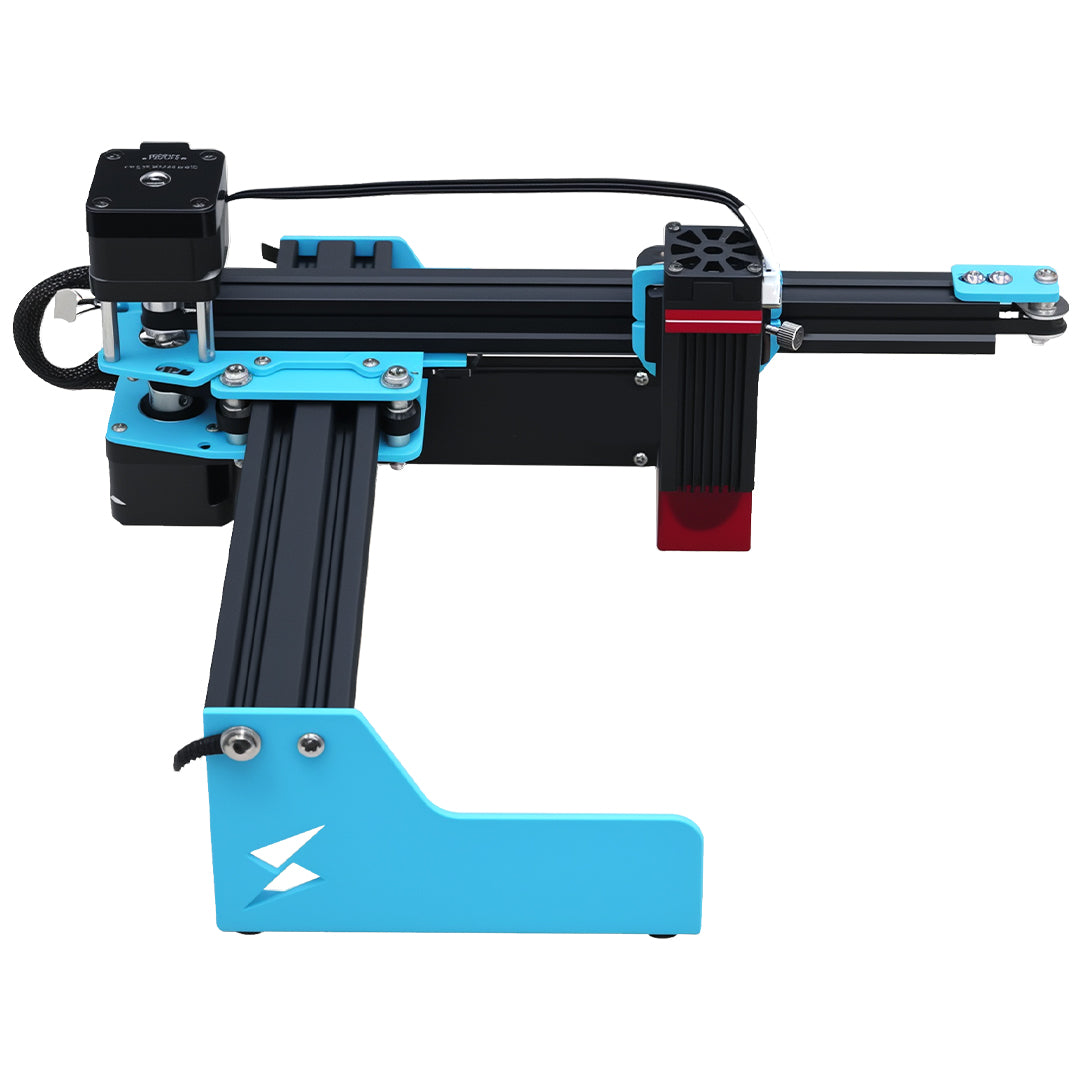
The X1S 2026 expansion message does not establish automatic camera registration or software synchronization. Use only functions documented for the live controller and software. Preserve shared-axis alignment, support overhangs safely, maintain effective exhaust, stay present and stop on unexpected travel, collision risk, smoke or flame. Review the current TYVOK X1S 2026 page before purchase or use.
Related decisions after two-mark long-board alignment
Continue with Engrave Then Cut: Record the Air-Assist Changeover when its separate variable applies. Use Plywood Back-Burn: Separate Bed Residue From Top-Side Settings for the second neighboring decision. Neither guide replaces the evidence required here.
Buyer questions about two-mark long-board alignment
Can one registration mark align a long board?
One point can show offset but not reliably expose rotation; use two separated references.
Should the marks be inside the customer design?
Prefer waste or fixture space so failed acquisition does not damage finished artwork.
Does framing prove final processing accuracy?
No. Add a low-risk witness and inspect the physical transition.
Check the machine before buying
For the material and workflow discussed above, review TYVOK X1S 2026 configurations and purchase options after testing the exact project materials and setup.