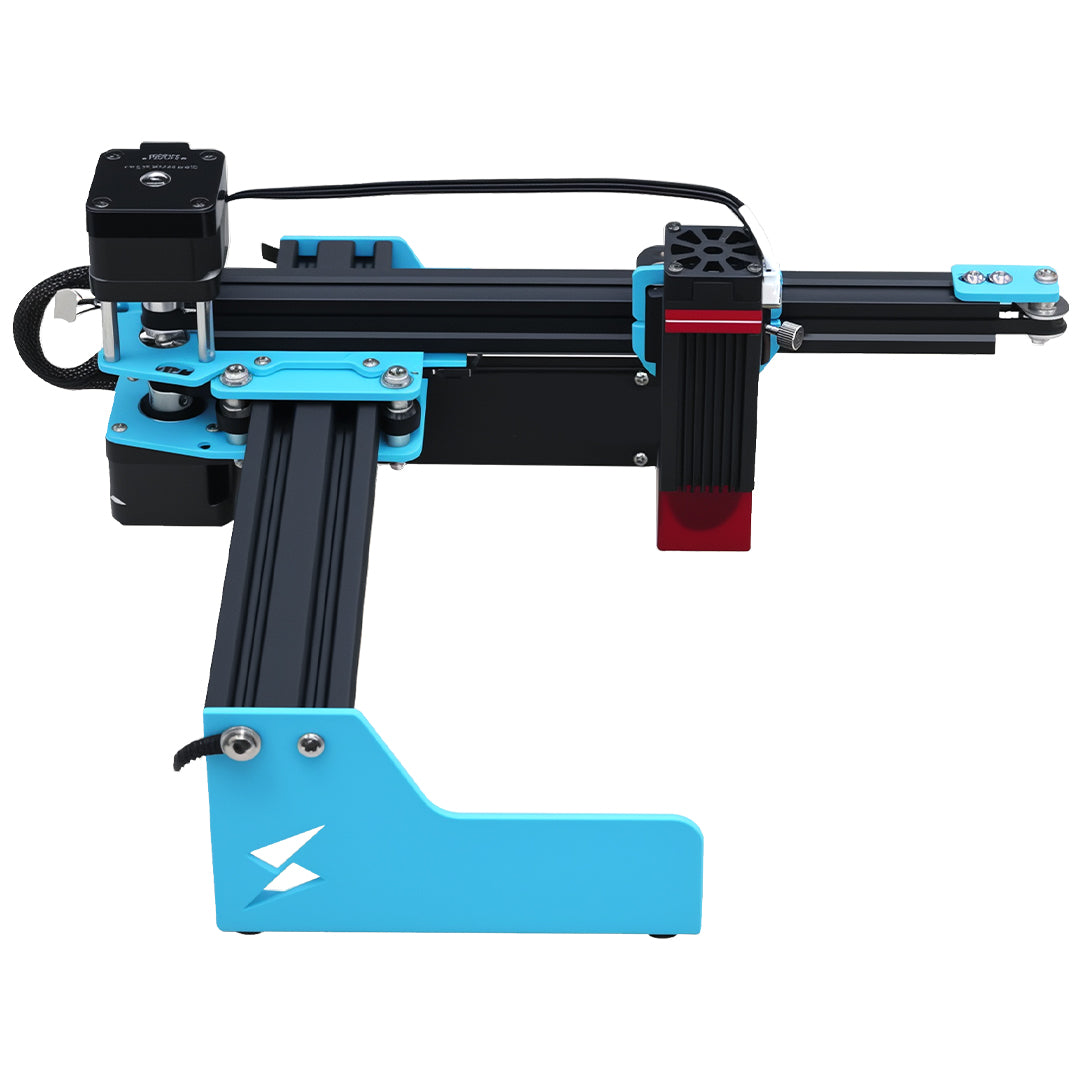


Direct Answer

An 800x2000-style large-format setup or extension path makes sense when the project is too long or too large for a compact desktop engraver and the real constraint is material handling, layout size, and repeatable positioning. For TYVOK buyers, X1S and X1S Pro are the right comparison path when the selected bundle and current product configuration support the intended workflow. TYVOK P2 remains the better fit for compact personalization, small gifts, cards, tags, and fast one-off engraving.
Do not choose an 800x2000 setup only because the number sounds large. Choose it when your actual product size, shop space, material source, and workflow justify the larger layout.
Case Snapshot
| Buyer question | What the 800x2000 extension case helps answer | Buying meaning |
|---|---|---|
| Do I really need a larger work area? | The project is longer or wider than compact machines can handle comfortably | Buy around real product size, not theoretical maximum size |
| Is X1S or X1S Pro the better path? | Both can be relevant depending on bundle, accessory plan, and shop workflow | Confirm the current product configuration before buying |
| Can a large extension increase output? | Only when layout, material handling, and finishing are repeatable | Work area helps planning, but does not guarantee production volume |
| What should I test first? | One long board, one panel, or one repeated layout | Validate finished result before building a catalog |
Project Video Reference
The official TYVOK Spider Laser channel includes an X1S extension / large-format setup video:
Use the video as a visible setup and workflow reference. It should not be used as proof of speed, cutting depth, material compatibility, or universal extension limits. Always confirm the current X1S or X1S Pro bundle, accessory, platform, and extension details on the live product page before ordering.
What 800x2000 Changes

A larger work area changes the workflow in practical ways when the selected configuration supports the intended setup. It gives you more room to place long materials, arrange larger artwork, or plan repeated layouts. It also requires more attention to shop space, ventilation, material support, positioning, and finishing.
A confirmed 800x2000-style or extended large-format workflow can help when:
- The product is a long board, sign, panel, template, or oversized layout.
- Repositioning a compact machine would create alignment risk.
- The design needs to stay in one larger layout.
- The material is awkward to rotate or reset.
- You want to test large-format products with a more planned setup.
It does not remove the need for testing. Material flatness, smoke control, artwork detail, and finishing steps still decide whether the final product is sellable.
Quick Choice: P2 vs X1S vs X1S Pro
| Workflow need | Better TYVOK path | Why |
|---|---|---|
| Compact personalization | TYVOK P2 | Smaller products, fast setup, names, tags, cards, small gifts |
| Larger boards and first large-format tests | TYVOK X1S | Good path when work area becomes the constraint |
| Planned large-format shop workflow | TYVOK X1S Pro | Stronger shortlist when Pro options, accessories, and shop workflow matter |
The decision should start with the product you want to sell. A compact name tag does not need an 800x2000 setup. A long wall sign, oversized board, or repeated panel layout may.
Best Projects to Test First
| Project type | Why it fits large-format work | What to verify |
|---|---|---|
| Long wood signs | Clear need for extended length | Board flatness, text readability, finish, shipping |
| Wall art panels | Strong visual search and social appeal | Artwork detail, surface prep, photo quality |
| Menu boards | Commercial buyer intent | Letter size, contrast, sealing, mounting |
| Event direction signs | Useful long-tail search demand | Readability, board size, stand or hardware |
| Packaging templates | Practical small-business use | Repeat placement, material safety, fold/fit |
| Large stencils or layout templates | Good workflow use case | Alignment and material stability |
Pick one project type first. The safest first test is one board size, one material source, one design style, and one finishing method.
When X1S Makes Sense
X1S makes sense when the buyer is moving from compact personalization into larger flat projects, but still wants to validate demand before building a more complex shop workflow.
Choose X1S when:
- You need more area for boards, signs, panels, or templates.
- You are testing whether large-format products can sell.
- You do not yet need every Pro option.
- You want a practical growth path from compact work into larger layouts.
- You can confirm the selected bundle supports the intended material size.
Before choosing X1S, confirm the current product configuration, platform option, extension path, shop space, and whether your target board sizes fit the selected setup.
When X1S Pro Makes Sense
X1S Pro makes more sense when large-format work is already part of the plan, not just a curiosity. It is the stronger shortlist when the buyer wants a more structured setup, Pro configuration options, accessory planning, rotary or multi-workflow capability, and a larger layout area.
Choose X1S Pro when:
- Your main product line requires large boards or repeated large layouts.
- You have space for a larger setup and material handling.
- You need to compare Pro bundle options and accessories.
- You want a machine path that can support more planned shop workflows.
- You already know the product sizes you want to process.
Do not treat X1S Pro as a shortcut to automatic output. It should be chosen because the workflow requires it.
Setup Questions Before Buying
| Question | Why it matters |
|---|---|
| What is the exact largest product I plan to make? | Prevents buying around imaginary projects |
| Does the selected bundle support that size? | Configurations and accessories can change |
| Can my shop physically fit the frame and material? | Long boards need loading and unloading space |
| Will the material stay flat? | Long materials can bow, twist, or lift |
| Do I need engraving, cutting, or both? | Cutting depends on material, thickness, module, air assist, settings, and passes |
| Is the material laser-safe? | Unknown coatings, PVC, vinyl, and unsafe plastics must be avoided |
| How will I finish and ship the product? | Finishing and packaging can decide margin |
This table is the real buying filter. If the project cannot be sourced, finished, photographed, and shipped, a bigger work area will not solve the business problem.
Large-Format Workflow Checklist

Before selling products made with a confirmed larger-format setup, run this workflow:
- Choose one project size.
- Source a consistent material.
- Confirm the material is safe for laser processing.
- Build the artwork at final size.
- Test placement on the full material.
- Inspect the engraving or cutting result across the entire design.
- Finish the product as a customer will receive it.
- Photograph the finished result in context.
- Measure packing size, shipping cost, and damage risk.
- Repeat the process before taking larger orders.
Do not skip the finishing and shipping test. Large-format products often fail commercially after engraving, not during engraving.
What Finished Product Photos Should Show
A large-format product page should lead with the result. Buyers need to understand what the larger work area produces before they care about frame size.
Useful photo sequence:
- Finished sign, panel, or board in a room, shop, or event setting.
- Close-up showing engraving contrast and line quality.
- Full material view showing scale.
- Workflow view showing why the larger area matters.
- Packaging, hardware, or mounting detail if the product ships.
Machine photos support credibility, but finished products drive purchase decisions.
Extension Workflow Risks
| Risk | What it causes | How to reduce it |
|---|---|---|
| Material bowing | Uneven focus or inconsistent marking | Use flatter material and support the workpiece |
| Poor layout planning | Crooked or misplaced large designs | Test at final size before selling |
| Unsafe materials | Fume or residue risk | Avoid PVC, vinyl, unknown plastics, and unknown coatings |
| Overlarge products | Hard shipping and low margin | Test packaging before listing |
| Output assumptions | Missed delivery promises | Track setup, engraving, finishing, inspection, and packaging |
| Weak product photos | Low conversion | Photograph the finished result first |
Large-format work rewards planning. It punishes vague product ideas.
Recommended TYVOK Path
| Buyer situation | Recommended direction |
|---|---|
| Small customized gifts, tags, cards, compact items | TYVOK P2 |
| First large board, sign, or panel tests | TYVOK X1S |
| Planned large-format workflow with confirmed 800x2000-style configuration | TYVOK X1S or TYVOK X1S Pro, depending on selected bundle |
| Mixed compact and large products | Use P2 for compact personalization and X1S/X1S Pro for large layouts |
| Unsure demand | Build one finished sample before buying around a large catalog |
Related guides:
- Large Format Laser Engraver Buying Guide: X1S vs X1S Pro
- X1S Large Wood Sign Video Case Guide
- X1S Pro Batch Rotary Engraving Guide
- Laser Engraver for Acrylic Display Signs
- Laser Engraver for Packaging Inserts
FAQ
Q: What is an 800x2000 laser engraver extension for?
A: It is for larger or longer projects where compact desktop positioning is not enough, such as long boards, signs, panels, templates, large art, or repeated layout work.
Q: Do I need an 800x2000 setup for small products?
A: Usually no. Small tags, cards, ornaments, patches, and compact gifts are better suited to a compact personalization workflow such as P2.
Q: Is X1S good for large-format engraving?
A: X1S can be a good path when the buyer needs more area for boards, signs, panels, or templates and confirms that the selected bundle fits the intended material size.
Q: When should I choose X1S Pro?
A: Choose X1S Pro when large-format work is already part of the plan and you need to compare Pro configurations, accessories, shop space, and more structured workflow options.
Q: Does 800x2000 mean I can cut any large material?
A: No. Cutting depends on material type, thickness, laser module, air assist, settings, passes, focus, and finish expectations. Test the exact material before taking orders.
Q: Can a larger work area increase production?
A: It can help layout planning and reduce repositioning for the right products, but output still depends on setup, material, artwork, finishing, inspection, packaging, and mistakes.
Q: What should I test first with a large-format extension?
A: Test one long board, one wall panel, one menu sign, one event sign, or one packaging template from a consistent material source.
Q: What safety issues matter for large-format engraving?
A: Confirm material and coating safety, avoid PVC, vinyl, unknown plastics, and unknown coatings, and use ventilation. Large materials can create more smoke and residue.
Q: What photos help sell large-format engraved products?
A: Show the finished sign or panel first, then close-up detail, full scale, workflow context, and packaging or mounting details.
Q: Should I buy X1S Pro only because it supports large-format work?
A: No. Buy it when your product size, shop space, material source, accessory needs, and repeatable workflow justify the larger setup.
Conclusion
An 800x2000-style extension is valuable when the product really needs large-format handling: long boards, wall signs, panels, templates, packaging layouts, or oversized artwork. The buying decision should stay product-led. Use P2 for compact personalization, compare X1S for first large-format tests, and shortlist X1S Pro when the larger workflow is already clear enough to justify the setup.